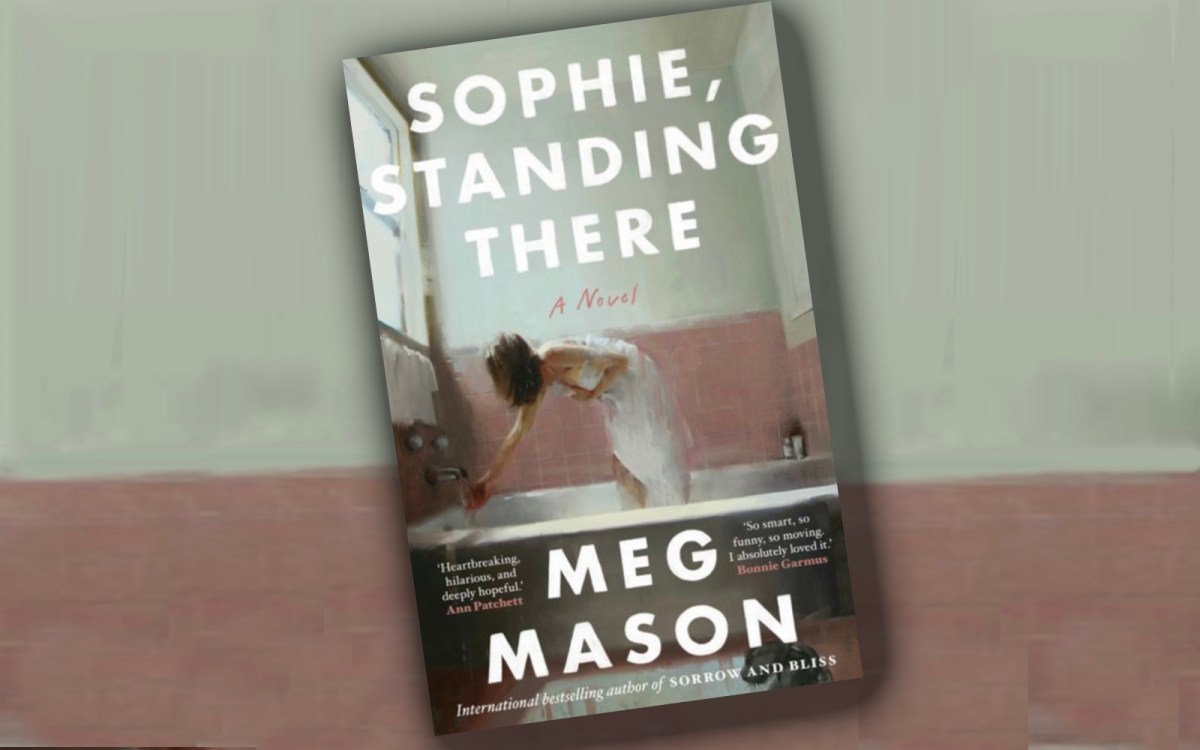
It’s a dull title, but apt. Sophie stands there a lot, waiting around for people to need her. I thought Meg Mason’s previous novel, Sorrow and Bliss was a terrifically clever (and dare I say funny in the context of mental illness?) description of an awkward, dysfunctional woman. I loved it. I felt such sympathy for the character. But my God. Sophie. There’s nothing particularly funny in this story, not funny haha, not funny peculiar, not funny clever, which is a shame as Meg Mason is absolutely capable of all three. But if you’re feeling down and enjoy a bit of schadenfreude to cheer you up, Sophie’s your girl.
Sophie is miserable, living in the horrible pokey flat of her nasty ex-husband, broke, unloved, friendless, her poor brother fielding daily calls of misery and trying to prop her up. It’s palpably uncomfortable, something Mason evokes very well, letting the reader wonder what, in the girl’s background, has left her so emotionally fragile.
Sophie’s a techie for book festivals, back-stage, miking up the ‘talent’ before they go on. Sounds like a great job and she’s a huge reader, but Sophie is too much playing the doormat to enjoy it. Thing is, the rest of the crew think she’s great (we conveniently hear a couple discussing her in the loos) and she is proficient in her job. But she’s wallowing in self-pity. ‘And she did, still, have moments. Not whole days, anymore, where it felt like she was wearing an x-ray apron of grief and sadness. Or an entire month where it was almost like, cry by night, sleep by day.‘ Misery reigns. Come on Sophie!
We’re backstage at a literary event for most of the plot (perhaps the AWF?), and Mason drops names: it’s George Saunders this, David Sedaris and Douglas Stuart that. Ann Patchett gets chatted to by a crew member (it’s a no-no to ask advice, apparently) and Elizabeth Strout cancels a gig. Unfortunately there are no juicy stories, the names are literally dropped and we’re left with a pretty bleak description of a festival, where the ‘talent’ are whisked in and out and the crew find them intimidating. There’s none of the genuine warmth of every lit festival I’ve been to, where authors seem unfailingly polite and approachable.
The plot becomes weird when sad Sophie gets parasocial and imagines herself in love with an author she has never met. Reads all her books over and over, watches her interviews, has her podcasts on constant loop. She has pretend conversations with the author, imagining the love is reciprocal. I don’t think sexual, there is no indication that Sophie is gay. But I found it frustrating that we’re given no insight into why this author is so appealing, no descriptions of her books, whether the attraction is for the woman or her writing. I like a bit of obsession in a story but this one had me flummoxed.
And, of course, the haughty author turns up at the festival and there’s a ‘meet cute’ where the author gets soup spilled on her white trousers and Sophie has to give up her new smart trou to the author and spend the rest of the novel in an oversized baggy pair of leggings, including an on-stage appearance to fix a mic. How’s that schadenfreude going?
Does Sophie get her trousers back and retrieve the author’s white pants from the rubbish? We never know because the plot of author-and-Sophie gathers pace and gets so unrealistic it left me cringing a bit. Cringing a lot, to be honest.
There’s lots more angst including a quick explanation of Sophie’s unusual, but not unhappy, childhood followed by a sunset ending. Such a cliché, but maybe Mason is being tongue in cheek here?
Here’s a Sophie insight: ‘Apparently, what writers want is for their characters not to be forgotten. They all said that. If she has done her job, readers will keep thinking about the people she created and wonder about them and imagine what happens to them after the novel ends.’
I’m reluctant to confess – because perhaps the point of the book is exploring the way we (the readers) confront depression – but I really couldn’t wait to get away from Sophie.
Argh!


