
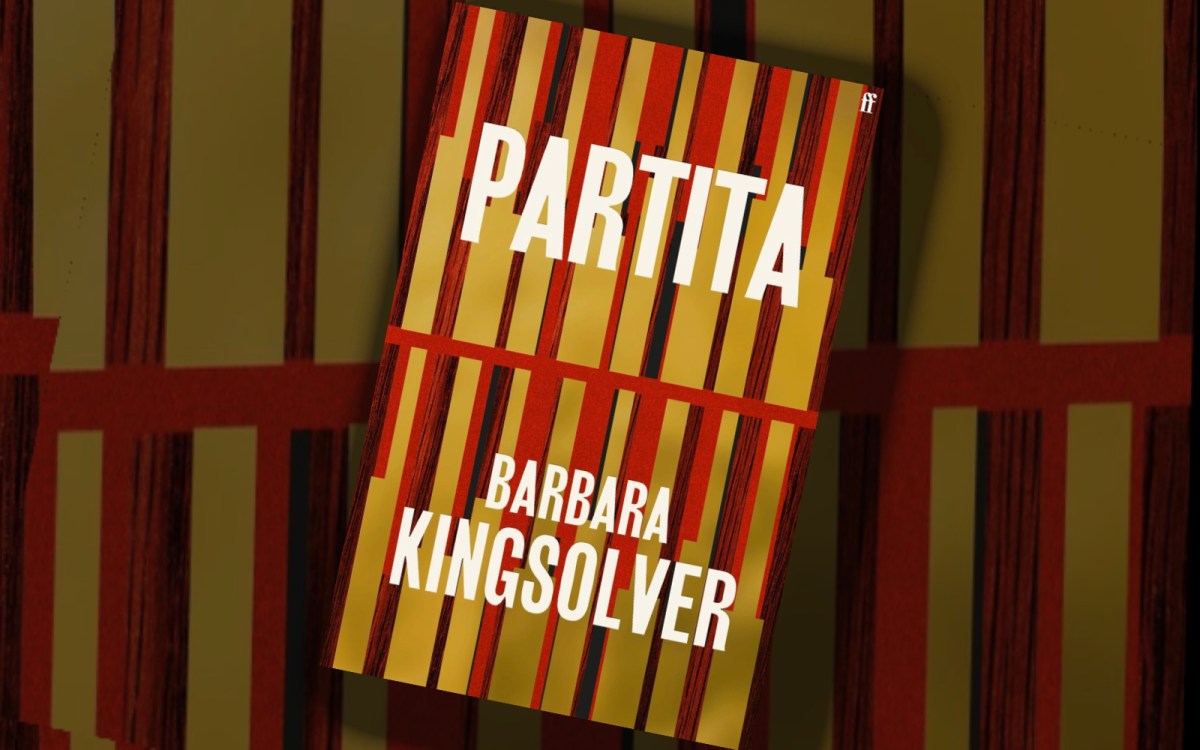
Since The Poisonwood Bible I have bought every Kingsolver book hot-off-the-press and have never been disappointed. They are the highlight of a literary year for me, stories much anticipated and hugely engaging. Barbara Kingsolver offers two things in every story – characters I feel an intense empathy for, and a background that opens my eyes. Missionary lives in Africa (Poisonwood Bible); the OxyContin horror in USA (Demon Copperhead); the effect of climate change on butterfly migration (Flight Behaviour); Mexican art (The Lacuna); species adaptation and upheaval (Unsheltered). In Partita our character is a young woman musician from rural Tennasasee trying to exist in the highly competitive and selective world of classical piano. The background is music, and like all Kingsolver’s themes, it soars.
Turns out, as well as her many other talents, Barbara Kingsolver herself was a classical pianist whose musical life was cut short by a hand injury, mirroring the story of Livia here. She speaks of music and writing as conjoined: ‘Good music begins with good listening, not just to dialogue and storytelling but also the musical elements of language: rhythm, inflection, pacing, dynamics, voice.’ So apt.
Our narrator, the shy but gifted Livia, sees the world through music and in Partita music is a metaphor for life. It’s not subtle. The chapters are named Overture, Prelude 1, Allemande, Prelude 2, Toccata etc, and there is a helpful listening list at the end which I really recommend you take the time to listen to as you read. Kingsolver has worked hard to put this book together, it’s courteous to read it as intended, with the music.
Livia tells us what the composer is expressing, what the music feels like to play, and there is this constant refrain of life reflecting art. There’s the gentle start, the challenge, the lusty bits in the middle, the crises. Ravel’s Gaspard de la Nuit frames the most intense scenes, a piece apparently so fiendishly difficult that Ravel himself couldn’t play it. I’m listening to it now. It’s glorious. Sounds like there are an awful lot of fingers involved.
Livia’s story stats with the suicide of her brother. ‘How does a person step in front of a train and leave everything right there? Inhale, no exhale.’ This question runs like a train in the background of the story and of course there is never an answer to suicide. He is an ever present ghost. ‘But I saw him, his long shins and overlong feet like a young dog growing into itself, his hair he kept a little too long to be taken for a jock, the way he splayed himself on the floor to read or think, as if he took gravity harder than the rest of us. Dark eyes looking up, offering no answer to this question that stuffed our throats like cotton wool.’ At the other end of the story Livia de-clutters the house of her mother, a lifetime hoarder. ‘These were not my dead mother’s shoes, obviously. I’d taken them off there when I sat down, needing to feel the cold pedals under my bare feet. Empty leather flats with the sad, squashed look of weariness, just like the ones she used to park beside her recliner every time she gave up on another day, accepting her life as the sum of its disappointments. If an elephant had scuffed around the kitchen all day in those, I used to think to myself, they would not look worse. A child can’t hate her mother without putting the load-bearing walls of the known world at risk. I settled for hating her shoes.’
In between her negotiation of how she engages with brother and mother, Livia faces the old chestnut: will it be the boy next door, the OK ‘bread and cheese’ relationship she falls into at uni, or the smoking hot but ultimately unreliable activist lover? A girl doesn’t always get to decide, but changing circumstances and maturity provoke different needs and desires at different times that Livia explores as she grows away and back to her community. During these years she has more than her fair share of both physical and emotional challenges. Through it all, the music plays.
This is yet another satisfying and rewarding read that must put Kingsolver high up on my list of all time favourite authors.


