Lauren Keenan (Te Ātiawa ki Taranaki) is making a name for herself writing strong women’s stories of our past told from alternating Māori and Pakeha viewpoints. Both The Other Catherine and her previous novel, The Space Between, follow this device. It soon becomes clear that, though the lives of these women from the outside may appear very different, their lived experiences have distinct similarities. They struggle, love and fear, find joy in small things, have unfulfilled desires and hope for a better future. Throw these experiences into a colonial context: women’s lack of agency and political power, poor sanitation and health, hard work and lives dependent on the mercy of men, and you’ll find a compelling story.
In The Other Catherine, one Catherine is an Irish convict, sailing in chains to Australia. The other is a Taranaki Māori woman given the name Keita, a transliteration of Catherine, by her Australian born husband, Abraham. In an historical note, Keenan tells us of the origin of this story:
“For as long as I can remember, I have been able to recite my Keenan family tree back many generations, all the way to when my Irish whaler ancestor, William Keenan, arrived in New Plymouth in 1828 and married a local Māori woman, Kātarina.” She later discovers an ancestor, Catherine Keenan, a convict from Ireland.
Interesting stuff! And so the story begins.
Keita tells her story as an elderly woman, living on a whaling station in the Marlborough Sounds in 1893. Abraham has died, and she looks back over her life, including a devastating attack on her Taranaki iwi by the Waikato, a pivotal moment in history. This is where Keenan is at her best, focusing on the small details that change lives – the child who refuses to get into a waka heading for safety, an Englishman misunderstanding tikanga, the child thrown over a shoulder like a kete of potatoes. Then the walk south until the mountain has disappeared behind.
Keita feels constantly compared to the paragon of virtue described by her husband – the other bold and brave Catherine. She hears stories that have been passed down to Abraham. The reader, however, knows more about Catherine than Keita (or perhaps even Abraham) does, as in alternating chapters we hear her story directly, beginning with her boarding The Tempest in 1793, eighteen years old and in chains. Her voyage is one of the rivalries and companionship between the suffering women. There is a lot of suffering and life is as bleak as the bucket of shit that sits under the post. There are murderesses on board, but most women are there for petty crimes. Catherine is serving a seven year sentence for stealing a coat. Those English, hey. She seems a cut above the others. There are floggings and sickness, a woman dead and a man hanged from the yard. History really was awful. Abraham just tells Keita how Catherine reached her arm out from the ship to touch a leaping whale. A example of how stories grow and change and mythology replaces history.
A hundred years and very different cultures separate these two women, but their lives, sadly, are both filled with troubles and grief.
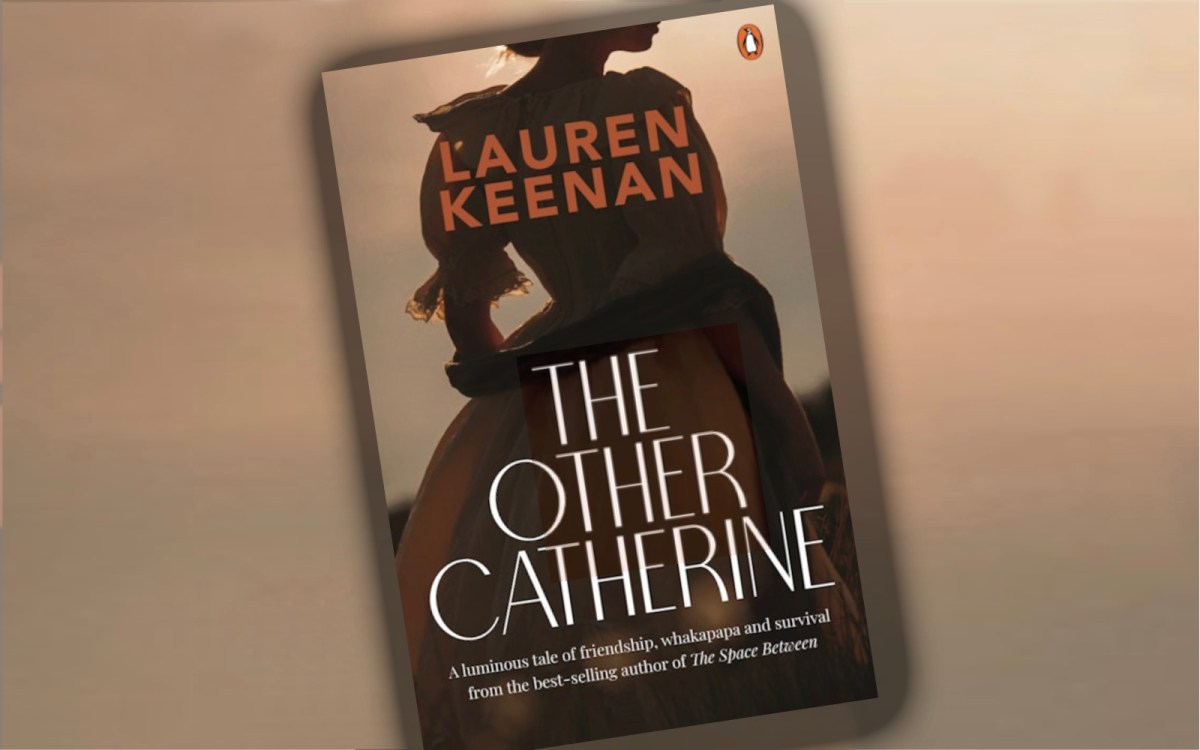
BTW, neither Catherine is the elegant young woman in the lovely dress on the cover. The story has so much more grit than that.


