Whangaroa: running with ghosts

Vibrations of the Boyd Massacre

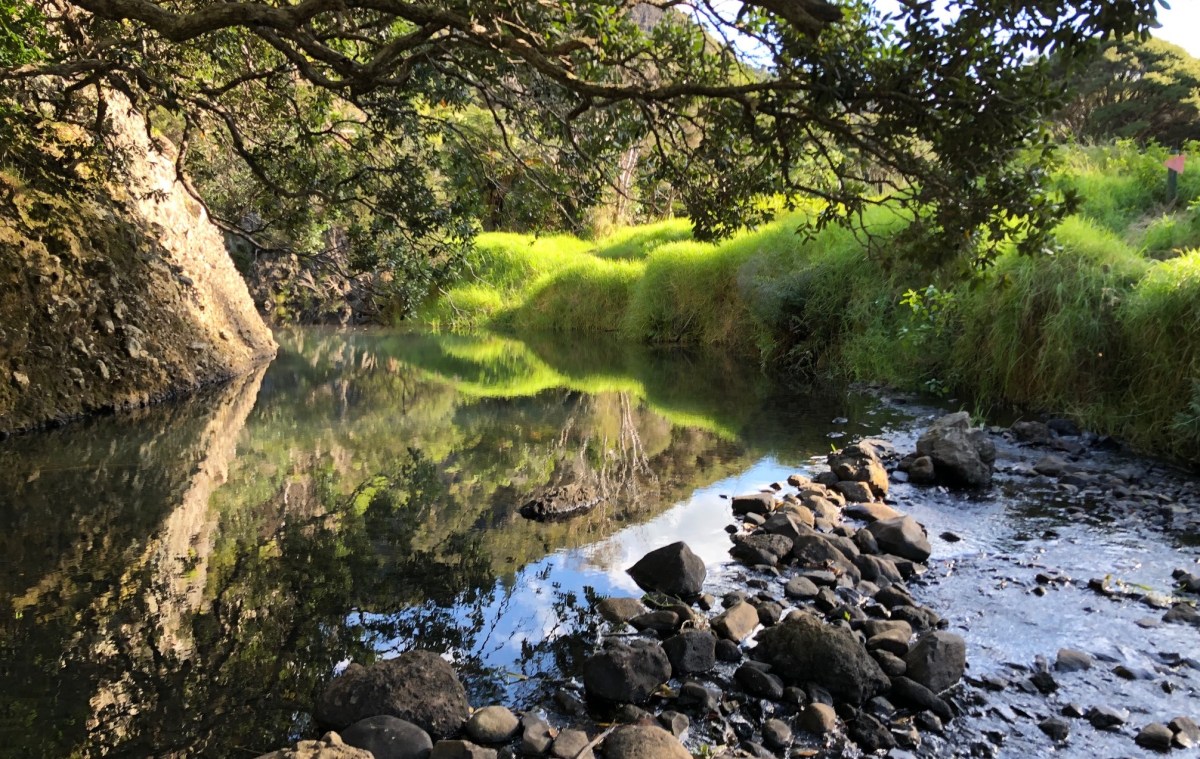
A man on a boat told me to run the Wairakau Stream to the Duke’s Nose, which sounded my type of thing. I took my friend M with me, a Spanish lady who was staying at the YHA, who is so intimidatingly spiritual she talks of her body as a separate person. She listens to her body, and does what it tells her. It told her to come with me into the forest, so off we went.

Continue reading “Whangaroa: running with ghosts”

Birds without wings – book review

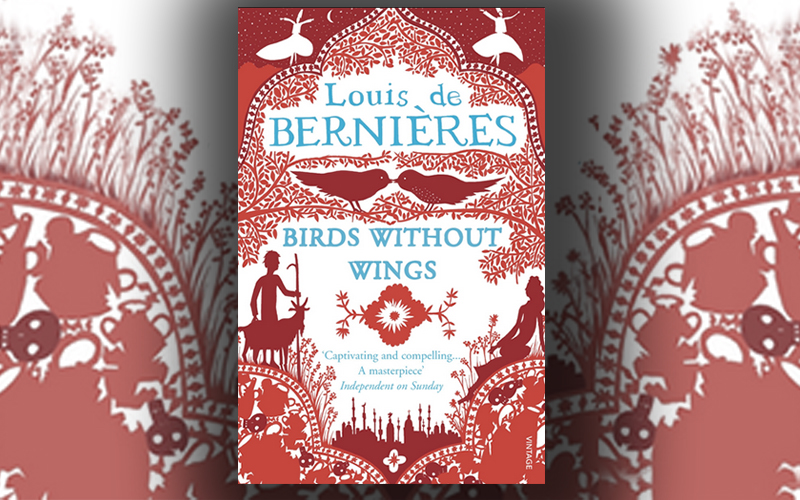
Birds without wings by Louis de Bernières

God, this is horrific. If you’re looking for a sweet but deep sequel to Captain Corelli’s Mandolin, which is what the bloke in our book club thought he was giving us, this is way out of your depth.

This is Turkey before, during and after WWI, the waning years of the Ottoman Empire. I don’t voluntarily read war stories, but this was for book club and having been brought up on the glorious allies, I was interested to read the perspective of the other side’s glorious allies. But I was sickened by the brutality and inhumanity in this story. De Bernières writes with such clarity and perception there are images painted in my head I will never wipe clean. Continue reading “Birds without wings – book review”

Edward Jerningham Wakefield

Died 140 years ago today

Dear fellow Wellingtonians

Here is a celebration of Jerningham Wakefield, a founding colonist of Wellington. He died 140 years ago today, aged 58, penniless and alone, in an alms-house in Ashburton.  But before the drink got him, in his early twenties, he had been an extraordinary young man, a journalist, a rip roaring adventurer, the Wellington wild boy of his time. Continue reading “Edward Jerningham Wakefield”

The Smuggler’s Wife – book review

Kitty, Amber & Band of Gold, by Deborah Challinor

These books are a lot of fun. I defy anybody to read just the one. And I’ve just seen there is a fourth, published after a six year (and at least 5 book) gap. Hooray! I’m going back in. Continue reading “The Smuggler’s Wife – book review”

Mr Peacock’s Possessions – book review

Mr Peacock’s possessions, by Lydia Syson

Lydia Syson’s Mr Peacock’s Possessions sets the characters and the scene slowly – you need to understand the background before you can follow the story. So don’t be impatient, sit quietly as the curious and impulsive Kalala introduces you to his life in the Pacific, his brother, the pastor Solomona, and their small group of god fearing men who are shipped to an island where a white man and his family are struggling to settle.

Lizzie’s story comes next, she tells of family life on an isolated island, the difficulties faced by her mother and many children as they live castaway style, and the struggles of her delicate older brother, who is a disappointment to their very physical and driven father. Lizzie is her father’s favourite and she loves him unreservedly. Until she has to confront a truth that questions all she believes of him.

The family are swindled by a ship’s captain, they suffer rats and weevils and have some small successes, but there is an undercurrent of suspense growing. There are bones on the island, pigs’ bones, says Mr Peacock, as he hastily buries them.  Kalala and the Islanders arrive, Lizzie’s brother goes missing and they all spread out over the island to search for him.

Mr Peacock is a possessive man. Lydia Syson makes his frustrations seem understandable in the rough and rugged man’s world scattered around the very edges of Victoria’s imperial petticoats. Peacock had struggled for years, as many did, slowly realising through constant failures that the dream of owning colonial land was not a promise for everyone. He owned his wife and his children and when the opportunity came to buy and island he owned that, too.  Our main story begins when he brings in his “Kanaka boys,” to work his land and gradually young Lizzie and the rest of the family begin to question her father’s possessive attitudes.

Kalala and the Islanders’ story merges with Lizzie’s and a story that has gone before them on the island, and the mystery of the missing brother hangs over them all.

The reading just gets better and better and the story becomes utterly compelling.  My advice is to set aside a good chunk of time when you get near the end, there are some things that need to be finished.

Mr Peacock’s Possessions is a terrific book for a book club read, there are lots of questions around possessiveness and ownership, success and failure, compassion. You can discuss colonial attitudes to women, race, land, the power of religion. I don’t think I’m giving anything away by saying Monday Island, where the Peacock’s live, is in fact Raoul Island in the Kermadecs, and now a marine reserve and a place of extraordinary biodiversity. It featured on the migration route for early Pacific voyagers and for those of us who love islands it has a fascinating history all of its own.

Head’s up for my book club – this one is my next choice.


Decline & Fall on Savage Street – book review

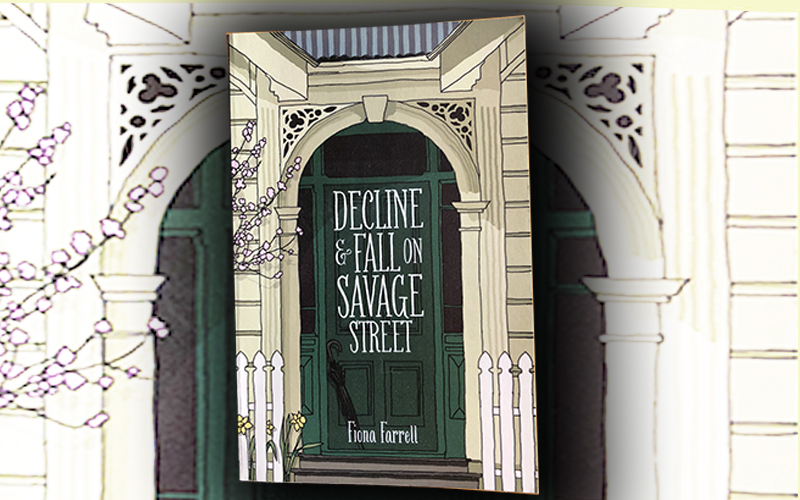
Decline & Fall on Savage Street, by Fiona Farrell

A lot happens. It says this in the blurb.

So don’t go thinking you can just whizz through this as you would a normal novel. You need to go in with the right attitude, with a predisposition to enjoy Fiona Farrell (I do!) and a realisation that some novels don’t have obvious characters you get to know and love and follow on a journey.

The character on a journey in Farrell’s Decline & Fall on Savage Street is a house.  It took me a while to understand this, (and apparently she has written a non-fiction book about this house so perhaps I should have come better prepared) so for a while I floundered around with characters disappearing just as I got interested and a whole new set of people coming in. It reads more like a set of short stories, chronologically spanning 100 years, with each story bringing characters who live in the same house with their personalities and tribulations – from our perspective we see a house, but of course for every new arrival it is their home, they move their baggage in and own it.

As a collection of short stories this book is very rewarding and the format works really well, I love the fact that we get to know the house better than the characters themselves because we’ve been inhabiting it, along with all the former tenants, since it was built.

But she’s clever, Fiona Farrell, and this is also a story of another character that lives under the bank of the river, undisturbed (mostly) by the turmoil of change and war and earthquakes. In contrast to the lot that happens to the humans above, nothing happens to the eel for a very, very long time. Or if something happens, it is the drop of a leaf onto the water. We feel her ageing not in the time it takes to read the pages, but in the span of frantic, scrabbling activity that happens ashore. Her story made me feel old. But every story has a climax, and even for the eel, eventually something happens.

Each human chapter starts and ends with a missing line which drove me mad. I guess it is to show we are dipping in and out of a story, but this is a book for intelligent readers and we know that. A kind editor should have said, let’s not do this.

I wont specifically remember any of the characters in this story, they passed by too fast,  but the house and the eel will stay with me forever.

Also by Fiona Farrell, if you love good New Zealand writing, is:
Mr Allbones’ Ferrets – Book Review

Golden Hill – Book Review

Golden Hill, by Francis Spufford

Oh, what a lot of fun this book is! Step off the ship in the  New York harbour of 1746 with Richard Smith, an entertaining young wag with a cheeky way about him, as he looks and smells and gets into all sorts of trouble hanging around town for 60 days waiting for his £1,000 cheque to clear.

Finance was complicated in those days – lots of currencies in paper and coin and gold – and Smith had a very large cheque. Why? He’s not telling. Not us, not the merchants to whom he presents his cheque and not any of the worthies about town who think perhaps, he is a French spy.  This is the puzzle that keeps us turning the pages and the American gossips on their toes.

I would have been happy with a few more clues to the mystery, though some of the blokes at book club claimed to have been suspicious in the right direction, so maybe I was just being thick. It was one of those annoying plots where the almighty twist is revealed in the last chapter and you have to read the whole thing over again in the know. Sometimes I want to know the score before the game, especially if it’s a brilliant win.  I was irritated by  Life of Pi  for this reason – did anyone [spoiler alert] guess the tiger was the cook all along? Or who the annoying guest narrator was in Chidley’s The Wish Child?

Actually, an odd narrator jumps into Golden Hill too, just a couple of times, and appears at the end as the unlikely author. I bet Spufford had to argue to get that one past his editor.

But read this book for the creaking of rigging from the ships riding at anchor and the stink of the town: “A little fish, a little excrement; guts here, shit there; but no deep patination of filth, no cloacal rainbow for the nose in shades of brown, no staining of the air in sewer dyes.”  Yum.

Look up cloacal if you don’t know what it means. I love a book that has better vocab than my spell check.

And here’s a description of a staircase that puts you inside an old, dark, Dutch house (think of the rich tones in the film Girl with a Pearl Earring): “Stray gleams of polish showed the placing of the banisters and newel posts; picture frames set faint rumours of gold around rectangles of darkness or curious glitters too shadowed to make out, as if Lovell had somehow collected, and drowned, a stairwell’s-worth of distant constellations.”

Lots of his descriptions are like this; layered, multi-sensual, slightly chaotic.

There is a character cast that reflects the theme of the book, which boils down to the fact that things are not what they seem. “I know why a magician claps his hands,” says the inconstant Tabitha, who begins as the pretty daughter of the banker but turns into so much more: trickster, betrayer, love interest, caustic fence, forgiver, and eventually – well. Read the book. She is one of the most interesting characters I have met for a long time, but you have to work it out. They didn’t know in the 18th Century.   Septimus is not just the foppy Governor’s man, Terpie takes her clothes off, Smith shocks the town and the slave Archilles – but here again the author claps his hands and your attention is diverted elsewhere.

I am respecting the tradition of book reviews here by keeping mum, but there is a VERY BIG ELEPHANT on this page and I want to tell you to come back when you have read the ending so we can discuss what a £1,000 buys in the market in New York and what it all means. Did you think it was just a romping travel story?

Clap clap. Think again.


Little Blackbirds in the nest

I reached my camera up high above a bird’s nest and this is what I found:

The little one at the bottom fell out of the nest and didn’t make it, but Alpha and Beta are hopping around in the tree outside my window and squawking.  Ma and pa still bring them grub.

Potiki – book review

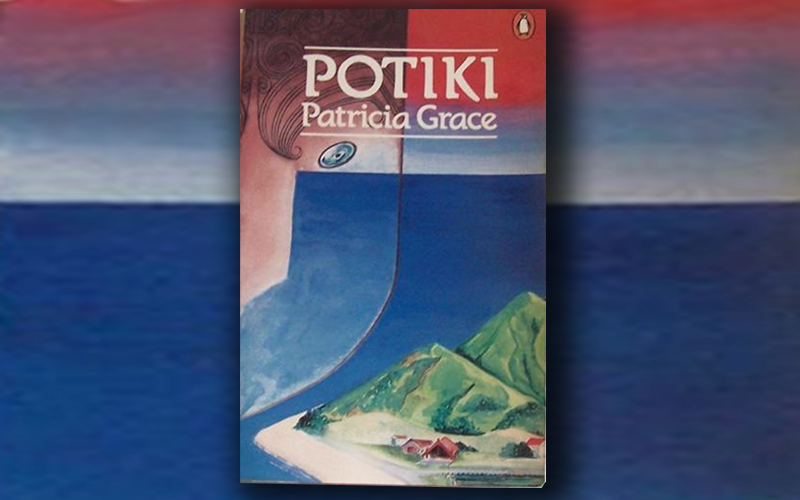
Potiki, by Patricia Grace

Not sure how I grew up in a kiwi bookshop without having read this. It would be on my list of books to recommend to new New Zealanders, as well as to oldies like me who missed it. It is a description of a rural Maori community and a way of life that most of us are probably aware is part of our history, but we haven’t been inside.  In Potiki, Patricia Grace invites us in.

This is a simple story of good verses evil, weak versus strong, country v commerce, tangata whenua v greedy imperialists.  Basically, it’s a book about the imbalance of power, told from the viewpoint of the extended rural family whose lives are threatened by the Dollarman who will bulldoze away their traditional lifestyle and smother their ancestral lands with rather obvious bad things: night clubs, golf, a zoo of trained whales and seals.  The reader needs to get past this very clichéd plot and enjoy the Maori characters, several of whom tell the story in their very distinct voices.

Roimata is the strong sensible woman at the centre of the community, and tells a lot of the story. She is a balance between her children who go away to university and come home with skills and ideas, and her husband Hemi, who believes in the old ways, working the land like his ancestors did, feeding the family from the garden and the sea, trusting in the land to provide all they need.  If school doesn’t suit the other kids, teach them traditional ways at home – Maori science and folklore. To Grace’s credit, she doesn’t paint this with a rose wash and the poverty is raw.  You do get the sense that these are people living on the edge and that subsistence living is, in the long term, unsustainable.

Roimata and Hemi’s adopted son Toko is physically disabled but has a sixth sense, and this mystical element blurs the edges of reality enough that disbelief taints the rest of the story.  Once fantasy is out of the bag like that anything can happen, and the story entwines with myth and you don’t know what to believe.  There may be deeper parallels here, between Toki and Maui or Christ, but they take a bit of delving and this complicates an otherwise simple story.

Mary, Toko’s birth mother, is a colourful personality treated sympathetically both by Grace and her characters. She has a role in the story and the community. Her intellectual disabilities shape but don’t define her, and she thrives in the loving community.

And it is the loving community that really is the crux of the book – no one is marginalised, everyone is welcomed and you find yourself rooting for this most precarious way of life and deeply saddened to know that it is disappearing, or gone.

There are many Maori words and no glossary which has raised an issue with many readers – to me, this feels inclusive rather than alienating. Use your own sixth sense.  Or google.

Patricia Grace chooses her words well and is a beautifully understated storyteller. Potitki challenged some of my long held assumptions. I wish I had read it earlier. I went straight on to read Chappy.

The Three Legged Pig

A Camp Fire story by Peter Lugg

My friend Peter Lugg has always kept us entertained at the fireside (though I’m still wondering why we call him Sparky when he couldn’t light a fire to save his life). Here’s one of his stories that can be extended to be as shaggy as you like. Just keep on adding to the feats of this remarkable pig.

Not really a shaggy dog tale but you may be interested that I was walking past a farm on the Mendips the other day when I saw a pig with only 3 legs. I thought this was pretty strange so, when I saw the farmer, I had to ask.

“A long story,” he explained. “Last winter was particularly cold. Snow everywhere and a deep frost that didn’t rise above freezing all day for weeks. Our pond froze over and, against family rules, our young daughter ventured out onto the ice. She fell through into the freezing water. Unbelievably, the pig eased gently out across the ice and reached through the hole, grabbed my daughter by the collar and pulled her out. Then the pig dragged her to safety into the barn, wrapped her in straw to warm her and came to fetch me. Absolutely incredible!”

“But why the 3 legs?” I asked.

“Well, not long after the iced pond incident, we had a fire in one of our outbuildings,” continued the farmer. “There were a number of sheep in the barn and we couldn’t get close through the flames to rescue them. We were faced with the horrific prospect of watching the poor sheep burn to a crisp when the pig suddenly grabbed a tarpaulin with its teeth and covered itself, ran through the heat and smoke, leapt up to the barn door catch and released the sheep who ran out to safety. As I said, unbelievable!”

Again I asked, “But why the 3 legs?”

“Well,” the farmer explained at last, “if you had a pig like that, you wouldn’t eat it all at once, would you?”