Always Home, Always Homesick

Always Home, Always Homesick, by Hannah Kent

Why fall in love with Iceland? Hannah Kent counts the ways. As a young Australian woman she picks up the default option of a Rotary exchange to Iceland, spends the first few months in a cold house with a cold family and an inhospitable frozen land, but after a while, both Hannah an Iceland thaw. She works hard to learn the language “my conversation has always been pockmarked with grammatical error and the foreigner’s manner of jamming in known vocabulary at the expense of clarity and precision”, makes some friends, and moves in with a new family who became her greatest support and friends for life. She falls in love with Iceland itself.

Continue reading “Always Home, Always Homesick”

One Boat – book review

One Boat, by Jonathan Buckley

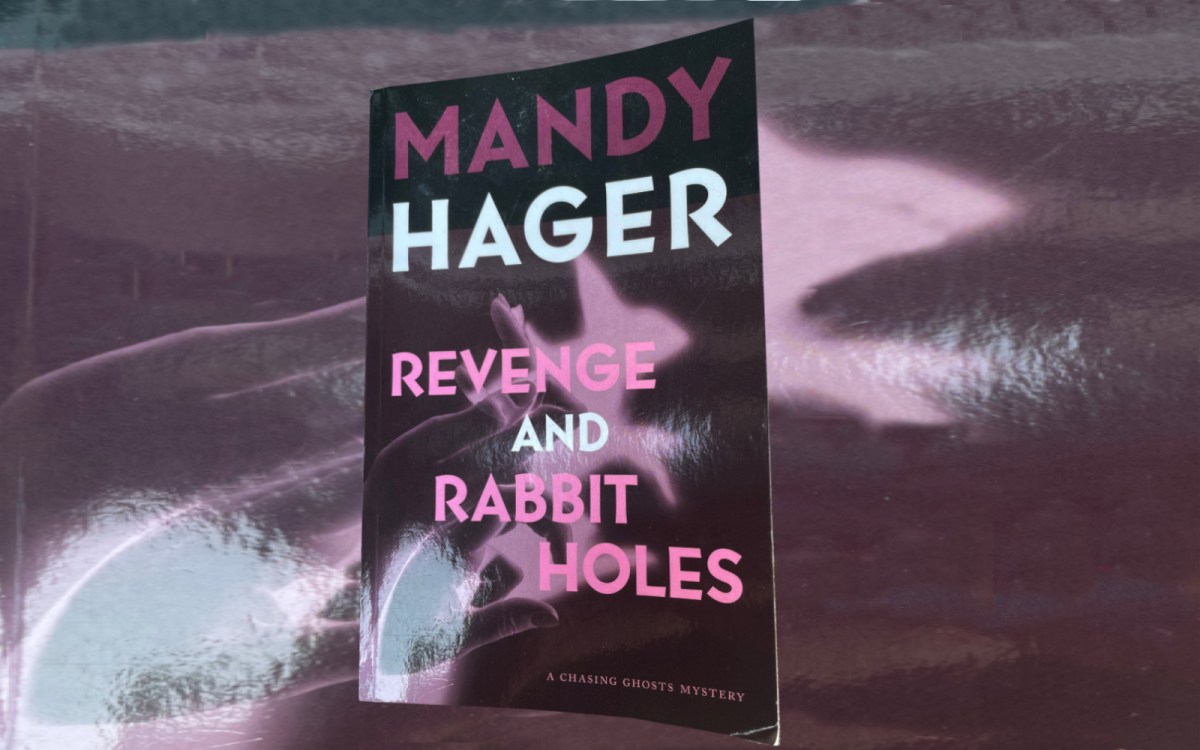
What, was the cover designer on holiday this week? I could have done that.

One Boat, by Jonathan Buckley, was on the longlist for the Booker this year. It didn’t make the shortlist, which I think is the right decision. Nice book, but not a winner. The Greek Island setting is lovely, reminiscent of holidays past, the writing evocative and I almost really enjoyed it but there was something a bit too clever about the way we jumped around in different time periods. It felt like an editor had switched some chapters around to make the book more exciting. It didn’t work. The book is still slow and introspective. And also jumpy.

Continue reading “One Boat – book review”

Bad Archive – book review

Bad Archive, by Flora Feltham

Here’s another interesting look at how we view history, seems very much the topic du jour (see What We Can Know), this time by local author Flora Feltham, contained in a set of wandering essays that I enjoyed tremendously. Just the title, Bad Archive, tells you that this is going to be an opinionated work with something awry – slanting truths perhaps, ironic labels on ordinary things. Just the way I like my archives.

Continue reading “Bad Archive – book review”

What We Can Know

What We Can Know, by Ian McEwan

For a writer of historical fiction, a researcher, a historiographer, this book concerns things that obsess me. The wonderful Ian McEwan, in What We Can Know addresses all these questions that I confront every day : Is it true? Is the source reliable? Who recorded this and what was their motive? What did they miss? What’s been misinterpreted? What aren’t they saying? What happened to the records? Can I assume that…?

Continue reading “What We Can Know”

Empathy – book review

Empathy, by Brian Walpert

Empathy, I think, is one of those words that is overused and misused. It’s often used to express feelings of compassion or pity, though is not the same thing at all. Empathy is not a matter of expressing how you, too, have strong emotions that are similar to another’s. It’s a vicarious thing, it’s about letting go of your feelings and experiencing those of another person. And empathy applies to more that just pity, as Bryan Walpert explores in his intriguing new book, Empathy.

Continue reading “Empathy – book review”

The Adversary–book review

The Adversary, by Michael Crummey

I was recommended The Adversary by Phil of Wardini Books who knows what I like and what might challenge me. I’ll tell this one in her words: “It’s miserable. Absolutely. It’s so dark and violent and they all lead such horrible lives and it’s historical and there are old ships and pirates and oooh, I read it and thought of you straight away.” Is this how she sees me? I mean, I love Catherine Robertson, too, and not a shipwreck in sight. But I’ve read and been inspired by many books on Phil’s recommendation, so off I went with The Adversary under my arm. Good God.

Continue reading “The Adversary–book review”

1985 – book review

1985, by Dominic Hoey

I guess Dominic Hoey sets his street cred early on in this story by throwing in a couple of ‘cunts’, just in case readers mistake him for an IIML grad. That would be a mistake. You can’t study to write authenticity like this.

Hoey’s previous story, descriptively called Poor People With Money is about youngsters on the edge in Auckland, making bad choices and rocking the consequences on a wild ride to a village so small. It’s on my list of classics of the decade. Can he do it again?

Continue reading “1985 – book review”

A Different Kind of Power – book review

A Different Kind of Power, by Jacinda Ardern

I didn’t know political biographies could be like this. There’s not a nasty bone in its body. I haven’t read a book so uplifting for a long time but I shouldn’t be surprised. I mean, Jacinda Ardern’s signature is kindness. No one was expecting she’d take the opportunity now she has left office and living overseas to get stuck into the dozens of goons she must have had to deal with on a daily basis.

Continue reading “A Different Kind of Power – book review”

A Beautiful Family – book review

A Beautiful Family, by Jennifer Trevelyan

Lots of hype came with this book, a first novel by a Wellington writer and IIML grad Jennifer Trevelyan: massive publicity, a high profile agent, a two book deal, international sales, film rights. All of it, I think, very well deserved. It’s the story told by a ten year old girl of a summer holiday at the beach. They are a beautiful family, but somehow there is a sense of danger everywhere. Danger either for our girl, her sister, her mum or dad – risk everywhere, some obvious, some insidious. Enough to keep you anxious for the entire book. I had that feeling of early motherhood where I was constantly sweeping the environment for things that might damage my child. Here, at this seemingly wholesome kiwi bach, there are things to watch out for: a difficult sea with rips and big waves, a mother not watching her children because she has another agenda, two sisters looking/not looking out for each other, a teenage hangout at the lifesaving club, bad choices, a creepy voyeur next door, a missing girl whose name is carved into a wall. A swampy lagoon.

Continue reading “A Beautiful Family – book review”

Wonderland – book review

Wonderland, by Tracy Farr

I really hope this book smashes the awards next year. It’s a damn good story about family dynamics and dealing with life’s ups and downs in a Wellington seaside suburb in the early 1900s. Oh, and for some reason, Tracy Farr decided to stretch belief a bit to invent a scenario where scientist Marie Curie comes to lodge with this very kiwi family. She is hiding out of the public eye as she recovers from scandal and illness. Each of these very different story-lines offers a good premise, the weird thing is to put them together. What was Farr thinking? Whatever madness caused it, we need more of it in our novels.

Continue reading “Wonderland – book review”