Happy birthday, Jerningham

History is people, and it’s the charismatic ones who live on in our imaginations. Today, to celebrate Jerningham Wakefield’s 201st birthday, here is an extract of his journals from August 1841. Some of his assumptions are uncomfortable today, some of his observations prescient, but judge the boy in context (where he is still problematic) and enjoy his lively voice. He was twenty-one when he wrote this.

In Wellington, progress had been made in the signs of civilisation.  A large and well-furnished chemist’s shop, with the due allowance of red bottles and blue blue bottles, and glass jars full of tooth-brushes and sponges, and gay labels of quack pill and ointments, showed a broad front to the beach near Barrett’s hotel.

As this shop, which gloried in the sonorous title of ‘Medical Hall’, was close to the usual place of disembarkation for passengers, it became a much frequented morning lounge; especially as Dr. Dorset and another of our oldest medical friends were partners in the establishment. Many other equally gay shops began to ornament the bustling beach. Two clever rope-makers had begun the pursuit of their trade on a large scale, using the phormium tenax as prepared by the natives; and they received ample support from all classes, there being a considerable demand for small rope for the running rigging of ships, fishing-nets, and whale-lines for the stations in the Strait.

Rangihaeata and his followers had destroyed some of the bridges on the Porirua bridle-road, and in some places trees were purposely felled across the narrow path with a view to prevent the easy passage of travellers.

Tonight we’ll be putting on top hats (instant power) and eating pork, potatoes and puha and we’ll toast him a happy birthday. I’ll see if I can find a bottle of Hokianga red.
The Secrets of Strangers—book review

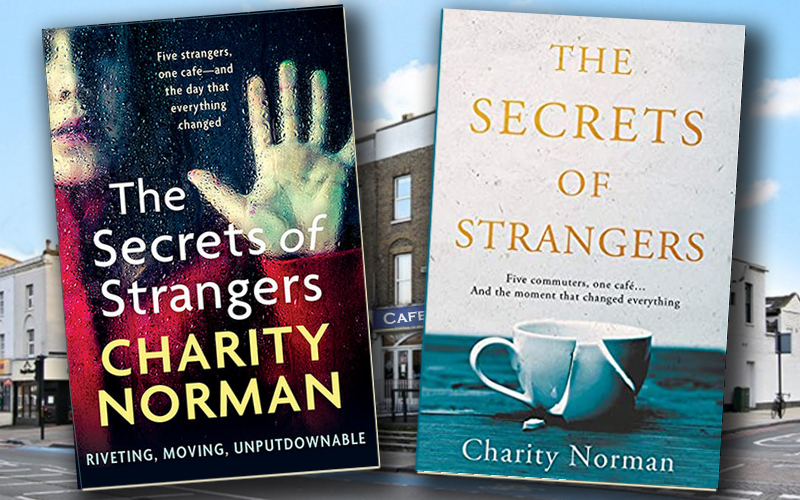
The Secrets of Strangers, by Charity Norman

Next time you are in a café, pretend to be Charity Norman and imagine a backstory for everyone in the room. I heard her talk last week and she explained that this was how she came to write the The Secrets of Strangers, just looking around patrons in a café and imagining their stories. One customer knows she has just failed IVF again and is waiting for the confirmation, she’s on a timeline for court and has four minutes to pick up a coffee. Another is an ex-teacher with a gambling addiction, sleeping rough. A boy comes in for breakfast with his grandmother and he will need saving first. There’s a woman who has escaped such atrocities in her homeland it is hard to believe she still functions but she is rock solid and kind to strangers. The girl behind the counter plays too easily with others’ emotions; one man gaslights and manipulates and is about to get shot and one is so traumatised he will pull the trigger.

Continue reading “The Secrets of Strangers—book review”

A Room Made of Leaves—book review

A Room Made of Leaves, by Kate Grenville

John Macarthur was a British lieutenant who sailed on the second fleet to Botany Bay in 1790 with his wife and child. By all accounts he is a thoroughly nasty man, quarrelsome and jealous. As he manipulates his way to grants of land and stock his influence and holdings increase dramatically. This much is recorded history. But he is not the hero of this story.

Continue reading “A Room Made of Leaves—book review”

Shackleton’s Endurance — book review

Shackleton’s Endurance, an Antarctic survival story, by Joanna Grochowicz

Complained about the cold lately? Snowflake! Shackleton’s Endurance will knock that out of you. Comparatively, you have never been cold.

Continue reading “Shackleton’s Endurance — book review”

We are all completely beside ourselves—book review

We are all completely beside ourselves, by Karen Joy Fowler

Second time round for this book. I read it when it first came out in 2013 and it took a while to recognise it because the title sounds too frivolous for the book it becomes, and the story starts on a bit of a side note. A couple of girls in a canteen meeting and becoming friends. But then our narrator mentions her sister, Fern, and it all came flooding back and made me very uncomfortable all over again.

Continue reading “We are all completely beside ourselves—book review”

Klara and the Sun — book review

Klara and the Sun by Kazuo Ishiguro

I was so excited when I saw the new Ishiguro on the bookshelf. His previous: The Remains of the Day and Never Let Me Go are wonderful books, full of insight and character that leave you thinking deep philosophical thoughts and spark great conversations.

Sadly, I found Klara and the Sun — seems almost sacrilegious to say so — boring.

Continue reading “Klara and the Sun — book review”

The Salt Path — book review

The Salt Path, by Raynor Winn

They’re not old. Early fifties is not old. But after sleeping rough on the trail for a few weeks they are often mistaken for a pair of old tramps. True, they have lost their house and are living hand to mouth, sleeping in a tent on waste land and often going without meals. Ray talks of her birds-nest hair and filthy clothes and Moth’s illness makes him frail and tentative. They kind of are tramps. Don’t judge the homeless, is a refrain throughout the story.

This is the journey of a couple who find themselves homeless. It’s a six hundred and thirty mile journey. Unable to secure a flat and with no income (their home-stay business lost with the house), they pick up a copy of Paddy Dillon’s guide to the South West Coast Path and decide to walk through the summer, freedom camping, a burden on no one. They have £115 topped up with a small weekly benefit, a cheap tent and thin sleeping bags, a copy of Beowolf. Not much else. Oh, and the complication that Moth has just been diagnosed with a terminal illness and been told to get lots of rest, take occasional gentle walks, not too far, and be careful on the stairs.

Continue reading “The Salt Path — book review”

This pākehā life — book review

This pakeha life — an unsettled memior, by Alison Jones

What does it mean to be Pākehā?

There are hundreds of answers, all of them right. I am Pākehā. I know it, I feel it, though I wouldn’t presume to categorise anyone else, and I stand to be corrected at any time. To me, being Pākehā assumes some kind of relationship with Māori (even as simple as not-Māori) without necessarily defining what that relationship is.

Continue reading “This pākehā life — book review”

Flight Behaviour — book review

Flight Behaviour by Barbara Kingsolver

Dellarobia is a woman in small town hillbilly USA, pregnant at seventeen, now ten years a wife and mother who is bored and disappointed in her life, heavy with the burden of being judged and found wanting. Her husband Cub matches his name; I can hear his slow drawl in my head. He’s gentle, a two-hundred pound child and dumb as a cow and Dellarobia has the smarts but not the provocation to take her beyond small town life. “Her anger collapsed into a familiar bottomless sorrow,” is a good description of her state.

The book opens with Dellarobia walking up into the hills to a tryst, but what she finds instead is a small movement, a fleck of orange wobbling, a butterfly on the wing. It changes everything, as we all know a butterfly beating its wings can do.

Continue reading “Flight Behaviour — book review”

All our Shimmering Skies — book review

All our Shimmering Skies, by Trent Dalton

Like the gorgeously lush cover, this book is almost too sumptuously overgrown with luxuriant succulents to be true. If that sounds a mouthful, you should read Dalton’s descriptions of the Australian outback.

Molly, our spunky but naive child heroine, walks away from the bombing of Darwin and I was expecting Australian desert. But she walks through many variations of the cover picture. “… a stand of black wattles and soap trees with flat round black fruits and then down an avenue of trees with mottled cream-grey bark and stiff leaves exploding with small ripe red fruits. These tree clusters are all canopied by a dense climbing vine with orange-yellow flowers shaped like starfish …” I’m wondering what to make of this dreamy psychedelic landscape and the vividness of the descriptions, which are offered in stark contrast to the city in the background. The voice is often passive: “Seen from the orange-red sky above and looking down and closer in and closer in, they are three wanderers crossing a vivid floodplain cut by sinuous rivers and wide freshwater channels dotted with lily-fringed waterholes. The sun low and honeyed.” (Love that repetition and the honeyed sun.)

It seems a strange response to trauma. Unexpected, perhaps intriguing.

Continue reading “All our Shimmering Skies — book review”