Still Life–book review

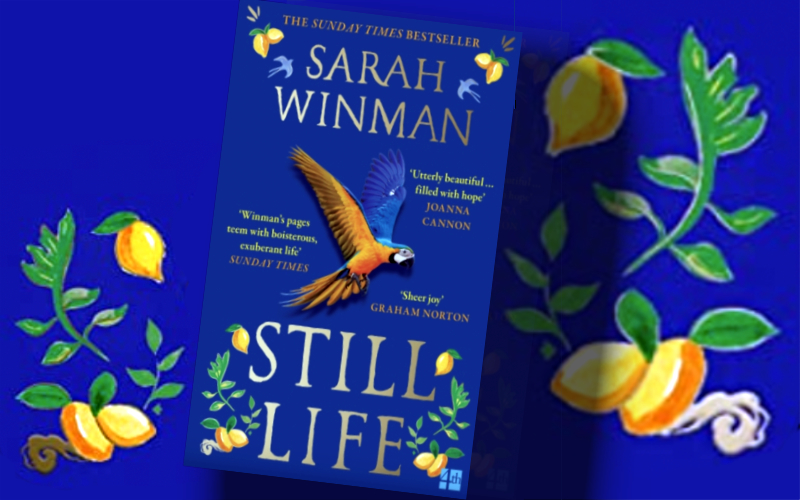
Still Life, by Sarah Winman

After a strange first chapter this book leaps into absolute gorgeousness and oh God! It helps that I read it in Italy. The Allied Troops are waiting to enter Florence. With them, is a young man, Ulysses Temper, and his Captain Darnley. Darnley has seen to it that the younger man should fall in love with Italy. “A little over a month before, they’d driven up to Orvieto, a city built on a huge rock overlooking the Paglia Valley. They’d sat on the bonnet of the jeep and drunk red wine out of their canteens as bombers roared overhead towards Mount Cetona, the boundary of Tuscany. They’d stumbled into the cathedral, into the San Brizio chapel, where Luca Signorelli’s masterpiece of the Last Judgement could be found. Neither of them believers, the images had still held them to account.” As they drive away their jeep is waved down by Evelyn Skinner, art historian, who needs a lift.

The dialogue between Evelyn and Ulysses is perfect. English, clipped, wry funny, understated. You can tell these two are going to be friends for life. In the fast way of two people who click but realise they will probably never meet again, Evelyn sums herself up.  Kent. Sixty-four. Unmarried. Childless. We feel she’s also posh, independent and full of zing. He’s: London. Twenty-four. Married, no kids. He tells her he’s the son of a globe maker. “Find a Temper & Son globe and you’ll find my mum’s name hidden somewhere on the surface.” Lots of little villages called Nora. How romantic is that?

Continue reading “Still Life–book review”

The Reindeer Hunters-book review

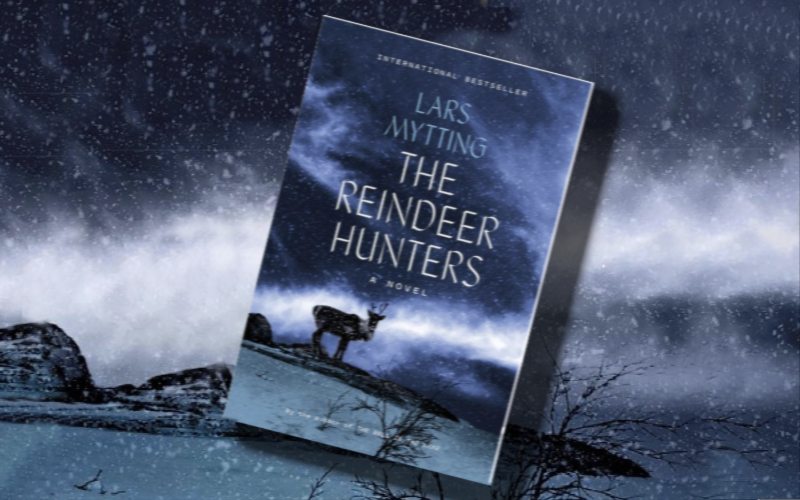
The Reindeer Hunters, by Lars Mytting

It’s been a while since I read The Bell in the Lake (which I loved). The Reindeer Hunters is the second in Mytting’s Sister Bells trilogy and I do recommend you read/refresh the opening novel first, mainly because it’s so damn good but also because this next would be hard to navigate without the earlier history of the Stave Church and how it came to be in Dresden and what happened to Astrid and the bells and who were the Hekne Sisters…and so on. It is a complicated plot spanning a few generations and secrets.

Continue reading “The Reindeer Hunters-book review”

The Promise – book review

The Promise, by Damon Galgut

Like I often say with the Booker – read the shortlist.

I didn’t find any joy in this novel. It is set in South Africa in the 1980s as apartheid falls apart, but we don’t venture out into the country much. The action, such as it is, concerns a white family who live on a farm. The characters are all unlikeable. The only one with any shred of decency is the youngest daughter, Amor, who cannot stand up for her beliefs and opts out, not only of the family but also, by being so damn wet, pretty much out of her own life as well. To call her uncharismatic is being kind. She is moderately interesting because she was struck by lightening as a child and lost a toe, but that’s about it. She’s absent for most of the book.

Continue reading “The Promise – book review”

Catching the Current–book review

Catching the Current, by Jenny Pattrick

If you have read and enjoyed Jenny Pattrick’s latest, Harbouring, do go for a romp around her backlist. They’re consistently good. I’ve just reread Catching the Current and enjoyed it the second time around even more than in 2005 when it was first published.

This is a prequel to Denniston Rose, but reads as a stand-alone story based on the early life of Faroe Islander, Conrad Rasmussen—known to Denniston fans as Con the Brake. He’s tall, fair and handsome, playful, talkative, a renowned singer and teller of tales, and pretty full of himself. He excels at everything he turns his hand to, a man not to be ignored. He’s quick to temper and loyal to his friends—a lover, a hero.

Continue reading “Catching the Current–book review”

Worse things happen at sea–book review

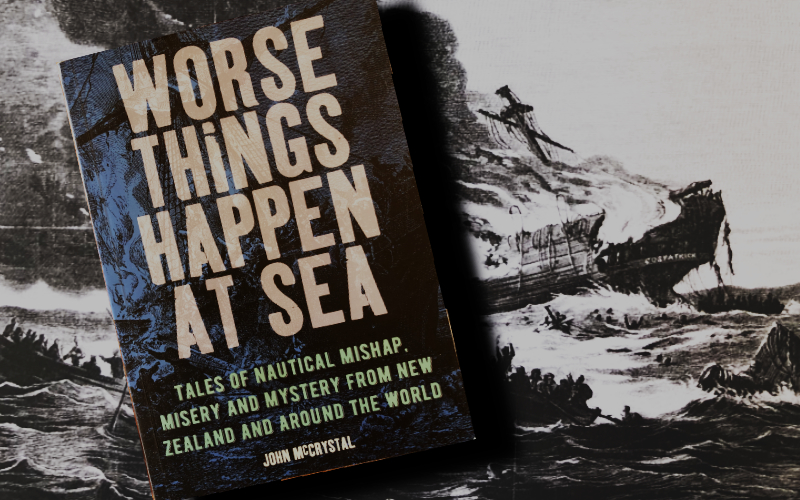
Worse things happen at sea, by John McCrystal

Worse things happen at sea is probably the most appropriate book title ever. Whatever catastrophe happens on land you can crank up the Richter scale of disaster if it happens out on the briny. Flood, fire, psychopath, injury, grandstanding, storm, starvation, getting lost – put a ship in the background of any of these and they become so, so much worse.

Continue reading “Worse things happen at sea–book review”

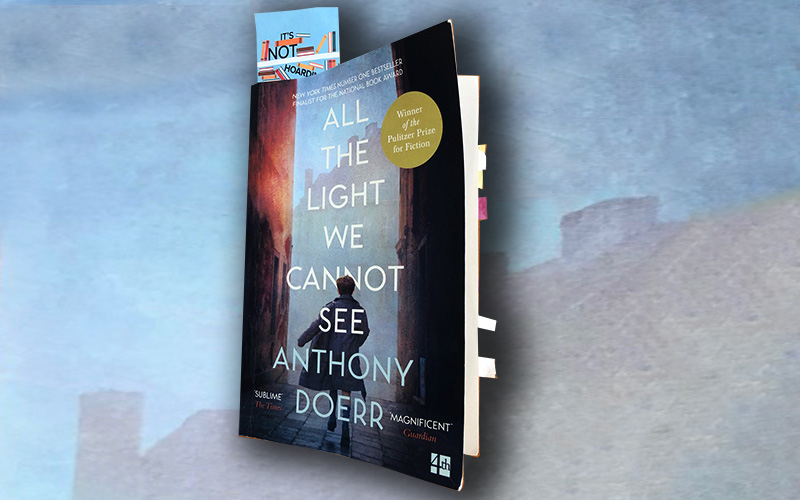
All the light we cannot see—book review

All the light we cannot see, by Anthony Doerr

This is another war story (they are so unavoidable). It’s the story about the frog in the pot of water: the one where the frog will jump out of boiling water, but won’t take action if the heat is applied slowly, and so cooks. Here it’s used as a metaphor for complacency as the Germans move in and occupy France, and also, I think, of the German people themselves becoming immune to the violence building in their own country. Interesting in that we are invited to have sympathy for both the main characters as victims of war, even though one is a blind French girl and the other a partly radicalised Nazi youth. If you’ve wondered how nice kids were turned into Nazis, here it suggests they were put in the pot when the water was cool and inviting, and were cooked from the inside out.

Continue reading “All the light we cannot see—book review”

Harbouring–book review

Harbouring, by Jenny Pattrick

I’ll admit to being nervous in approaching this book. I love Jenny Pattrick’s rousing stories of colonial New Zealand communities and I’ve walked through the mud with her characters. Like many others I was introduced to her books through Denniston Rose and Heart of Coal and Denniston became part of my mental map. The same thing happened with Landings, and Catching the Current. Pattrick offers lively characters as guides to explore our colonial history.

Her new book, Harbouring, is set amid the NZ Company’s arrival in Wellington and the establishment of the colony there. Hence the nerves. Two years ago I published Jerningham. It’s the same story, wrought from the same material. What would an expert storyteller like Pattrick make of it?

Continue reading “Harbouring–book review”

The Wreck of the General Grant

Diving for gold and buttons

Mrs Jewell & the Wreck of the General Grant is the story of the survivors of this most famous of shipwrecks. In 1866 the General Grant, carrying miners, their families and gold home from Melbourne struck towering cliffs that reared out of the sea at night. She was sucked into a cave and sank. Fourteen men and one woman (Mrs Jewell) made it ashore on the remote, sub-Antarctic Auckland Islands where they lived as castaways for eighteen months. This is the base for my new novel, due in June with Cuba Press, best-guessing to fill gaps in the survivors’ testimonies and reading between the lines in the context of the times and situation. Everything we know about the story has been told to us by the survivors and despite numerous searches along that wild coast for over 150 years, the ship and her gold has never been found.

But—and here we go again with history reasserting itself— that might be about to change. For that I blame swashbuckling shipwreck fanatic, Bill Day.

Continue reading “The Wreck of the General Grant”

Hokitika Town — book review

Hokitika Town by Charlotte Randall

A while ago someone told me their cousin/sister-in-law (can’t remember) Charlotte Randall wrote New Zealand books and I so wish I could remember who it was because I want to thank them profusely. I’m reading my way through all Randall’s novels and thoroughly enjoying every page.

The Curative is set in Bedlam and is funny. I’ll reread it before reviewing, but thoroughly recommend it. The Bright Side of my Condition , again, is bleak and hilarious. Both of these books are told by people who, after some life-changing event, have little of anything left other than the insides of their heads but what goes on there is imaginative as hell. Randall seems to enjoy exploring the inner madness of men.

Continue reading “Hokitika Town — book review”

Master & Commander — book review

Master & Commander, by Patrick O’Brian

I felt a huge sense of relief to get through this ordeal of a book without being scuppered or broadsided and blasted by a thirty-six pounder or court marshalled and shot by my own side. I kept a furtive lookout for the massing enemy French fleet showing the tips of their masts over the horizon. The thought of comforting myself with several bottles of wine with dinner occurred to me, and a tot of rum a day wouldn’t have gone amiss.

Much of the detail of the action went right over my head and I know that’s the truth for most readers, though there are men who swear they understand every manoeuvre (who you really should not engage in conversation if you have somewhere else to be in the next, say, five hours).

Continue reading “Master & Commander — book review”