Golden Hill – Book Review

Golden Hill, by Francis Spufford

Oh, what a lot of fun this book is! Step off the ship in the  New York harbour of 1746 with Richard Smith, an entertaining young wag with a cheeky way about him, as he looks and smells and gets into all sorts of trouble hanging around town for 60 days waiting for his £1,000 cheque to clear.

Finance was complicated in those days – lots of currencies in paper and coin and gold – and Smith had a very large cheque. Why? He’s not telling. Not us, not the merchants to whom he presents his cheque and not any of the worthies about town who think perhaps, he is a French spy.  This is the puzzle that keeps us turning the pages and the American gossips on their toes.

I would have been happy with a few more clues to the mystery, though some of the blokes at book club claimed to have been suspicious in the right direction, so maybe I was just being thick. It was one of those annoying plots where the almighty twist is revealed in the last chapter and you have to read the whole thing over again in the know. Sometimes I want to know the score before the game, especially if it’s a brilliant win.  I was irritated by  Life of Pi  for this reason – did anyone [spoiler alert] guess the tiger was the cook all along? Or who the annoying guest narrator was in Chidley’s The Wish Child?

Actually, an odd narrator jumps into Golden Hill too, just a couple of times, and appears at the end as the unlikely author. I bet Spufford had to argue to get that one past his editor.

But read this book for the creaking of rigging from the ships riding at anchor and the stink of the town: “A little fish, a little excrement; guts here, shit there; but no deep patination of filth, no cloacal rainbow for the nose in shades of brown, no staining of the air in sewer dyes.”  Yum.

Look up cloacal if you don’t know what it means. I love a book that has better vocab than my spell check.

And here’s a description of a staircase that puts you inside an old, dark, Dutch house (think of the rich tones in the film Girl with a Pearl Earring): “Stray gleams of polish showed the placing of the banisters and newel posts; picture frames set faint rumours of gold around rectangles of darkness or curious glitters too shadowed to make out, as if Lovell had somehow collected, and drowned, a stairwell’s-worth of distant constellations.”

Lots of his descriptions are like this; layered, multi-sensual, slightly chaotic.

There is a character cast that reflects the theme of the book, which boils down to the fact that things are not what they seem. “I know why a magician claps his hands,” says the inconstant Tabitha, who begins as the pretty daughter of the banker but turns into so much more: trickster, betrayer, love interest, caustic fence, forgiver, and eventually – well. Read the book. She is one of the most interesting characters I have met for a long time, but you have to work it out. They didn’t know in the 18th Century.   Septimus is not just the foppy Governor’s man, Terpie takes her clothes off, Smith shocks the town and the slave Archilles – but here again the author claps his hands and your attention is diverted elsewhere.

I am respecting the tradition of book reviews here by keeping mum, but there is a VERY BIG ELEPHANT on this page and I want to tell you to come back when you have read the ending so we can discuss what a £1,000 buys in the market in New York and what it all means. Did you think it was just a romping travel story?

Clap clap. Think again.


Sticking with Pigs – Book review

Sticking with pigs, by Mary-anne Scott

A fourteen year old boy, wrapped lovingly in cotton wool, goes out into the New Zealand bush with his uncle on a hunting expedition.

His parents have good cause to worry. The boy’s named Wolf, so you know they’re not precious by nature (named for Wolfgang Mozart, but sounds like his parents love a rough diamond to me). But Wolf has a chronically sick brother whose illness, as it would, dominates every safety decision and going hunting is not a walk in the park.

Lots of kids say they’d like to go hunting. I’ve never hunted, but I have friends who say they’d like to come tramping with me – a shadow version of a hunt but involving going bush with plenty of frightening-lite experiences. Mostly the friends are all talk and no trousers; when you start describing the hill tracks and the bare huts and the long-drops the enthusiasm wanes.

To Wolf’s credit, he trains up and off he goes with his uncle Jem and the dogs and the knife (no rifle, because to appease Wolf’s gun-shy parents, as the title says, they’re sticking with pigs), up the long haul to the ridge line, deep into the NZ bush. Scott doesn’t give a location, could be anywhere, but feels like the Ruahines to me.

If a kid can learn instinct, this is where he learns it.

There are wasps and pig shit, steeper and steeper hills, gullies, water and bush. I won’t give the story away but yes, there’s a pig. Then the trouble starts and Wolf gets his coming-of-age challenge slammed down on top of him, as raw and as kiwi as you like.

There’s a girl and a man’s mate at the edge of the story. I recognise both these characters. She’s an outdoor chick, handy with a GPS and long treks up the hills, practical, good in a crisis. I can see why Wolf fancies her. Uncle Jem’s mate has a pre-packed rescue kit and will walk through the night, no question, not much conversation. Everyone needs a mate like him.

Sticking with Pigs is probably aimed at reluctant young teen readers. But it’s also great entertainment for avid middle aged story-gobblers.


Pocket sexism

How to wear a mobile phone

So much for unisex clothing. Discrimination is rampant, and it is apparent in the pocket.

And I’m not talking about the price of women’s clothing compared to men’s. I’m really talking about pockets.

I’ve gone out in the evening and discovered my husband has seven pockets and I have none. Summer dresses with a pocket? Nope. Work skirts? Nope. Fashionable leggings? No pocket.  Those jackets with the little lapel thing that looks like a pocket but is stitched over so you can’t put your hand in, who’s that for?  I have the odd shirt with a silly little flip of a pocket right over the breast bulge, I’m not sure what is designed to go there, but not wallet or keys.

Jeans? Don’t get me started. A phone in your pocket is asking for trouble.  Pick me! it says. Let me fall out when you sit down. Please, let me slide from that precarious little flap of fabric and dive with a splash into the toilet bowl.

Women’s clothing designers, if you’re reading this, do us a favour!  Women no longer want to carry a wee handbag where ever we go. Like the blokes, we like to be hands free. Design us clothes that look good, feel comfortable and have pockets.  And make them big enough for a phone, keys and cards.

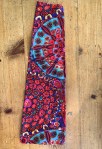
In the meantime, ladies, here’s a work around for the jeans:

Voila! You have a bit of swank in your back pocket and your phone’s not going anywhere.

The Wakefields on Waitangi Day

Colonial characters in New Zealand

I’ve became obsessed with the Wakefields while writing a novel about a fictional family of early settlers. I spent months inventing complex characters and dramas for my story.  But marching into my research and sprawling themselves along every  plot-line came the Wakefields and I can’t keep them out: generations of reckless, debauched, manipulative, egotistical, philandering creative geniuses with the complexities of an entire ecosystem. I’ve had to dump my imaginary characters and write about the Wakefields.  They’re too good to ignore.

You can’t make this shit up.

A quick dip into Edward Gibbon Wakefield’s past, (he who invented the system of colonisation that formed the original settlements of Wellington, Wanganui, New Plymouth, Nelson and Christchurch) will tell anyone that much of his formula for colonialsation originated from Newgate Prison, where he was incarcerated for the family pastime of abducting and wedding a young girl in the hope her dad would give him a leg up in politics. He didn’t, but it was touch and go.

Edward Gibbon’ son Jerningham sailed around the world in a 382 ton barque to New Zealand in 1839, back and forward across Cook Straight and up and down the West Coast, wrangling with Te Rauparaha and drinking with Te Rangihaeata, negotiating land deals with local chiefs, staying a step ahead of Hobson and the Crown,  adventuring up rivers in waka to meet war parties, whaling and trading, all the while writing brilliant and evocative journals he turned into bestselling propaganda for the colony. Pretty swashbuckling stuff for a nineteen-year-old lad. 

William Wakefield did a lot of the early colonial leg work diligently and intelligently. He put “Wellington” on the map (owed him a political favour) and kept the missionaries from inheriting the earth, which is a plus point in my books. He was probably quite a decent man when not in thrall to brother Edward Gibbon or reining in wild young Jerningham. He seriously lost his judgement when he accepted wayward bankrupt brother Daniel into New Zealand under a false name (leaving his gambling debts and the wife he had infected with an unpleasant disease) and helped establish him as Crown Solicitor.


What have the Wakefields ever done for us?  It’s a complex question. They are mostly forgotten as we focus on the dominant role of the Treaty of Waitangi in 1840, but at the time the Wakefields were potentially far more influential than Hobson. Which is why I was astonished and delighted to open the Dominion Post today to see Wakefield’s face highlighting an opinion piece on the Treaty, with his very noble quote:

“The establishment of the same rights and same obligations can only be fair between parties who have the same power in the same field.”

It’s well said and certainly resonates on Waitangi Day, though imbalance of power obviously wasn’t top of Wakefield’s mind when he abducted 15-year-old heiress Ellen Turner.

The Wakefields were an extraordinary family, men with huge personal ambition and a genuine desire to improve the system for those without power, although their methods were often dubious and ambiguous. They all seemed to verge on insanity – and I haven’t even mentioned Felix or the father.    I both applaud them and strongly disapprove of them and never quite know what to think of them on any given day.

Love them or hate them, they make a hell of a story.


Chappy – book review

Chappy, by Patricia Grace

Chappy, by Patricia Grace, is a domestic story of a community whose relationships are entwined and confusing in the way real life is confusing.

“I told you that Aki was your uncle by double adoption. That first adoption was when Dorothea became mother to Moana-Rose and me, and we became his sisters.”  The timeline jumps around and the narrators switch about, it’s a rambling story that could be told by mates sitting around on old sofas with a few beers, interrupting each other and backtracking. Some incidents feel honest and factual, others edited with the retelling. This is the way family histories are, and there is truth in both.

The catalyst for the story being told is the (dare I say, Gen-Y) crisis of young Daniel in Switzerland, of New Zealand descent, wanting to find himself. He is the investigative reporter, if you like. I think the discovery of his family helps to heal him. I like to think so, anyway, although the story is not about him. “There’s a much more interesting story than one of a spoilt brat with his own bank account who had to try and kill himself…”

For me, the breadline living of the whanau that Daniel finds back home is a pretty typical mid-century NZ story, Māori or Pakeha. Rural life was precarious: a lot of self sufficiency, some number 8 wire, generosity and sharing, the value of a storyteller to an introverted community, both the welcoming and the fear of strangers. The necessity of going away and how grounded you feel when you make it back.

Chappy Star is a stranger, a Japanese stowaway on a ship. Māori seaman Aki stumbles across him and takes him home to the marae, where he finds kindred spirits. The differences between ghost-like Chappy and the warm and candid Oriwa, with whom he falls in love, are made to appear superficial – language, culture, nationality are nothing beside their attachment. Their love survives years of racially induced separation and misunderstandings. Oriwa understands this as she disentangles her family stories for Daniel. Maybe we all need to tell our lives as stories to understand them.

The novel is about roots and coming home – from Hawaii, where Aki washes up, from Switzerland where Daniel is born, and the confusion that ensues when home means two or more places. Chappy weaves between his cultural home in Japan, his adopted home in Hawaii and his spiritual home with Oriwa in New Zealand.

The story of Moonface made me cry. There is a lost child in many stories, but none so poignantly as here.  Moonface is Aki’s adored little brother.  At the end of one long afternoon, Moonface insists on following Aki to the spring, but he lies down in the ferns and falls asleep. Aki fills the billy, and when he turns around the boy is gone. In his mind, forever,  is “- the cold spring water, the silver tin, water silvered, the creaking birds, the pouring, the boy invisible, the unspeaking leaves, the trail of torches, the voices calling, the crying, the wailing of all the grandmothers in the world, the waiting, the ferny nest.”  It seems natural that Aki would absorb his lost brother into his soul to become his moral compass, the well of his tenderness. “Go home,” Moonface says, when Aki has been away at sea too long and needs to get his feet back on family ground.

Patricia Grace writes with lovely, sparse descriptions. Aki: “I was at the woodpile sawing stove-lengths from manuka trunks I’d brought down from the slopes. About mid-morning. There was mist soft-footing about the hills, grey like old photos.” It’s all you need, a whole scene implied from a good choice of words.

There’s a moral to Chappy, which is spelled out very clearly (in case you missed it) as Daniel sums up the story at the close.  He was born of the generation that left the home fires, and now is a wealthy outsider looking back in. “…I am who I am. I understand that now. I’m not about to chuck it all away and go barefoot, and I don’t wannabe a wannabe. So, no matter where I go or what else I undertake, I’ll continue to increase my understanding of this part of myself that I embrace with all my heart. I’ll keep in touch, work back and forth from wherever I am in the world and contribute from the depth and core of me.”

There you go, kids.

Little Blackbirds in the nest

I reached my camera up high above a bird’s nest and this is what I found:

The little one at the bottom fell out of the nest and didn’t make it, but Alpha and Beta are hopping around in the tree outside my window and squawking.  Ma and pa still bring them grub.

Potiki – book review

Potiki, by Patricia Grace

Not sure how I grew up in a kiwi bookshop without having read this. It would be on my list of books to recommend to new New Zealanders, as well as to oldies like me who missed it. It is a description of a rural Maori community and a way of life that most of us are probably aware is part of our history, but we haven’t been inside.  In Potiki, Patricia Grace invites us in.

This is a simple story of good verses evil, weak versus strong, country v commerce, tangata whenua v greedy imperialists.  Basically, it’s a book about the imbalance of power, told from the viewpoint of the extended rural family whose lives are threatened by the Dollarman who will bulldoze away their traditional lifestyle and smother their ancestral lands with rather obvious bad things: night clubs, golf, a zoo of trained whales and seals.  The reader needs to get past this very clichéd plot and enjoy the Maori characters, several of whom tell the story in their very distinct voices.

Roimata is the strong sensible woman at the centre of the community, and tells a lot of the story. She is a balance between her children who go away to university and come home with skills and ideas, and her husband Hemi, who believes in the old ways, working the land like his ancestors did, feeding the family from the garden and the sea, trusting in the land to provide all they need.  If school doesn’t suit the other kids, teach them traditional ways at home – Maori science and folklore. To Grace’s credit, she doesn’t paint this with a rose wash and the poverty is raw.  You do get the sense that these are people living on the edge and that subsistence living is, in the long term, unsustainable.

Roimata and Hemi’s adopted son Toko is physically disabled but has a sixth sense, and this mystical element blurs the edges of reality enough that disbelief taints the rest of the story.  Once fantasy is out of the bag like that anything can happen, and the story entwines with myth and you don’t know what to believe.  There may be deeper parallels here, between Toki and Maui or Christ, but they take a bit of delving and this complicates an otherwise simple story.

Mary, Toko’s birth mother, is a colourful personality treated sympathetically both by Grace and her characters. She has a role in the story and the community. Her intellectual disabilities shape but don’t define her, and she thrives in the loving community.

And it is the loving community that really is the crux of the book – no one is marginalised, everyone is welcomed and you find yourself rooting for this most precarious way of life and deeply saddened to know that it is disappearing, or gone.

There are many Maori words and no glossary which has raised an issue with many readers – to me, this feels inclusive rather than alienating. Use your own sixth sense.  Or google.

Patricia Grace chooses her words well and is a beautifully understated storyteller. Potitki challenged some of my long held assumptions. I wish I had read it earlier. I went straight on to read Chappy.

Farm Holiday

New Zealand farm stay in Mahia

I haven’t been on a farm holiday since I was a kid and Kathleen and I walked a long way across the hills and the farmer’s son gave us a lift home in the helicopter. These things stay with you.

So last week instead of our pre-Christmas family long weekend blobbed by a lake, this year I thought we’d go for some kiwi action and booked three days on a farm in Mahia and it was everything a farm holiday should be.

There was a good looking and friendly young farmer in stubbies and a rugby shirt – a bit of confusion when my son said he was saving to go the world cup next year – World cup’s not next year? Oh, soccer? The football/rugby divide. It’s real.

His most hospitable wife wandered past, with baby farmers in tow (the blondie dressed like her dad and keeping those dogs in line) to check we had everything we needed in the glampy shearers’ quarters which were spanking clean, very basic, and just perfect for a family of 6 unloading a stack of books, a football, a few board games and a well stocked chilli bin.

We “helped” sort and drench the lambs,  watched sheep shearing and the rounding up of the cows. There were smart dogs doing their thing at the shrill whistle of the shepherd and pet pigs, a pony. We rode trail bikes up hill tracks for breathtaking views.

The same things I did on a farm holiday as a kid and I thought nothing had changed, until our 2017 farmer explained the native bush replanting in the gullys, the erosion protection, the focus on environmental care.  I think slash and burn was still in fashion when I was young.

We had Uncle Ted along from Canada for a bit of a kiwi experience, so on the rainy day while the grass got drunk we walked the Nikau rainforest and soaked in Morere Hot Springs and the following day, with all the leaves sparkling, we walked the circuit at Kinikini, in lush native bush.

I reckon a farm holiday should be on every family’s list.  I’m a Wellington city girl and have spent limited time on farms – childhood visits, a few friends on farms growing up, an occasional horse trek, thistle pulling jobs  – but there have always been hills with dots in the background calling me closer. It comes with being a New Zealander.

Standing in the sheep sheds with the dogs and the farmers felt like finding my roots.


Sheep shearing New Zealand.jpg
Fast, expert sheep shearing on Mahia farm
Native Bush.jpg
Kinikini loop track, Mahia Peninsula scenic reserve

http://www.doc.govt.nz/parks-and-recreation/places-to-go/east-coast/places/mahia-peninsula-scenic-reserve/things-to-do/mahia-peninsula-scenic-reserve-track/


The Boy Behind the Curtain – book review

The Boy Behind the Curtain, by Tim Winton

Tim Winton is a shy bloke. He’s a West Australian surfer who has list of accolades for his literary work and by all accounts has been very industrious, often behind-the-scenes, in saving the wild, natural spaces of Australia. All credit to him for this. I feel I should love him.

I think the reason I don’t might be the shyness.

The Boy Behind the Curtain – what does that promise if not a great reveal? He’s going to let us in and introduce us to the man behind That Eye, The Sky, Cloudstreet, Dirt Music. (All great reads, BTW, told by a thinking Australian). But does The Boy Behind the Curtain fulfill its promise and take us into his head?  Here are a collection of good stories, grouped together as an autobiography, but I’m not feeling personal passion. He’s still a writer telling stories at a narrator’s arm’s length.

The first two chapters, on his habit of pointing a gun at passers by from behind the curtain and an endless ramble on 2001: A Space Oddessy were an odd opening choice, neither seemed to illustrate a thread. I suppose he became an author, so had people in his sights, and there was a good line about space junk “every new marvel is on its way to being landfill” that could lead to his later environmentalism. But do these incidents define his childhood enough to warrant this focus?

It’s a strange place to start.

There are a great couple of chapters on near fatal accidents – a stranger’s, his father’s and his own, which are personal and raw. But then there are pages on his childhood car, a huge chunk on Sunday religion which yes, must have played a big part in his life but could have been much tighter in the telling.

All through this book I’m waiting for something. We hear about his dad – including a rather personal incident I’ll bet his dad would rather be forgotten, we get a mention of a sibling. His mum gets a wee look in. There is a hint of a wife somewhere in the distance. At some stage there’s bound to be a bit about writing books, do you think? He’s “Australian’s greatest novelist” according to the blurb (Peter Carey, anyone? Tom Keneally?)  Family and writing – two pretty big topics. So back to the book…

There is a long essay about a lecturer of whom he is rather scathing during her tenure, seeming to agree with his classmates that “at the time they felt they’d learnt nothing useful from her.” But she goes on to be famous and Winton is almost sycophantic in his retrospective regard for this “genteel old lady” (she was 55. Watch it, Tim). We get stories of her literary successes, her book launches, her promotional and business style, her clever repartee. This is the behind-the-curtain writing story we don’t get regarding Winton himself.  There is barely a mention of his writing before he is on a cool environmental crusade and is suddenly billed as the “celebrity activist”  brought out to bring in the crowds, the bait to get the press along. Hang on – when, how, did he get famous? Is he too modest to tell us that all this time he was writing and getting accepted by publishers, growing a following, receiving awards?

And, I have to know. Where is the love?  On page 189 he goes whale watching with his wife, to whom we have not been, and never are introduced. They met at school, she’s a nurse. Call me a romantic, but who you love and how you love and what happens to you through love and how you deal with love’s confusions is intrinsic to who you are.  We may have been invited behind the brick wall, but the curtain is firmly pulled. This enormous omission frustrated me throughout the book.

But on to the good bits, of which there are many.

His environmental activism in saving a remote West Australian reef is an inspiring essay. The decency and and camaraderie of those involved, even among opponents, is heartening. He calls it a “lesson in personal prejudices,” and we’ve probably all been there.

Winton always writes beautifully of landscape and seascape.  There are lovely passages of littoral regions. I looked this up, it technically means the shore line but he put in my mind an evocative image of that magic place where the wet sand meets the dry, or where the scrubby edge of desert meets the salt pans. “The littoral – that peculiar zone of overlap and influx…”

He shares the aspect of his daily life that includes dolphins, whales and all kinds of sea creatures (but not the wife, children, mother, friends – should I read something into that?).  “The Wait and the Flow” piece is a sufie/writing metaphor, and I guess the “curtain” of the title is also a surfy nod – that mysterious space behind a breaking wave.

And the whole book is scattered with read-them-twice metaphors. He found the story of Space Odyssey “a big shiny wheel that seemed a little short of hand-holds” (I take it back, maybe it was a defining moment), a Hillman sedan that “smelt like an abandoned cinema” – we had one of those. Urban greenies and rural business people are “the facially pierced and the bark-knuckled”. I like the indignity he suffers when kicked out the the Coral Bay pub for being barefoot after 6 p.m. There are standards.

He ends with a metaphor of an Art Gallery visit – child to man, which seems retrospectively contrived for the theme. He first enters the NGV barefoot and cowering but years later strides out “like a man in boots”.

Most of these chapters have been published before.  As a collection of articles they are interesting, sometimes provoking. But they are a strange choice for a  autobiography, billed on the cover as:  “A deeply personal book, one that throws much light on the reclusive Winton as a man and as a writer.”  It really doesn’t. The curtain twitches, but we only glimpse the outline of the boy.