Elizabeth is missing – book review

Elizabeth is missing, by Emma Healey

Maud is a great hero of mine. She’s an old lady who is losing her marbles, but she clings on to the things she does know for dear life. She remembers things long past, but not yesterday. She’ll set an alarm clocks to remind her of something, but can’t remember why she set it.

I’m not Maud yet. I do remember why I set the alarm clock, but the fact that  I feel I need to set it at all makes we wonder if I’m heading that way.

So here’s a lovely book for a book group of women rolling with a bit of a swagger through their fifties. Watch the hesitation in their eyes as they make their funny wee confessions and giggle. Forgot the name of the actor you watched last night? Bought canned peaches again, although they already form a wall in the cupboard? Swear blind you haven’t seen your husband’s keys and can’t explain how they ended up in your handbag? (Hang on, that last one might just be me…)

Elizabeth is Maud’s dear friend. Maud thinks Elizabeth is missing, but is unable make her concerns clear to her long-suffering daughter, or her carer, or Elizabeth’s difficult son, or the police, the doctor.  Maud is confused about a lot of things, and the way this confusion is handled by Healey is gentle and empathetic. We are inside her head and feeling her frustration, but can also sympathise with the way those around her react to her crumbling reality.

The missing friend obsesses Maud so piercingly because, after the war, her older sister, Sukey, also went missing.  She was never found. We go back fifty years into Maud’s clearer memories, but things get more confusing before all the unravelling begins to reform into something unexpected.

It’s hard to categorise Elizabeth is Missing. It’s a lovely character story and a well described study of a woman’s slide into dementia with all the accompanying frustrations and misunderstandings that many readers will recognise.  It’s also a sharp psychological mystery, and a ripping thriller.  There are lots of different aspects to discuss in Healey’s book (not least that it’s her first novel – how does a woman in her twenties develop such acute observation?) For sure it’s a good pick for a women’s book club if, as I say, the odd senior moment hovers around your periphery.  This will make ’em squirm.

A Gentleman in Moscow – book review

A Gentleman in Moacow, by Amor Towles

This is War & Peace-lite, set over a century later with a different kind of war. And while the original covers a huge sweep of country from Napoleon’s battlefields to the St Petersburg salons, country peasants and the exodus from Moscow, Towles’ A Gentleman in Moscow is set entirely within the walls of the Hotel Metropol in Moscow’s Theatre Square.

But there is something distinctly Tolstoyian in our hero, Count Alexander Ilyich Rostov, charming and urbane, surely a descendant of the more famous Rostovs. He is sent into house arrest by the Bolsheviks and goes willingly, considering the alternative, and for 30 years from 1922 is imprisoned in the hotel, first as an honoured guest and later as a respected waiter. We almost see this as a promotion, so conditioned are we by then to look on the positive side of life.

Rostov witnesses the momentous changes in Russia, not Tolstoy-style through the debate of powerful men and the clash on the battlefields, but in the detail of everyday life in the hotel as he quietly observes the changing guests and procedures. We are left to imagine the mentality of the new regime’s leaders who remove the labels from every bottle in the famous wine cellar so comrades receive a egalitarian pot-luck bottle with each meal. Rostov, connoisseur and master of the wine-food match, merely serves the first bottle that comes to hand.

The backing cast of the story are the workers of the Metropol who are trained for service, impeccably courteous front-of-house and a pack of real characters behind the scenes. Rostov is Rostov, his beautiful manners translate from his aristocratic youth to service without missing a beat.

There are three main women who come into Rostov’s life, each in a different context, and he is loyal, generous and playful in his love for each in a very Rostovian way. The women all have beating hearts.

He’s a lovely man. It’s an elegantly written book. Glib? Yes, perhaps. Open the book in the middle and read a few pages to see if the voice is for you. But don’t be fooled, under the light tone, we are still in 1930’s Russia.  Towles gives a menacing feel for the era, without much “proper” history at all. And the end is sublime.

I finished it and immediately recommended it to friends, particularly, but not exclusively, to those who have re-watched the BBC War & Peace series over and over and can’t quite get enough.

And if you still can’t get enough, Amor Towles writes a Q&A on A Gentleman of Moscow on his website, well worth a read to pick up some little details you may have missed.

I love Charles Dickens

As a tonic for insomnia

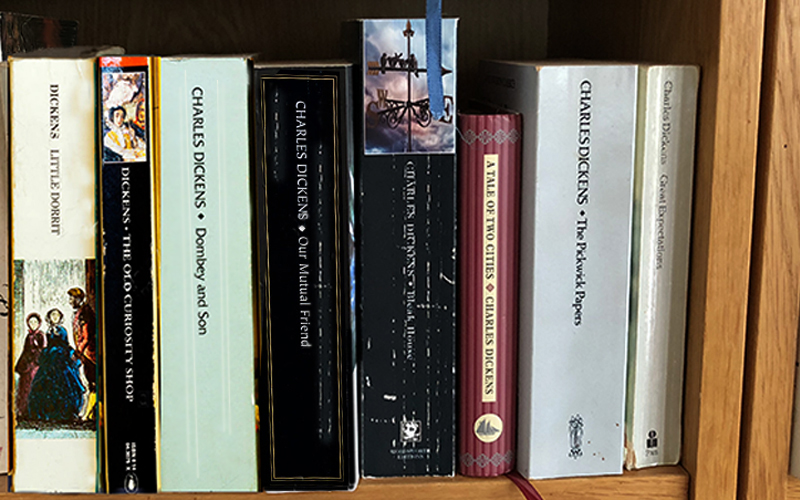
I became a Dicken’s fan early on. I remember reading David Copperfield at primary school and I gobbled up Oliver Twist. Pip and his Great Expectations hovered around my teenage years. I probably had a strange view of the world.

The thing I liked best about Dickens were the characters I met, they were nothing like the people I knew in 1970s Wellington.  I would have died for friends like the Artful Dodger and his gang.  They were my imaginary friends and did much more exciting things than the real ones.  And because I was not long out of the fantasy & magic worlds of Narnia and Middle Earth I half believed these people existed. I knew that “Dickensian London” was a real time and place, and I read in that zone between reality and imagination. Where most history probably belongs, anyway.

One of the main advantages of Dickens now is that he’s out of copyright. Yes, you can download the entire works of Dickens onto your kindle for free.  Generally, I don’t download books for free. I like to ensure the authors get paid, but that’s a rant for another time. Dickens doesn’t need my coin any more. I put him in my bag when I’m travelling and now I look forward to that four hour delayed stopover.

I suppose I’ve read Dickens on and off throughout my life. There is no end to the stories, once you’ve read the entire collection you can happily go back and start again – by that time years will have past and the stories will be fresh. They certainly won’t get any more dated.

But here’s the thing. Charles Dickens saved me.

It was when I was living in England, and my children were little, and I was an insomniac. I don’t mean the kind of insomnia when you’re a bit stressed and don’t sleep well for a few nights and whine, I’m so tired.  I’m talking about the deep insomnia that can last for months, when you have no expectation of sleep at all, even though you are in that place that’s deeper than tiredness. Fathoms deeper.

It’s where you wake up at 2am and know that nothing will send you back to sleep. That’s where I was. Of course I drank cocoa, had hot baths, did yoga, said hommmmm for hours. Counted bloody sheep. Sleep wasn’t coming.

If you ever find yourself there, here’s my tip: read Dickens.

I’m not suggesting for a single second that Dickens is soporific.  Quite the reverse. Reading Dickens will not send you to sleep.  He’s thrilling. And anyway, you’re an insomniac. Nothing is going to put you to sleep. You may as well read. At 2am, there’s not a lot else to do.

After a while you’ll find Dickens’ characters will climb in to bed with you.  They become so real, you can anticipate what they are going to do. And then they surprise you, like when a friend you know well does something out of character. The very fact that you can know a fictional character well enough to be surprised by them is a bit creepy.

When you know characters so well, you don’t even need to turn the light on or pick up the book. You can look, wide-eyed into blackness of your black room and you can play with Dickens’ characters, because you’ll know them so well. You can put yourself in the stories with them – you can take Pip in hand and tell him to forget his Great Expectations and go back to the forge, and have Pip look up at you with those big eyes and say “Yes! Yes I will go back. Joe is a good man, I’ll go home.”

Doesn’t happen in the book.

Or pick up a gun and shoot Little Nell – God knows she deserves it – and put her and generations of future readers out of their misery. I’ve done that a few times. BANG! Goodbye Little Nell.  It’s very satisfying at 3am.

I’ve been thanked many times by insomniacs  for that bit of advice – to read Dickens through the night. I know a teacher who received his entire classical education between 2 and 5am.

So if you find yourself falling into an insomnia that might last for months, put a stack of Dickens on your bedside table and pick some characters to romp around in bed with you. You can mix them up. I’ve got a bit of a soft spot for Inspector Bucket of Bleak House, and I sometimes take him to visit Dombey, to see if he can’t sort out that great bully. He tells Dombey to take note of little Florence: “You’re a sensible man of the world,” he says. “And a sensible man of the world knows the value of an intelligent girl.”

If you want a suggestion on where to start, try here:
“It was the best of times, it was the worst of times, it was the age of wisdom, it was the age of foolishness…” and keep going until you have worked your way through the complete works.  You won’t get any more sleep, but you will spend your nights in excellent company and get out of bed in the morning with a dramatically improved vocabulary.



The Road – book review

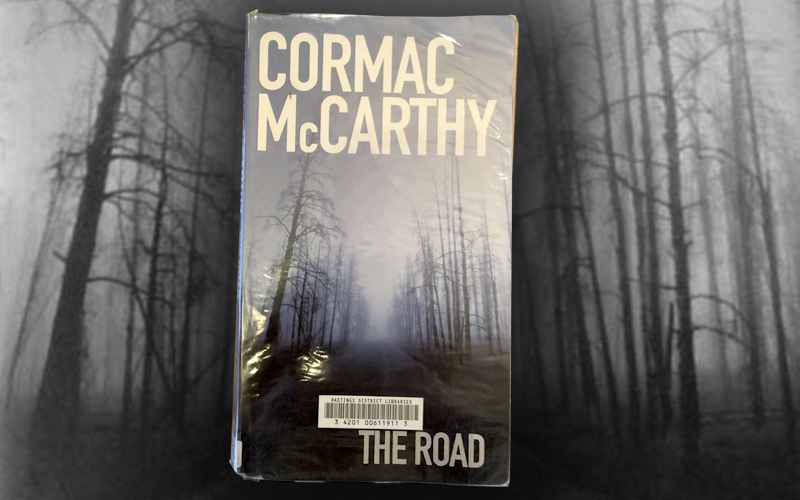
The Road, by Cormac McCarthy

I’m going out on a limb recommending this one.

I’ve promised here only to review books I love, and no one can love The Road. It’s grim. I had bad dreams for a week.

It’s grim in the way only Cormac McCarthy can be with his spare dialogue and relentlessly bleak landscapes. The cover is of a grey road heading into the grey distance under grey skies and surrounded by dead trees, cold and hostile. This is the book.

Here’s the opening:

When he woke in the woods in the dark and the cold of the night he’d reach out to touch the child sleeping beside him. Nights dark beyond darkness and the days more gray each one than what had gone before. Like the onset of some cold glaucoma dimming away the world.

It doesn’t get any cheerier.

But I suggest it as a good read for book clubs because sometimes a bit of raw dystopia is a change from character-full, plot-twisty, complicated, clever books. On the face of it, Cormac McCarthy’s The Road is not complicated. The complications are all in the subtext.  You can analyse the subtext for hours but you won’t find any answers in the book, and this is why I think it opens up some provoking discussions. You just need to ask two questions and the debate will outlast the wine and cheese: What do you think happened? What will happen?

All the stuff has happened in the past and you are confronted with the here and now, a man and a boy walking down a road in the fallout. It feels utterly, utterly hopeless. And yet, they walk.

That’s about it.

Don’t read it if you’re feeling miserable.

Good luck.


Mr Peacock’s Possessions – book review

Mr Peacock’s possessions, by Lydia Syson

Lydia Syson’s Mr Peacock’s Possessions sets the characters and the scene slowly – you need to understand the background before you can follow the story. So don’t be impatient, sit quietly as the curious and impulsive Kalala introduces you to his life in the Pacific, his brother, the pastor Solomona, and their small group of god fearing men who are shipped to an island where a white man and his family are struggling to settle.

Lizzie’s story comes next, she tells of family life on an isolated island, the difficulties faced by her mother and many children as they live castaway style, and the struggles of her delicate older brother, who is a disappointment to their very physical and driven father. Lizzie is her father’s favourite and she loves him unreservedly. Until she has to confront a truth that questions all she believes of him.

The family are swindled by a ship’s captain, they suffer rats and weevils and have some small successes, but there is an undercurrent of suspense growing. There are bones on the island, pigs’ bones, says Mr Peacock, as he hastily buries them.  Kalala and the Islanders arrive, Lizzie’s brother goes missing and they all spread out over the island to search for him.

Mr Peacock is a possessive man. Lydia Syson makes his frustrations seem understandable in the rough and rugged man’s world scattered around the very edges of Victoria’s imperial petticoats. Peacock had struggled for years, as many did, slowly realising through constant failures that the dream of owning colonial land was not a promise for everyone. He owned his wife and his children and when the opportunity came to buy and island he owned that, too.  Our main story begins when he brings in his “Kanaka boys,” to work his land and gradually young Lizzie and the rest of the family begin to question her father’s possessive attitudes.

Kalala and the Islanders’ story merges with Lizzie’s and a story that has gone before them on the island, and the mystery of the missing brother hangs over them all.

The reading just gets better and better and the story becomes utterly compelling.  My advice is to set aside a good chunk of time when you get near the end, there are some things that need to be finished.

Mr Peacock’s Possessions is a terrific book for a book club read, there are lots of questions around possessiveness and ownership, success and failure, compassion. You can discuss colonial attitudes to women, race, land, the power of religion. I don’t think I’m giving anything away by saying Monday Island, where the Peacock’s live, is in fact Raoul Island in the Kermadecs, and now a marine reserve and a place of extraordinary biodiversity. It featured on the migration route for early Pacific voyagers and for those of us who love islands it has a fascinating history all of its own.

Head’s up for my book club – this one is my next choice.


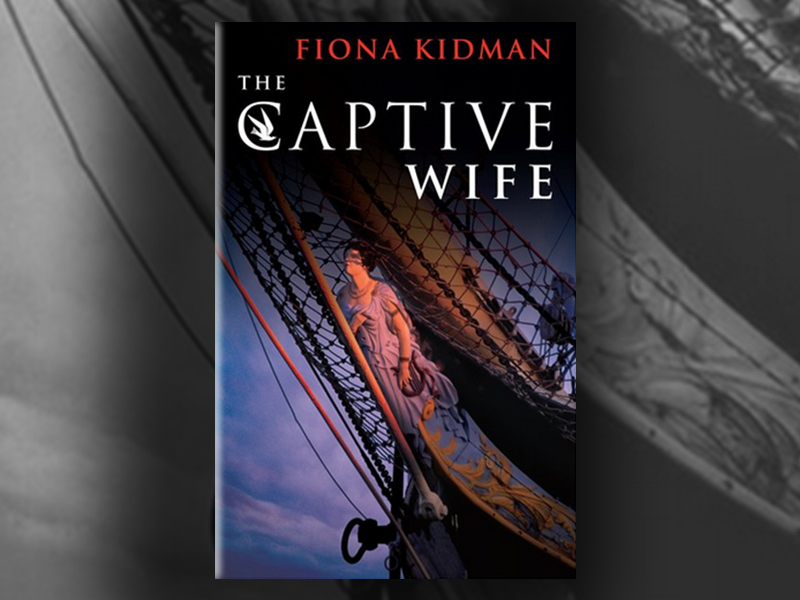
The Captive Wife – book review

The captive wife, by Fiona Kidman

This is a whale of a tale set in the days when a whaler could take a child bride to a remote New Zealand whaling station – when marauding war parties, cannibalism and shipwreck were common and life was fragile – and he could wonder why it all went so wrong.

Fiona Kidman’s The captive wife is a real New Zealand legend.   Jackie Guard was 40 when he married the spunky 14 year old Betty and took her from the Garrison town of Sydney to the whalers’ den of Te Awaiti in the Malborough Sounds.  Theirs is a real history and journals and letters of the time often mention them, particularly after the events recounted in this book that turn Betty into a bit of a celebrity.

Of course things often do go wrong, in a number of ways, but the main action of the story is based on a shipwreck when the Guards are returning to the station after a trip to Sydney and are smashed up on the Taranaki Coast. This is in 1834, before Governor Hobson and the Wakefields, before any kind of systematic colonisation of New Zealand or any semblance of British law, when the only force driving the foreigners in the country was exploitation.  The castaways are attacked, many killed and Betty and her children are captured by the Ngāti Ruanui Māori.

Jacky Guard is released to bring a ransom, but returns four months later on the Royal Navy’s man-o’-war Alligator from Sydney and a captain hell bent on teaching the Māori a lesson. This is England’s first armed conflict with Māori, and we are still learning from the lesson today. 

I guess you want to know what happened to Betty in those four months she spent in captivity, the book is called the captive wife, after all.  Well, first she witnessed the cannibalism of her murdered crewmen. And then she was struck by a tomahawk, which was deflected by a comb in her hair (so the legend goes, and you can view both the comb and Jacky Guard’s pistol at Te Papa) then her infant son was taken from her to be trained in Māori ways. And then … well, things changed.  She fell under the protection of a chief called Oaoiti who was kind to her and a man in extreme contrast to her rather nasty husband Jacky…

The story starts, like most stories of the time, with a male voice, and Jackie is wondering where he can lay his poker. But soon we hear Betty’s voice and female viewpoint, and later she tells her story to an older, sympathetic friend. I really like the duality of this, she and Jackie have very different eyes on the same world.

The research Fiona Kidman has done for this book is spanking and I never doubt that the fictionalised parts could well have happened in that time and place, though the telling of the story is often deliberately one-sided and told by unreliable, limited or misunderstood narrators.  The complexity of the telling sure make this a great read and I highly recommend it for an intelligent slap of New Zealand’s wild history.

If  The captive wife is a suggestion for a book club read, Elizabeth Welsh of Auckland University gives an excellent academic summary review on the themes, metaphors and perspectives here: The captive wife. But do read the book first.

The Eight Mountains – book review

The Eight Mountains, by Paulo Cognetti

I’m often asked to recommend books for blokes.

While I hesitate to divide literature into shades of pink and blue, I’m going to put my neck out here and say I think there is a difference in the way men and women experience books. I could probably draw an intersection pie chart with a crossover middle bit (there is a big chunk that belongs to women alone and a smaller chunk for hard-core boys – and I don’t mean that in  top-shelf kind of way, I mean car chases and adventures and explosions).

I belong to a bloke’s book club, which is very different to the all women clubs I have belonged to where we talk about the symbolism and the metaphors and the lovely writing. The boys are a bit more nuts and bolts and they want the ideas without particularly worrying about the package.

Paulo Cognetti doesn’t wow with fancy writing here.  This is sparse prose, cleanly cut, cool and clear as the mountains (oops – a simile, cut it out!) It’s the coming of age story of a nice Italian boy called Peitro who gets irritated by his father and doesn’t seem able to find a way back to him, which is very sad but so very real, I thought.

He also loses his childhood friend during adolescence, a local peasant boy from the village where Peitro’s family holiday so his father can climb the mountains.  But he finds Bruno again and they climb over a few obstacles into an adult friendship and the kind of kinship that escaped Pietro with his dad.

Pietro’s father goes uphill and his son chooses the path of less obsession, as most teenagers would, down in the village and then out in the world. But he is his father’s son and later in life his mountain backdrop is the Himalayas.  It is Bruno who manages to meet Peitro’s father on his own terms, you can’t blame the old man for welcoming the company of the substitute son.

What a lot father and son would have had to talk about together if a) they could articulate their feelings and b) they would talk to each other. See why I think this is a bloke’s book? Blokes know this.

Later, Bruno and Peitro together build the Italian mountain equivalent of a man cave but they take turns in their isolation, the lonely setting begetting lonely lives. You know it can’t go any other way.  Don’t go there blokes, go back down to the village, don’t lose your community. Reach out. Arrgggh. Blokes!

No car chases or explosions, but plenty of adventures up mountains and into the soul.


Decline & Fall on Savage Street – book review

Decline & Fall on Savage Street, by Fiona Farrell

A lot happens. It says this in the blurb.

So don’t go thinking you can just whizz through this as you would a normal novel. You need to go in with the right attitude, with a predisposition to enjoy Fiona Farrell (I do!) and a realisation that some novels don’t have obvious characters you get to know and love and follow on a journey.

The character on a journey in Farrell’s Decline & Fall on Savage Street is a house.  It took me a while to understand this, (and apparently she has written a non-fiction book about this house so perhaps I should have come better prepared) so for a while I floundered around with characters disappearing just as I got interested and a whole new set of people coming in. It reads more like a set of short stories, chronologically spanning 100 years, with each story bringing characters who live in the same house with their personalities and tribulations – from our perspective we see a house, but of course for every new arrival it is their home, they move their baggage in and own it.

As a collection of short stories this book is very rewarding and the format works really well, I love the fact that we get to know the house better than the characters themselves because we’ve been inhabiting it, along with all the former tenants, since it was built.

But she’s clever, Fiona Farrell, and this is also a story of another character that lives under the bank of the river, undisturbed (mostly) by the turmoil of change and war and earthquakes. In contrast to the lot that happens to the humans above, nothing happens to the eel for a very, very long time. Or if something happens, it is the drop of a leaf onto the water. We feel her ageing not in the time it takes to read the pages, but in the span of frantic, scrabbling activity that happens ashore. Her story made me feel old. But every story has a climax, and even for the eel, eventually something happens.

Each human chapter starts and ends with a missing line which drove me mad. I guess it is to show we are dipping in and out of a story, but this is a book for intelligent readers and we know that. A kind editor should have said, let’s not do this.

I wont specifically remember any of the characters in this story, they passed by too fast,  but the house and the eel will stay with me forever.

Also by Fiona Farrell, if you love good New Zealand writing, is:
Mr Allbones’ Ferrets – Book Review

Mr Allbones’ Ferrets – Book Review

Mr Allbones’ Ferrets, by Fiona Farrell

If you’re a library browser, pick this one up – although in the Hastings City Library you’ll have to look in the Science Fiction category (and I’m not sure whether to be the smart-arse and tell them or not).

Fiona Farrell’s Mr Allbones’ Ferrets is lovely historical fiction set in my favourite era, mid-19th Century, when those Victorians were exporting their exuberant passions all over the globe and wreaking havoc on the balance of things.

It’s a strangely paced book – all build up to the journey, and then the shock and resolution is hasty. Farrell wrote this over a decade (and many books) ago and I’ll review her latest book next (Decline and Fall on Savage Street) which is a masterpiece of pace – though again, unconventional.

There’s lots of unconventionality to enjoy in Mr Allbone. He is a young poacher and his speciality is ferrets, which he uses to flush out rabbits for the pot. He has a clutch of young ‘uns at home to feed – brothers and sisters. His mother lies beneath the wild garlic outside St Peter’s wall (a typically understated, but telling phrase). Along with the nest at home Allbones himself is ferret-like; a “skinny lad, the runt of the litter who had grown quick and cunning and able to squeeze his way though any gap or cranny, scaling soffit and drainpipe, up trees, under hedges.”

Farrell gives us lots of fascinating detail about ferret life: catching, keeping, illnesses and breeding. Lots about breeding, how to put the cob to the slut, never the other way around or he could kill her, leave them for a couple of ferocious hours and then sometimes it is necessary to drag the cob off because they don’t know when to stop. Etc.

Allbones has the job of collecting ferrets to take to the colony of New Zealand because previous settlers took rabbits. You can sing it to the tune of:  I Know an Old Lady who Swallowed a Fly.

He (of course) falls for the beautiful and enigmatic Eugenia, whose thoughts and feelings remain obscure. She is the granddaughter of Allbones’ employer and is both extremely observant of animals and beguilingly naive of people. Poor kid.

The period detail is expertly executed and full of sound and colour. Farrell is particularly evocative with her smells; the stench of 412 humans, 202 caged ferrets, 66 stoats, 82 weasels and 3200 pigeons (plus stray rats, mice, seabirds and the odd shark dissected on deck) in a tub in the tropical heat seems to be part of my memory now, as if I had been on board the Adam and Eve as she sailed south. It is as unpleasant as the story that is unexpectedly burst open as they race across the roaring 40s to New Zealand.

There’s an earlier name swap which hangs over the book and for which I expect a resolution which doesn’t happen. That’s distracting. And the whimsical, rather emotionless ending is disturbing. But the Victorians were a disturbing lot, with their twisted morality and God given authority to take what they want and rearrange the world to their liking.

And, often as not, they got away with it.

It’s a quick book, a good one as a Book Club read on the lighter side but still with lots of fascinating topics, big and small, to discuss and excellent writing from a very polished New Zealand author.

Here’s another Fiona Farrell, very different, equally good: Decline & Fall on Savage Street – book review

Golden Hill – Book Review

Golden Hill, by Francis Spufford

Oh, what a lot of fun this book is! Step off the ship in the  New York harbour of 1746 with Richard Smith, an entertaining young wag with a cheeky way about him, as he looks and smells and gets into all sorts of trouble hanging around town for 60 days waiting for his £1,000 cheque to clear.

Finance was complicated in those days – lots of currencies in paper and coin and gold – and Smith had a very large cheque. Why? He’s not telling. Not us, not the merchants to whom he presents his cheque and not any of the worthies about town who think perhaps, he is a French spy.  This is the puzzle that keeps us turning the pages and the American gossips on their toes.

I would have been happy with a few more clues to the mystery, though some of the blokes at book club claimed to have been suspicious in the right direction, so maybe I was just being thick. It was one of those annoying plots where the almighty twist is revealed in the last chapter and you have to read the whole thing over again in the know. Sometimes I want to know the score before the game, especially if it’s a brilliant win.  I was irritated by  Life of Pi  for this reason – did anyone [spoiler alert] guess the tiger was the cook all along? Or who the annoying guest narrator was in Chidley’s The Wish Child?

Actually, an odd narrator jumps into Golden Hill too, just a couple of times, and appears at the end as the unlikely author. I bet Spufford had to argue to get that one past his editor.

But read this book for the creaking of rigging from the ships riding at anchor and the stink of the town: “A little fish, a little excrement; guts here, shit there; but no deep patination of filth, no cloacal rainbow for the nose in shades of brown, no staining of the air in sewer dyes.”  Yum.

Look up cloacal if you don’t know what it means. I love a book that has better vocab than my spell check.

And here’s a description of a staircase that puts you inside an old, dark, Dutch house (think of the rich tones in the film Girl with a Pearl Earring): “Stray gleams of polish showed the placing of the banisters and newel posts; picture frames set faint rumours of gold around rectangles of darkness or curious glitters too shadowed to make out, as if Lovell had somehow collected, and drowned, a stairwell’s-worth of distant constellations.”

Lots of his descriptions are like this; layered, multi-sensual, slightly chaotic.

There is a character cast that reflects the theme of the book, which boils down to the fact that things are not what they seem. “I know why a magician claps his hands,” says the inconstant Tabitha, who begins as the pretty daughter of the banker but turns into so much more: trickster, betrayer, love interest, caustic fence, forgiver, and eventually – well. Read the book. She is one of the most interesting characters I have met for a long time, but you have to work it out. They didn’t know in the 18th Century.   Septimus is not just the foppy Governor’s man, Terpie takes her clothes off, Smith shocks the town and the slave Archilles – but here again the author claps his hands and your attention is diverted elsewhere.

I am respecting the tradition of book reviews here by keeping mum, but there is a VERY BIG ELEPHANT on this page and I want to tell you to come back when you have read the ending so we can discuss what a £1,000 buys in the market in New York and what it all means. Did you think it was just a romping travel story?

Clap clap. Think again.