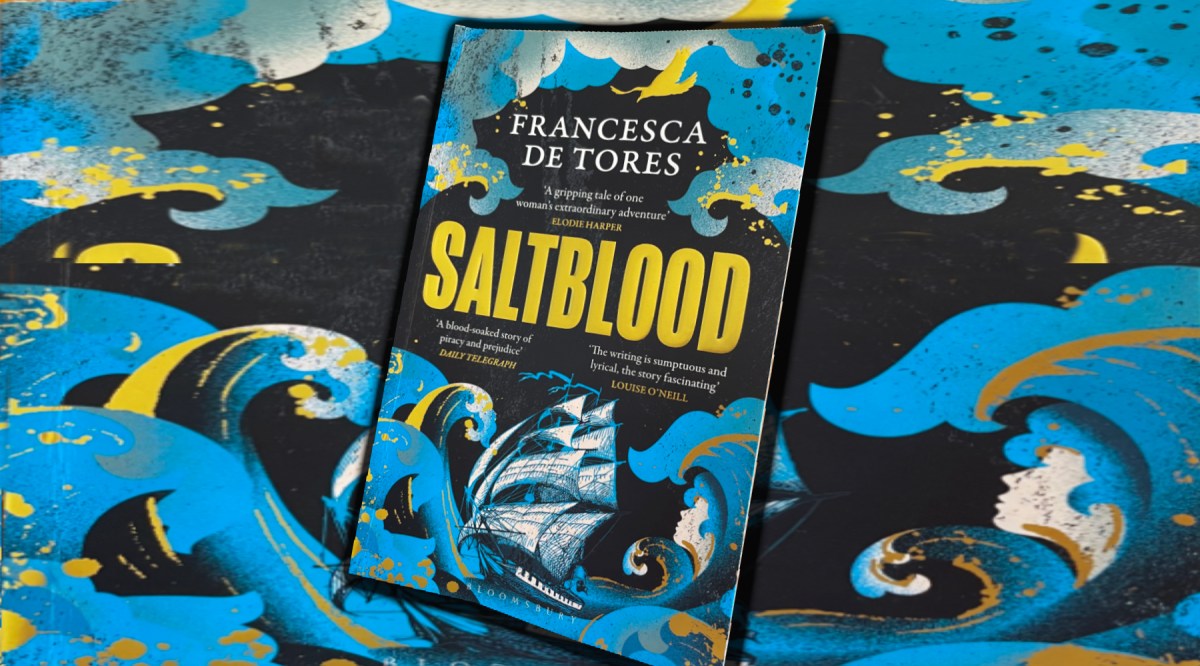
The cover has a tall ship under sail in a stormy sea, SALTBLOOD written in bold gold strapped across the middle and a promise of ‘A blood soaked story of piracy and prejudice’. Its a story of a girl brought up as a boy who runs away to sea and ends up as a pirate. Can a book get any more inviting than that? Well yes, it can, because I happen to know that the story is based on fact. How cool is that?
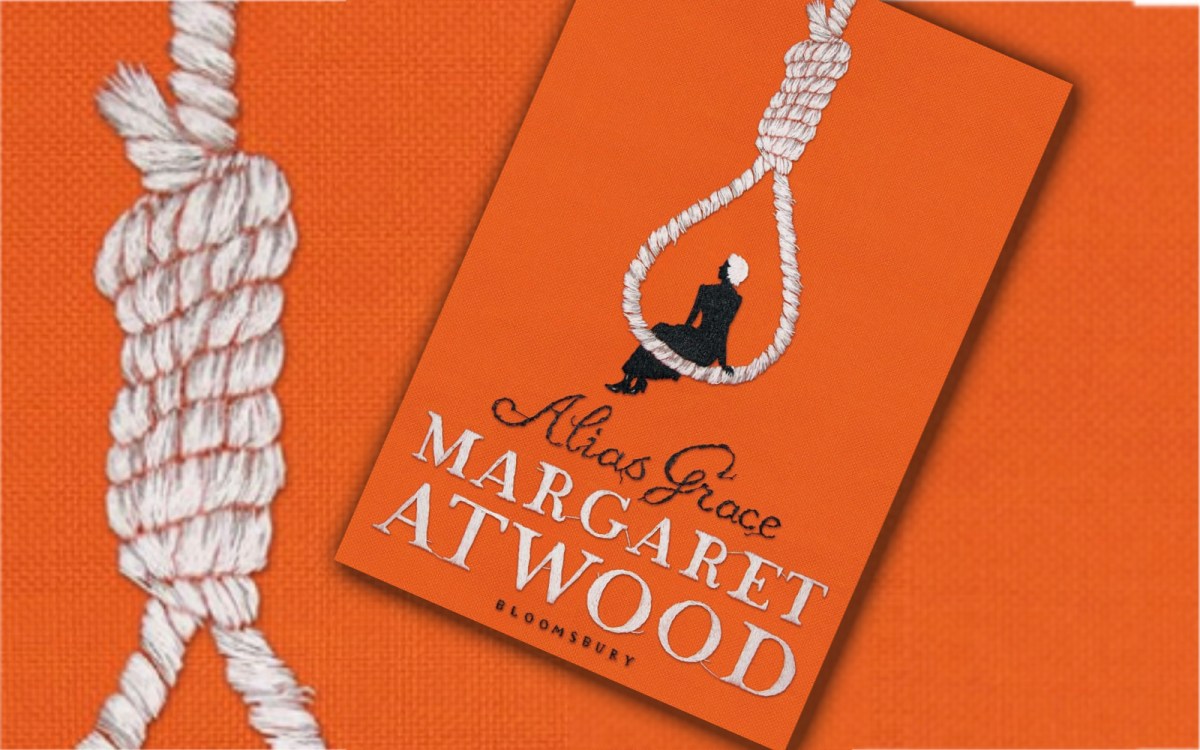
Wow. This is a hell of a book. Designed to throw you off balance and make you think, chapter after dense chapter of revelations that leave you uncomfortably challenging your assumptions and prejudices. Those weird Victorians and their strange ‘scientific’ beliefs – right on the cusp of modern thinking and at the same time waaay back in the Dark Ages. Well? Do you believe that sweet Grace Marks brutally murdered her master and the housekeeper?
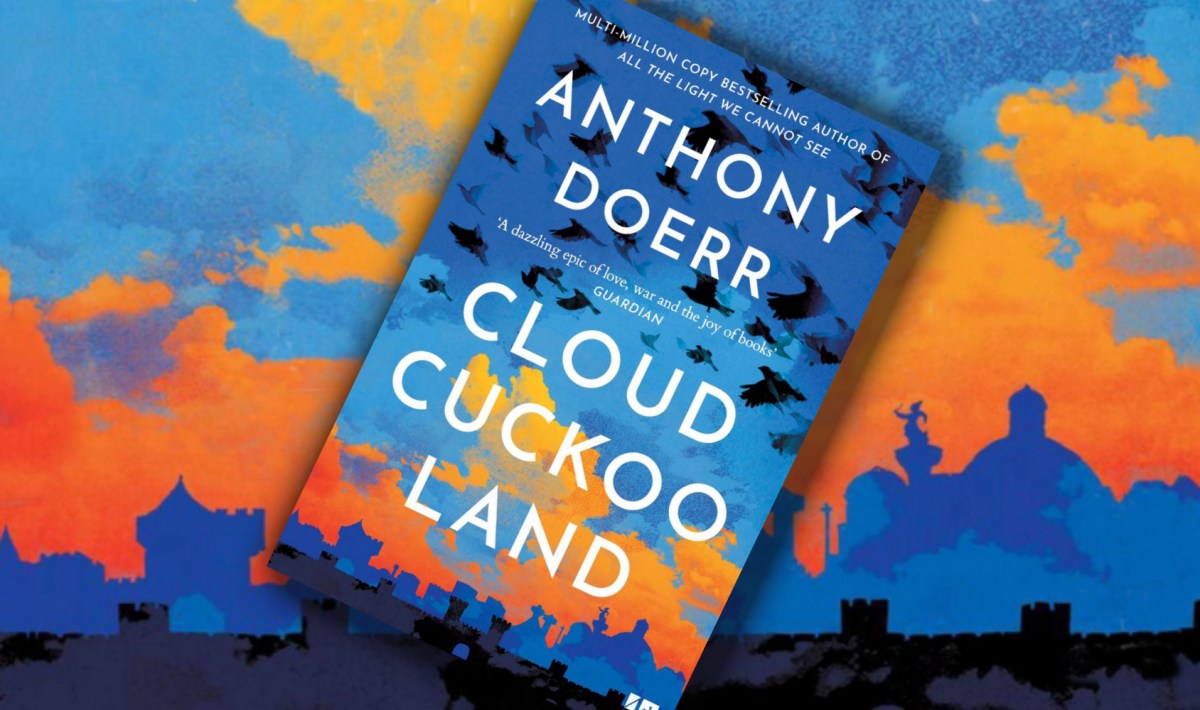
It took me a couple of attempts to get into Cloud Cuckoo Land, and I feel no shame in giving up initially after the first few chapters because there are half a dozen seemingly unrelated stories going forward or backward in different times and vastly different locations. If you want a put-down-and-pick-up story, this is not the right book for now. I came back with more patience, reread from the start and was slowly hooked. It’s absolutely worth the effort, but… I’ll explain.
For a writer of historical fiction, a researcher, a historiographer, this book concerns things that obsess me. The wonderful Ian McEwan, in What We Can Know addresses all these questions that I confront every day : Is it true? Is the source reliable? Who recorded this and what was their motive? What did they miss? What’s been misinterpreted? What aren’t they saying? What happened to the records? Can I assume that…?
Interveiw with Lars Mitting at Featherston Book Town Festival
Interviewing Lars Mytting at the Featherston Book Town Festival in May this year was a real treat. I’m a big fan, have read all his books, love the mix of engineering precision and intimate family saga in his writing, and so I jumped at the offer of being “on the couch” with Norway’s most famous literary woodsman, hoping he would be as interesting as his books. And he so was! The man is a joy to talk with and an absolute honey.
We talked about growing up in Norway and deer shooting in Featherston, old stories hidden beneath the new, things underground, and a bit of dark rural gothic, woodpiles, fame, herding cows, Saxon feet and old Norwegian ways to drink coffee. We talked about his character Kai Sweigaard realising that the future will judge us, and the truth behind the co-joined twins. I asked about his latest book, set in Norway during WWII and he was extraordinarily open about the evolution of shared histories between Germany and Norway and the pain of the misappropriation of legends and symbols that powered the Nazi regime. Just wow.
I was recommended The Adversary by Phil of Wardini Books who knows what I like and what might challenge me. I’ll tell this one in her words: “It’s miserable. Absolutely. It’s so dark and violent and they all lead such horrible lives and it’s historical and there are old ships and pirates and oooh, I read it and thought of you straight away.” Is this how she sees me? I mean, I love Catherine Robertson, too, and not a shipwreck in sight. But I’ve read and been inspired by many books on Phil’s recommendation, so off I went with The Adversary under my arm. Good God.
I really hope this book smashes the awards next year. It’s a damn good story about family dynamics and dealing with life’s ups and downs in a Wellington seaside suburb in the early 1900s. Oh, and for some reason, Tracy Farr decided to stretch belief a bit to invent a scenario where scientist Marie Curie comes to lodge with this very kiwi family. She is hiding out of the public eye as she recovers from scandal and illness. Each of these very different story-lines offers a good premise, the weird thing is to put them together. What was Farr thinking? Whatever madness caused it, we need more of it in our novels.
Dickens only appears in the background of this story, although the stamp of his concerns and values are everywhere. The Household is the story of historic Urania Cottage, an establishment set up by Dickens in the mid 1840s for ‘fallen women’, told through the eyes of two of the women and also their benefactrix, Angela Burdett-Coutts. So much misogyny in that word ‘fallen’ when you’d think falling is something a woman is capable of doing on her own. Expressions like The girls fell pregnant” and “…poor Lydia Rice had started a child” manage, so wonderfully, to excuse men of responsibility entirely.
At Urania Cottage the aim is to help these women rise up and help themselves by teaching them domestic skills before sending them off to Australia, God help them, to find useful jobs and husbands. Help both noble and patronising in that ridiculous Victorian way that pulls your heart.
There is something about Norwegian writing that reminds me of Irish literature. It’s so centred on place, it’s the being there that grounds the story. We are different here, these stories say, our culture is wrapped around our traditional ways based on a history, geography and climate that are distinctly our own. It’s like the country itself has a voice. We are beginning to understand this power in New Zealand writing and could take lessons from these countries, for sure. Lars Mytting’s voice is profoundly Norwegian. There is always the expectation of snow on his boots and trolls under the woodpile.
Sixteen Trees of the Somme has a long reach. The base of the story is a Norwegian farm – mostly in the snow but summer visits occasionally – and it’s a mystery and a history and a resistance story and has love and travel and coming of age, a history of gun making and an obsession with trees and their particular wood and so many other things. Lots of secrets to unravel. It kept me spellbound.
We haven’t changed so much since Victorian times. They chased after mysteries, fell in love inappropriately, refused to be pigeon-holed, got passionate about causes, died bright-eyed of lingering illnesses, and tried to make the world a better place for the less fortunate. The Essex Serpent is very much a character story with a perfect selection of characters: each distinct, with their own needs and foibles, each with their own way of engaging with the others. If that sounds a bit trite it absolutely is not: there is no feeling of a manufactured band here, this is not one of those dreadful ‘found families’ stories. They just meld together all over the place and it’s magic.


 Cristina Sanders' blog