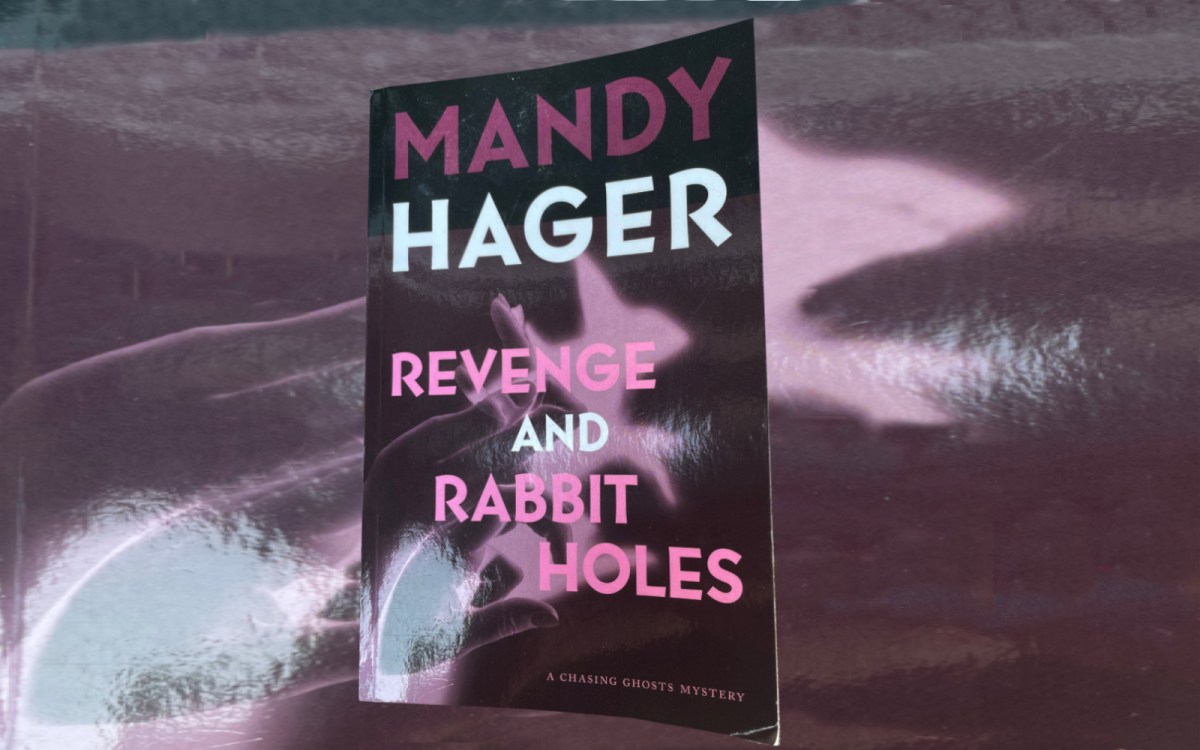
I reviewed Mandy Hager’s Strays & Waifs as part of the great Kapiti fiction theme – there are so many good reads coming from that stretch of coast. Something in the wind, perhaps. Strays was the first gutsy read in the series ‘Chasing Ghost Mysteries’, now followed by book two, Revenge and Rabbit Holes, which again, is a mix of thriller, mystery/crime plus ghost story, with a healthy dollop of Mandy Hager’s signature ‘fight for what’s right’ theme. I like a book that’s high on entertainment but still manages to have decency anchored in its body.
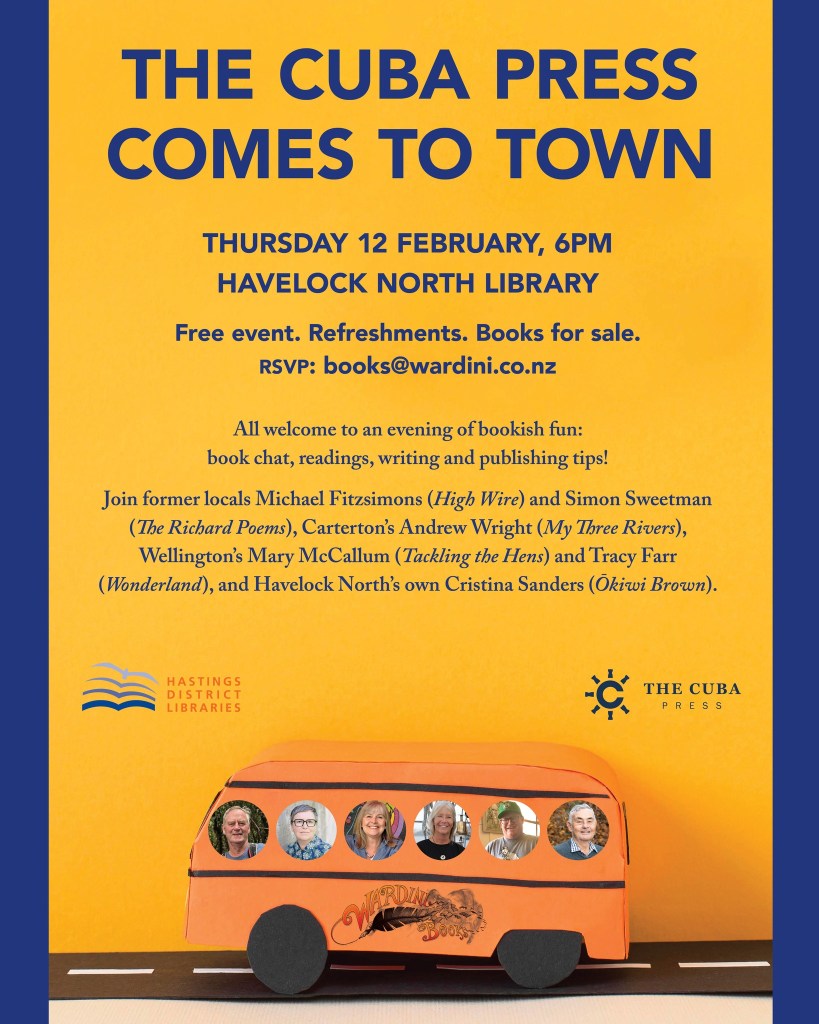
I’ve had a great run with publishers Cuba Press — Mary and Paul and all the other dedicated workers who have supported their efforts to publish local books, beautifully. It was Mary’s very cool idea to get some of their authors metaphorically on a bus tour for a gig in Hawke’s Bay.
THURSDAY 12 FEBRUARY, 6PM HAVELOCK NORTH LIBRARY Free event. Refreshments. Books for sale. RSVP: books@wardini.co.nz
Poets Michael Fitzsimons and Simon Sweetman (well known music reviewer) will be there, and Andrew Wright channelling the extraordinary Shirley Bagnall Metcalfe and her life in the early days between two rivers, Tracy Farr with the brilliant novel Wonderland which has left me star-struck and championing her for the Ockhams this year (obvious choice, I know), me talking history and murder and colonialism, and all tied up in a bow by Mary McCallum, novelist and publisher of Cuba Press… but also on this night wearing her poet’s hat and tackling the hens with her collection of read-out-loud poems.
That’s a lot of writers gathered together for an evening, and all keen to yabber about poetry, novels, writing, publishing, life. Come along and join us for a hell of a night.
The Wonderful Wardini Books will have books for sale.
Featuring:
Michael Fitzsimons, High Wire: author of Michael, I Thought You Were Dead.
Simon Sweetman, The Richard Poems: author of The Death of Music Journalism.
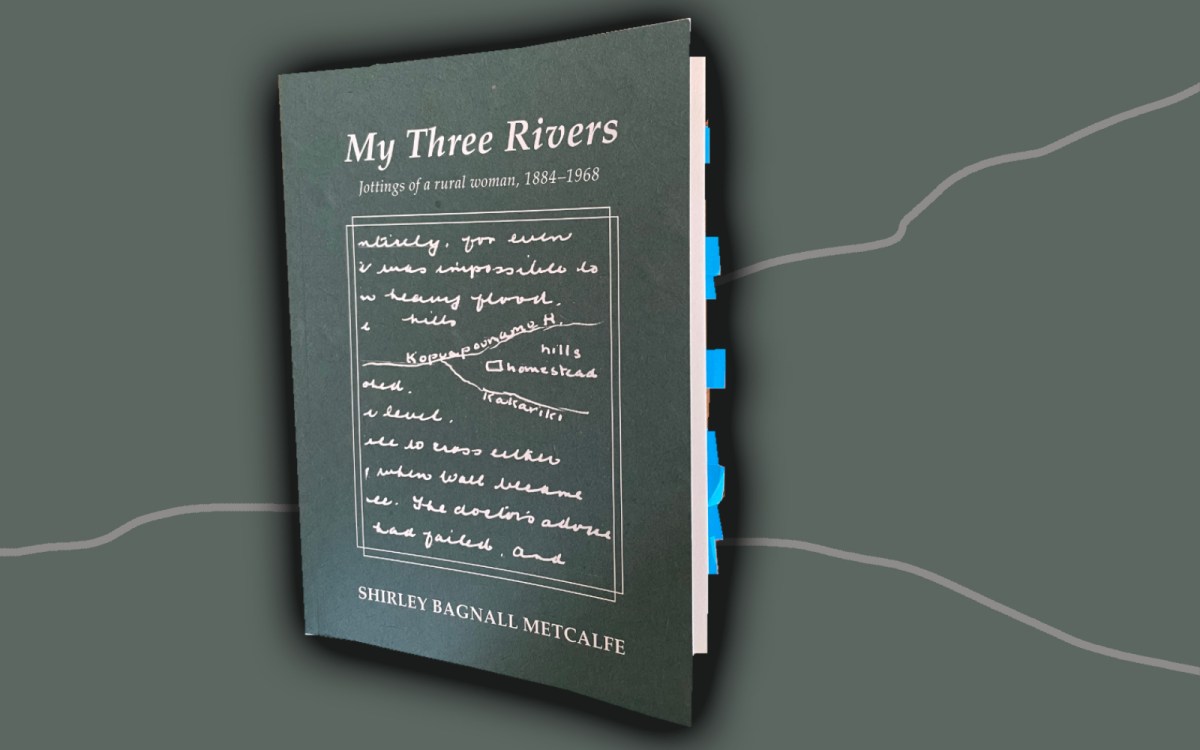
Andrew Wright, My Three Rivers: the unpredictable waters of rural life.
Tracy Farr, Wonderland: Marie Curie and an early Wellington circus family. What? Yes!
Cristina Sanders, Ōkiwi Brown, colonial Wellington and its degenerates.
Mary McCallum, Tackling the Hens. Both the name of her fab book of poems and also an apt description of what she’ll be doing on the night, probably.
Here’s another interesting look at how we view history, seems very much the topic du jour (see What We Can Know), this time by local author Flora Feltham, contained in a set of wandering essays that I enjoyed tremendously. Just the title, Bad Archive, tells you that this is going to be an opinionated work with something awry – slanting truths perhaps, ironic labels on ordinary things. Just the way I like my archives.
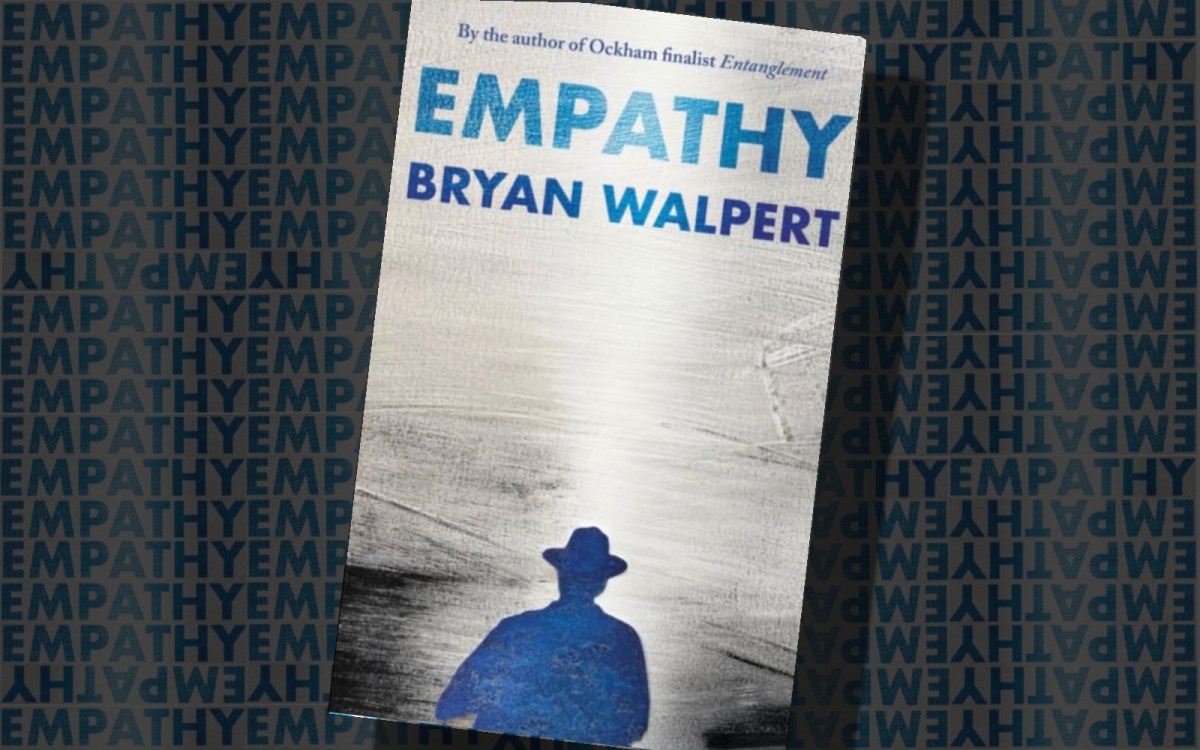
Empathy, I think, is one of those words that is overused and misused. It’s often used to express feelings of compassion or pity, though is not the same thing at all. Empathy is not a matter of expressing how you, too, have strong emotions that are similar to another’s. It’s a vicarious thing, it’s about letting go of your feelings and experiencing those of another person. And empathy applies to more that just pity, as Bryan Walpert explores in his intriguing new book, Empathy.
I didn’t know political biographies could be like this. There’s not a nasty bone in its body. I haven’t read a book so uplifting for a long time but I shouldn’t be surprised. I mean, Jacinda Ardern’s signature is kindness. No one was expecting she’d take the opportunity now she has left office and living overseas to get stuck into the dozens of goons she must have had to deal with on a daily basis.
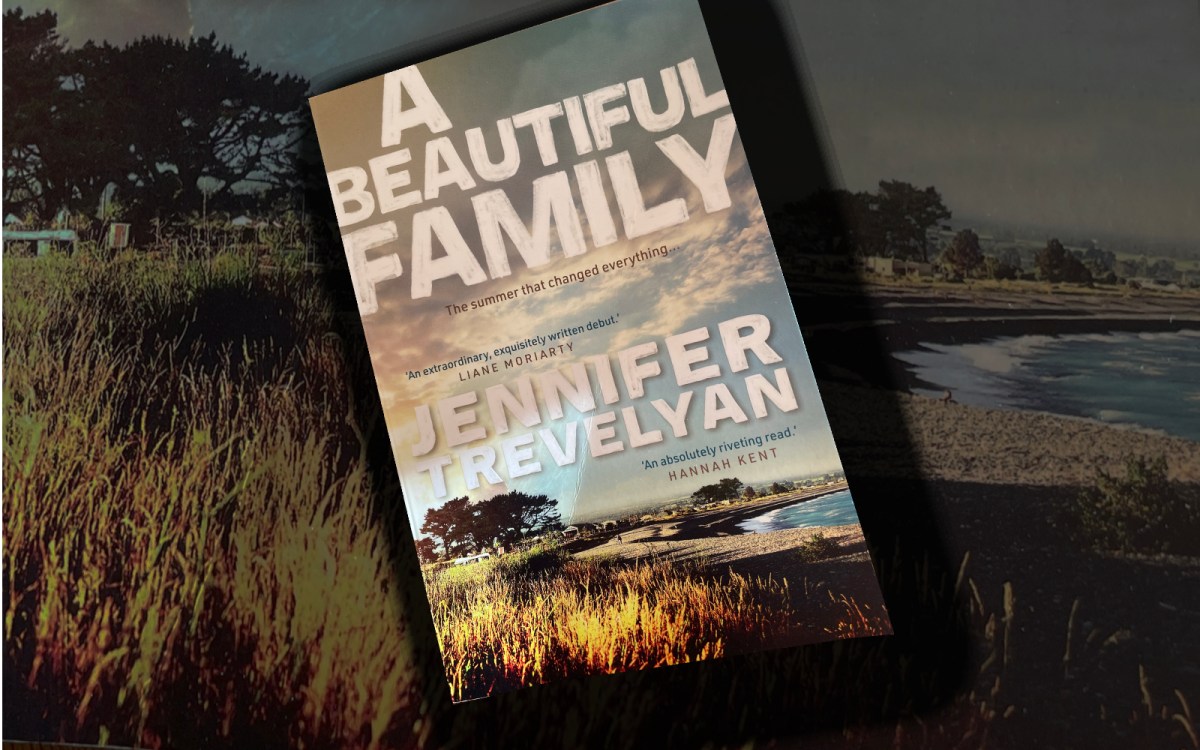
Lots of hype came with this book, a first novel by a Wellington writer and IIML grad Jennifer Trevelyan: massive publicity, a high profile agent, a two book deal, international sales, film rights. All of it, I think, very well deserved. It’s the story told by a ten year old girl of a summer holiday at the beach. They are a beautiful family, but somehow there is a sense of danger everywhere. Danger either for our girl, her sister, her mum or dad – risk everywhere, some obvious, some insidious. Enough to keep you anxious for the entire book. I had that feeling of early motherhood where I was constantly sweeping the environment for things that might damage my child. Here, at this seemingly wholesome kiwi bach, there are things to watch out for: a difficult sea with rips and big waves, a mother not watching her children because she has another agenda, two sisters looking/not looking out for each other, a teenage hangout at the lifesaving club, bad choices, a creepy voyeur next door, a missing girl whose name is carved into a wall. A swampy lagoon.
This book was a real surprise. Shirley Bagnall Metcalfe’s book on life in NZ’s early outback is subtitled “Jottings of a rural woman 1884-1968”. It sounds like it could be a bit staid. A little bit domestic. Grandmotherly, perhaps. But Shirley is a tour de force, a gutsy and practical woman with a hell of a life story and a cup that is never half-empty, despite the extremes of her life, but always, just like those bloody rivers, filled right to the brim and overflowing. She has gusto, does Shirley, and has a young, friendly voice. I wish we’d been friends. I’d have followed her anywhere.
On the strength of this book I am going to build a new bookshelf in the spare bedroom, just for short stories. For guests who stay a couple of nights and might otherwise run off with an unputdownable novel. Let them fill their early mornings or sleepless nights with Kirsty Gunn. That’s what short stories are for; they’re probably not designed to be consumed all at once like I did these. I couldn’t help it. These short stories are terrific.
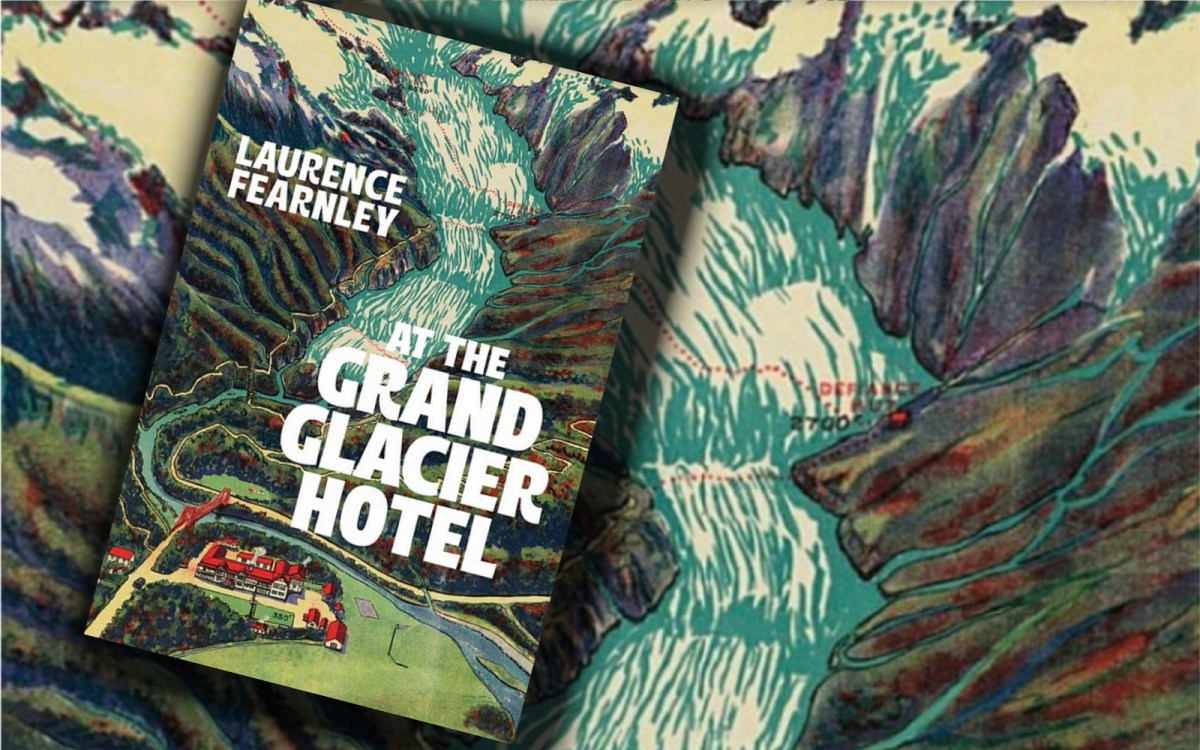
Laurence Fearnley sure knows how to write. I loved Libby’s voice in the book from the off, assured, authentic, telling a story in a way that fully engaged me. And I love the idea of The Grand Glacier Hotel – we’re a bit low on mountains up here in the north but I pictured the Chateau on Ruapehu and imagined the fading glory of such a place against the backdrop of the Southern Alps. It’s a terrific setting for a story, a touch of Hotel du Lac, a place where people go with baggage that needs to be put down for a while.
This is a familiar genre, a story of a bunch of plucky underdogs against big money developers. It reminds me very much of Patricia Grace’s lovely Potiki, of which I wrote: “This is a simple story of good verses evil, weak versus strong, country v commerce, tangata whenua v greedy imperialists… the imbalance of power … lives threatened by the Dollarman who will bulldoze away their traditional lifestyle and smother their ancestral lands with rather obvious bad things.” Jenny Pattrick’s Sea Change is a similar story set a few miles around the coast in a Paekākāriki-ish village, and a few decades later. There are two main changes. The first is that Grace’s Māori community is replaced by a collection of unrelated randoms: retirees, hippies, dysfunctional families, escapists, hermits. This could be a cliché of small town residents, but those of us who have lived up the coast know the truth behind these depictions. They grow into a sort of ‘found family’ with their power not in their iwi identity but in the coming together of a mixed community. The second difference is the tidal wave.





 Cristina Sanders' blog