The Fraud – book review

The Fraud, by Zadie Smith

The Fraud is an ambitious book, not one to take lightly. It encompasses the true story of an identity fraud trial in the 1800s, where a man returning from the colonies supposes to be not an East End butcher, but the lost son of a wealthy family. The family say he isn’t. Others, including a loyal black servant and the masses, believe he is.

Continue reading “The Fraud – book review”

Ingenious Pain – book review

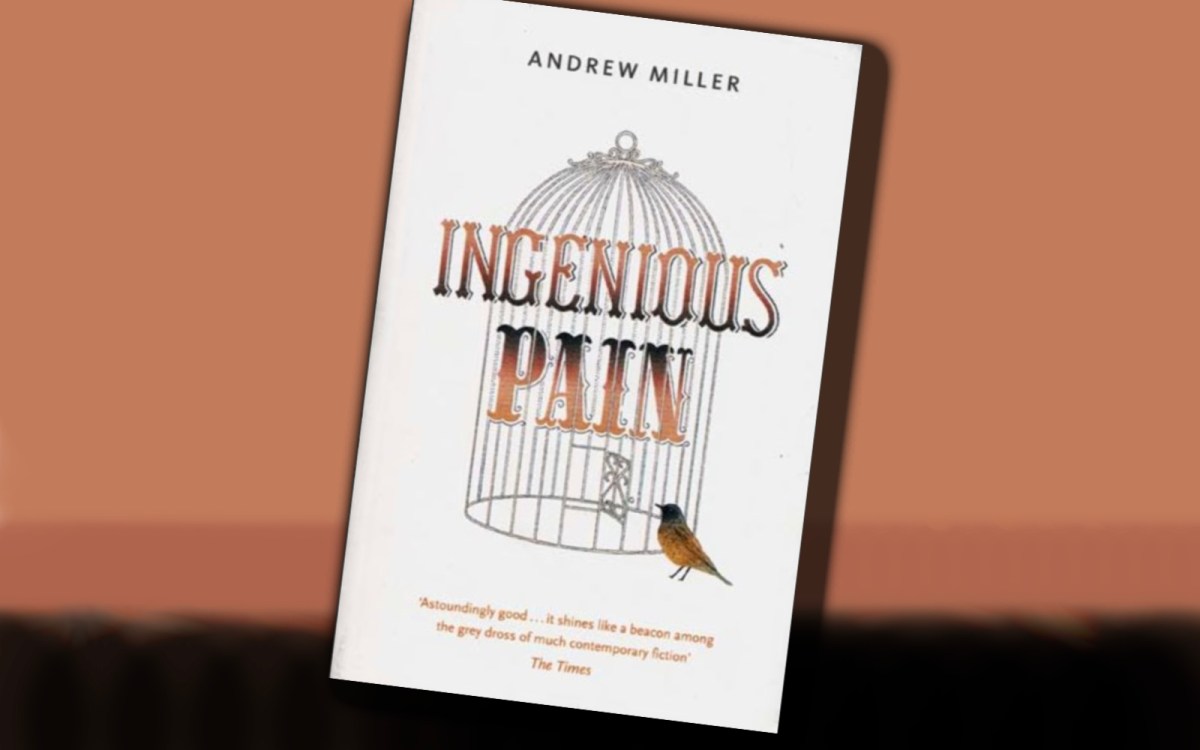
Ingenious Pain, by Andrew Miller

This book was recommended by a good reader to me, one with a shared love of historical fiction. It’s by Andrew Miller, who later wrote the fabulous but misnamed Pure about the stink of a cemetery in Paris in 1785, which I thoroughly recommend for a wallow in atmospheric history. Ingenious Pain not so much. There are flashes of writing that evoke time and place brilliantly, like: “Candlemas, 1767. The streets perfumed with coal smoke and frost, the night sky richly hammered with stars.” Perfect. A whole description in fifteen words. But these word-riches are not as frequently distributed as in Pure, and don’t flow as easily. I will still recommend Ingenious Pain, but if you’re only going to read one Miller, make it Pure, for sure.

Continue reading “Ingenious Pain – book review”

This Other Eden – book review

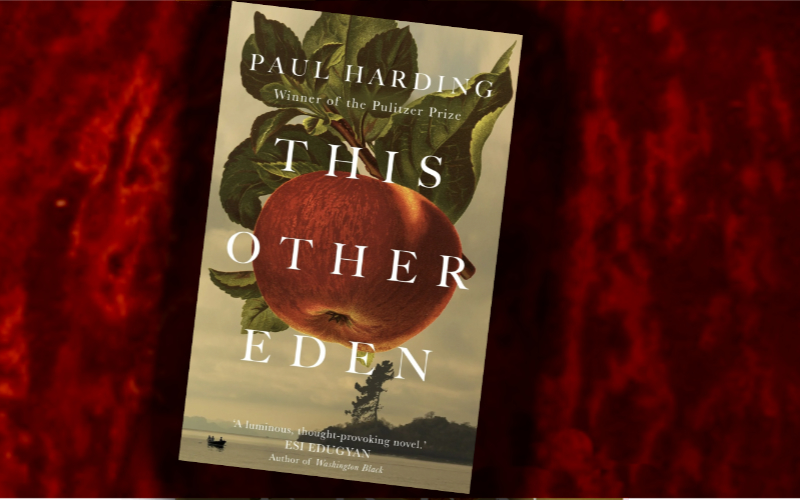
This Other Eden, by Paul Harding

Such an interesting book, such a dive into the lives of people ostensibly at the very bottom of the pile. The story has its roots at the end of the 1700s, when Apple Island is settled by an escaped slave called Benjamin Honey, and his Irish wife. A hundred years later their descendants and a smattering of other (often a bit too closely) related families still shamble through their lives in this place. They’re a stone’s throw from the coast of Maine, close enough that they can forage on the mainland but, in the eyes of the mainlanders, who consider the islanders an inbred, mixed-race of starving, ignorant, degenerate squatters, they’re too close for comfort. The islanders are an amorphous blight, a problem in need of some kind of resolution. We learn that each islander is, of course, an individual, with different wants and needs and talents.

Continue reading “This Other Eden – book review”

Empire City

Empire City by John E Martin

It would be silly to call this a ‘review’ of Empire City, as it will take me a few years to get through this tome properly, but I am so happy to have it, to drool over it and to put it on my desk as a kind of dual use research/paperweight. I bought it last week from Unity in Wellington on a recommendation from an historian without a second thought and then realised it weighed nearly 1.7kg and I was on a trip around the motu with only carry-on luggage. Worth every lug.

Continue reading “Empire City”

By the Green of the Spring – book review

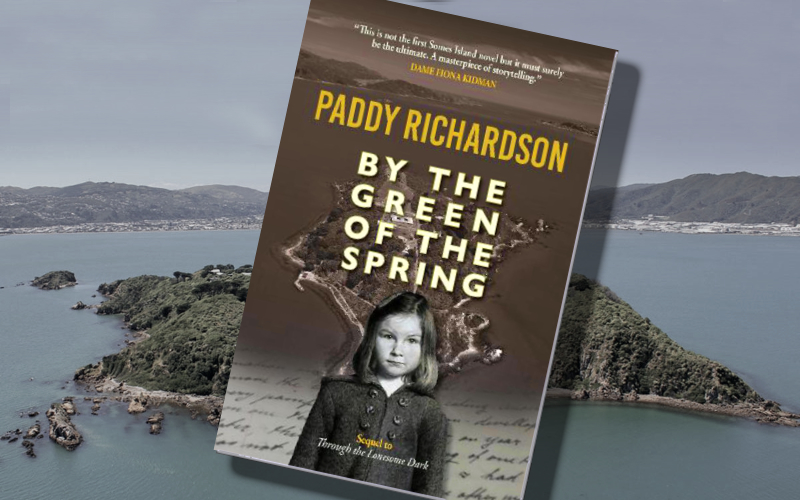
By the Green of the Spring, by Paddy Richardson

A much anticipated sequel to Through the Lonesome Dark, By the Green of the Spring takes our three young people: Otto, Clem and Pansy on with the lives that hung in a troubling denouement at the end of the first book. There is also Lena, Pansy’s daughter, who takes up the story of her parents’ lives through a child’s eyes.

Continue reading “By the Green of the Spring – book review”

Iris and Me – book review

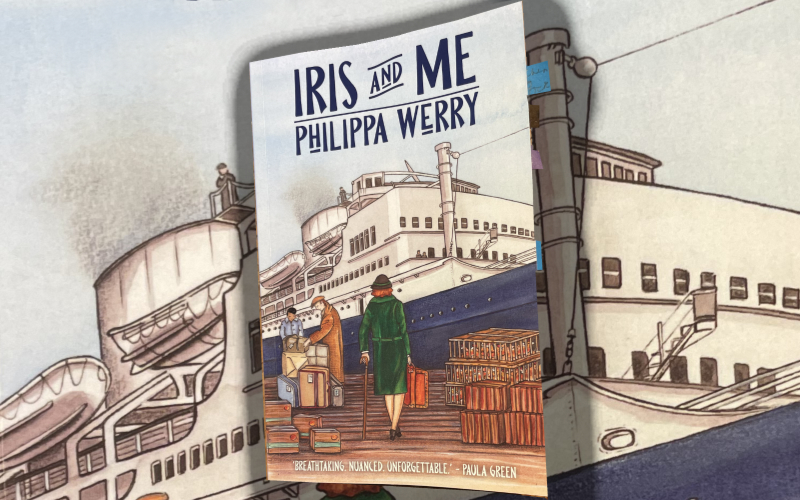
Iris and Me, by Philippa Werry

This is a terrific story about a tenacious woman who, in the 1930s, leaves New Zealand with no support and very little cash and reports on a war in China. It’s intelligent young adult fiction (though I don’t qualify as either and I loved it). Despite speaking no Chinese language, having no official capacity, being slightly lame and needing a walking stick, Iris gets right to the front-line and writes on the conditions she finds there. This is Iris Wilkinson, pen name Robin Hyde, who was a New Zealand poet, journalist and novelist. I knew her from her books; I read The Godwits Fly recently, but I had no idea she was such an audacious traveller as well.

Continue reading “Iris and Me – book review”

Lessons – book review

Lessons, by Ian McEwan

So continues my love/meh relationship with Ian McEwan. There’s no doubt this is a huge book, a deep immersion into an Englishman’s life from childhood to old age. Our narrator, Roland, is a decade-and-a-half older than me so what happened in his formative years went on to form me. Ian McEwan covers all the big political issues of those years through Roland’s eyes, from war-damaged parents and Arab nationalism to the threat of nuclear destruction, the Gorbachev years and the end of the cold war, women’s liberation, Thatcher, Major, and then Blair’s Britain (remember that huge positivity that the world was, finally, coming right?), and on to financial crises, corporate greed, global warming and covid. McEwan/Roland is intelligent, left-wing and an interesting political commentator. The problem is, though I think I probably like McEwan, I don’t like Roland at all.

Roland is eleven, sent away by his parents to boarding school (his father, the Captain, had them stationed in Lybia with the army) is kissed and fondled by his piano teacher, a woman a decade older who wears a seductive perfume. He is confused and awakened and a few years after the lessons cease he goes willingly, seeking her out, desperate to have sex before the world ends in nuclear destruction. He cannot die a virgin. This is the most obvious lesson in this Book of Lessons, and we see his self-destructive life path in the aftermath of this abuse. He learns other lessons from his parents, the way a mother can abandon a child to keep a marriage or hide a secret, and also from his wife, who vanishes in the second chapter leaving Roland to raise their child alone. A husband and child would cramp her style, she says and tells him not to look for her.

Continue reading “Lessons – book review”
Kāwai – book review

Kawai, by Monty Soutar

We seem to have been waiting such a long time for this book. Kāwai is truly groundbreaking and I hope that it clears the way for more stories in this historical and cultural setting. So what’s the big deal with Kāwai and why has it been so phenomenally successful?

Firstly, no one has published such an epic saga of Māori life before, and the timing now is impeccable. It seems Soutar has been coming all his life to be writing this story now (for such a time as this), when not only does he have the necessary contacts and learning and experience, but there is an audience with a huge appetite for stories and discussions of our history and people. Just look at how the bestsellers lists over the past three or four years have been dominated by things Māori. We’re open and primed for a big, readable Māori story that would have been unthinkable twenty, even ten years ago. And here it is and it’s fascinating.

Continue reading “Kāwai – book review”

The Marriage Portrait–book review

The Marriage Portrait by Maggie O’Farrell

It is Renaissance Florence, and Lucrezia de’ Medici is married off at the age of 13 to Alfonso, 23, the dashing, wealthy Duke of Ferrara. She’d met him once, when he was engaged to her older sister and he passed her on a walk. Their eyes met and they both felt cupid’s arrow. When the sister dies, Lucrezia gets the call.

The plot line and characters sound straight out of some Mills-and-Boon-type romance but the comparison ends there. This is a superbly written novel with gloriously textured descriptions and some pretty luscious history, and the hate him/love him of popular romance is reversed; the sweet romancer turning into a chilling murderer. The child bride can’t make sense of her husband, the dashing Duke Alfonzo who is intuitive and caring to Lucrezia one minute, and brutally cruel the next. The family needs an heir – as they always do, without ever having a plan B – and Alfonzo takes to his task with dedication. Gentle and caring at first, and then not so much. He is fighting to maintain his throne and his family is part of the power play.

Continue reading “The Marriage Portrait–book review”

Through the Lonesome Dark–book review

Through the Lonseome Dark, by Paddy Richardson

It’s the early 1900s and Pansy is living poor on the West Coast in Blackball, which apparently is a charming town these days. Pansy’s a smart kid. Smarter than her pa. Today you’d hope this would be a positive thing and she would be given every opportunity to make use of her talents, to be educated and offered the chances that would help a small town girl rise to fulfill her potential. You’d hope that someone would notice the bruising on her face and not turn away.

Continue reading “Through the Lonesome Dark–book review”