Sewing Moonlight – book review

Sewing Moonlight, by Kyle Mewburn

This is such a beautifully written book. So elegant, with space to breathe between the lines. I had the feeling, when I finally put the book down, of having been read to while I sat with my eyes closed.

It’s the early 1920s when our man in exile, Wilhelm, sails across the world from Germany and up the Clutha River until his progress is stopped dramatically. There are lots of ways to arrive in a town and this bizarre arrival has a strange ring of truth. He decides this is a sign he should give up the travels and put his feet on the ground here, in a place called Falter’s Mill. It’s as good a place as any to build a new life from scratch and find happiness.

Continue reading “Sewing Moonlight – book review”

Turning History into Fiction

Talking in Ōkiwi Bay

It was a real honour to be invited to speak at the Eastbourne Historical Society’s 2024 AGM, held yesterday. This is a very active society full of researchers, historians and writers whose lives revolve around the eastern bays of Port Nicholson, and yes, I felt a decided frisson in the meeting being held on the edge of what was Ōkiwi Bay, the stomping ground of my man, Ōkiwi Brown, himself. Or their man Ōkiwi Brown, I should say. They were a delightful audience, many bought a copy of my book and I do hope they jump right into the text and start arguing with it. I’ve already had one great lead to follow up – ‘who shot Burke’s wife?’ was a question from the floor I couldn’t answer (love those) but has me buzzing now. I’ve posted a transcript of the talk, here: Turning History into Fiction.

Continue reading “Turning History into Fiction”

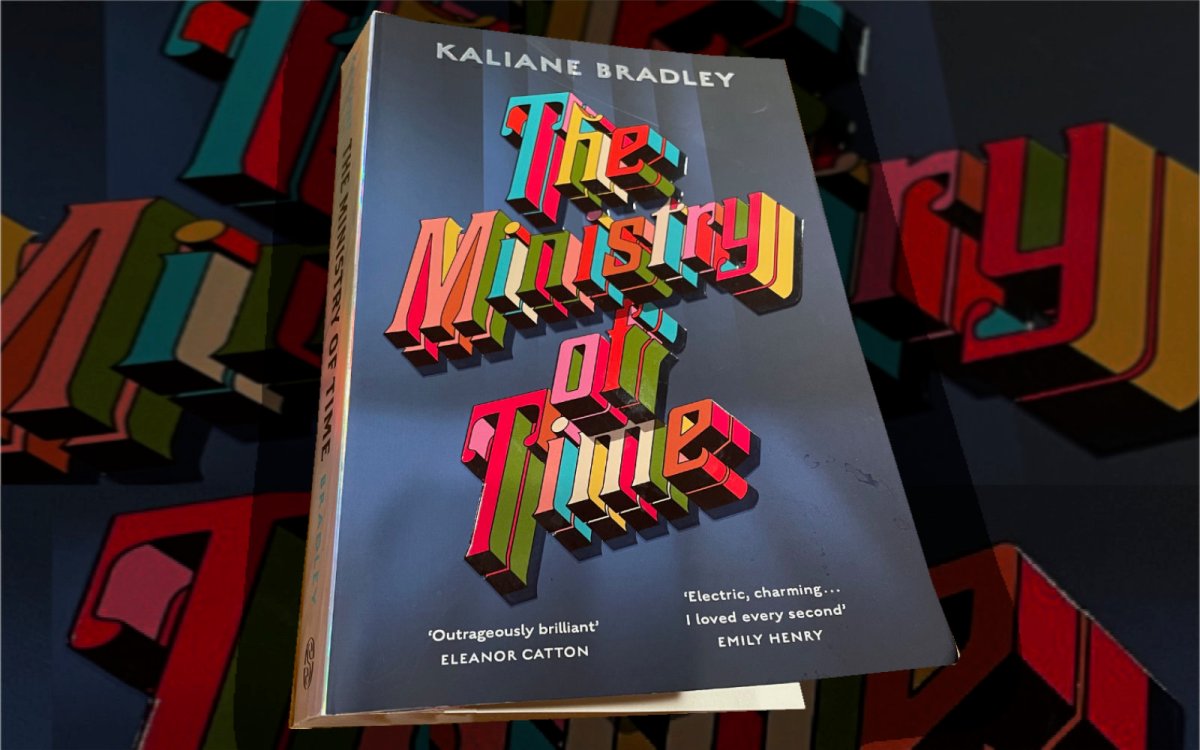
The Ministry of Time – book review

The Ministry of Time, by Kaliane Bradley

Yes, it’s only June, but The Ministry of Time by Kaliane Bradley gets my book of the year so far. It’ll be a hard one to beat. Great premise, excellent characters and the hottest sex I’ve read in years. The chap in question has been dragged out of 1845 into the near future, complete with fabulous side-whiskers, a cheeky dimple, and Victorian social attitudes. Our narrator likes his nose. He had a kind of resplendent excess of feature that made him look hyperreal. She is to be his bridge.

Continue reading “The Ministry of Time – book review”

Ōkiwi Brown

Ōkiwi Brown, by Cristina Sanders

*Currently on the Longlist for the Ngaio Awards!*
The Burke and Hare anatomy murders terrified Edinburgh in the 1830s – innocents smothered and packed fresh for the anatomist’s knife. Burke was publicly hanged before a crowd of thousands. William Hare, after turning king’s evidence against his erstwhile partner, was released. Somewhere south of Dumfries near the small river port of Annan, he was set down from a cart and told to walk on to England and never return. There, he disappears from history.

Continue reading “Ōkiwi Brown”

The Girl From London – book review

The Girl From London, by Olivia Spooner

I started this on a Tuesday night and ended up crying in a café on Thursday morning. I can’t remember when I’ve been so moved by the ending of a story. There is a book within the book. When the former ended a bit too neatly I was a slightly disbelieving, until I realised that actually, well, I’m giving no spoilers, but it’s a war story, after all. I’m not usually known for my tears.

The whole story ties in well with my current interest in stories of those who immigrated to New Zealand down the years, and why they came. Children evacuees from London bombings? I had no idea. Can you imagine sending your children out of a bomb zone, and not to the close countryside, which would be wrenching enough, but through a war-infested sea to an unknown land at the far ends of the earth? And yet people did.

Continue reading “The Girl From London – book review”

The Fraud – book review

The Fraud, by Zadie Smith

The Fraud is an ambitious book, not one to take lightly. It encompasses the true story of an identity fraud trial in the 1800s, where a man returning from the colonies supposes to be not an East End butcher, but the lost son of a wealthy family. The family say he isn’t. Others, including a loyal black servant and the masses, believe he is.

Continue reading “The Fraud – book review”

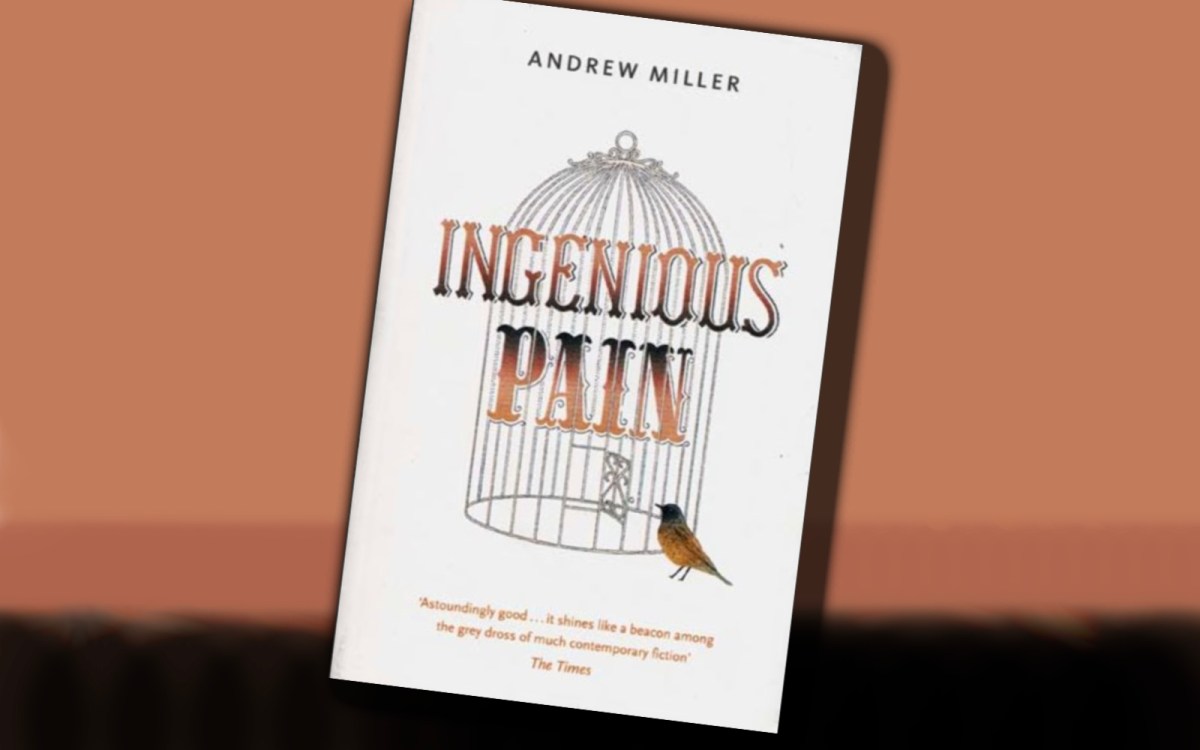
Ingenious Pain – book review

Ingenious Pain, by Andrew Miller

This book was recommended by a good reader to me, one with a shared love of historical fiction. It’s by Andrew Miller, who later wrote the fabulous but misnamed Pure about the stink of a cemetery in Paris in 1785, which I thoroughly recommend for a wallow in atmospheric history. Ingenious Pain not so much. There are flashes of writing that evoke time and place brilliantly, like: “Candlemas, 1767. The streets perfumed with coal smoke and frost, the night sky richly hammered with stars.” Perfect. A whole description in fifteen words. But these word-riches are not as frequently distributed as in Pure, and don’t flow as easily. I will still recommend Ingenious Pain, but if you’re only going to read one Miller, make it Pure, for sure.

Continue reading “Ingenious Pain – book review”

English Passengers – book review

English Passengers, by Matthew Kneale

This novel, like most colonial fiction stories told in the last 25 years, looks back at history and describes why the English should feel abhorrence and shame. I found the story interesting – the premise of a group of miss-matched individuals on a voyage to Tasmania and back is a good hook for me – but there was something here I found a bit off, and I’m trying to put my finger on it. I think, to me, it seemed the author, for all he researched events and geography well, was an outsider. He wasn’t wholly present in the period or the location. Perhaps we have woken up since it was published in 2000. I hesitate to use the word ‘flippant’ but it did feel the purpose of the story was to entertain us with the terrible things those crazy colonials did back in the day rather than explore something more nuanced: how these potentially good men could be so blind, perhaps; or what these psychologies meant to the people there, on the ground. The Aboriginal part of the story is told in first person by a boy whose mother is taken, chained and raped by an Englishman and the boy is blond. I’m not sure I trust Kneale’s telling of his voice and culture; I was always aware of the English pen behind the voice as I read, and I cringed, occasionally.

Continue reading “English Passengers – book review”

This Other Eden – book review

This Other Eden, by Paul Harding

Such an interesting book, such a dive into the lives of people ostensibly at the very bottom of the pile. The story has its roots at the end of the 1700s, when Apple Island is settled by an escaped slave called Benjamin Honey, and his Irish wife. A hundred years later their descendants and a smattering of other (often a bit too closely) related families still shamble through their lives in this place. They’re a stone’s throw from the coast of Maine, close enough that they can forage on the mainland but, in the eyes of the mainlanders, who consider the islanders an inbred, mixed-race of starving, ignorant, degenerate squatters, they’re too close for comfort. The islanders are an amorphous blight, a problem in need of some kind of resolution. We learn that each islander is, of course, an individual, with different wants and needs and talents.

Continue reading “This Other Eden – book review”

The Witching Tide – book review

The Witching Tide, by Margaret Meyer

I thought I’d jump in to the controversy about this book. I read it, not because I like books about witches, but because it got so badly trashed on Nine-to Noon (as reported here) in “the meanest book review of all times,” by Sonja de Friez. Wow. Elsewhere, Sue Reidy says: “The Witching Tide combines meticulous research with a dramatic and memorable story. A dazzling debut.”
So, who is right?

Continue reading “The Witching Tide – book review”