A Beautiful Family – book review

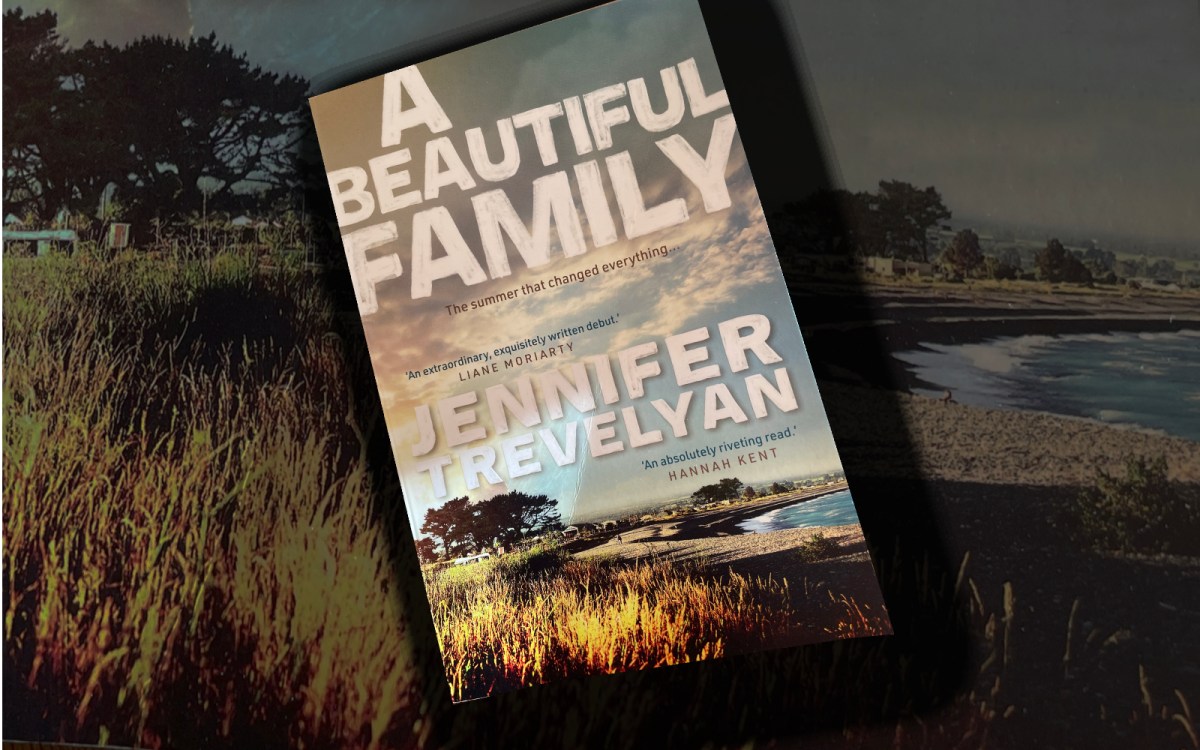
A Beautiful Family, by Jennifer Trevelyan

Lots of hype came with this book, a first novel by a Wellington writer and IIML grad Jennifer Trevelyan: massive publicity, a high profile agent, a two book deal, international sales, film rights. All of it, I think, very well deserved. It’s the story told by a ten year old girl of a summer holiday at the beach. They are a beautiful family, but somehow there is a sense of danger everywhere. Danger either for our girl, her sister, her mum or dad – risk everywhere, some obvious, some insidious. Enough to keep you anxious for the entire book. I had that feeling of early motherhood where I was constantly sweeping the environment for things that might damage my child. Here, at this seemingly wholesome kiwi bach, there are things to watch out for: a difficult sea with rips and big waves, a mother not watching her children because she has another agenda, two sisters looking/not looking out for each other, a teenage hangout at the lifesaving club, bad choices, a creepy voyeur next door, a missing girl whose name is carved into a wall. A swampy lagoon.

Continue reading “A Beautiful Family – book review”

Wonderland – book review

Wonderland, by Tracy Farr

I really hope this book smashes the awards next year. It’s a damn good story about family dynamics and dealing with life’s ups and downs in a Wellington seaside suburb in the early 1900s. Oh, and for some reason, Tracy Farr decided to stretch belief a bit to invent a scenario where scientist Marie Curie comes to lodge with this very kiwi family. She is hiding out of the public eye as she recovers from scandal and illness. Each of these very different story-lines offers a good premise, the weird thing is to put them together. What was Farr thinking? Whatever madness caused it, we need more of it in our novels.

Continue reading “Wonderland – book review”

My Three Rivers – book review

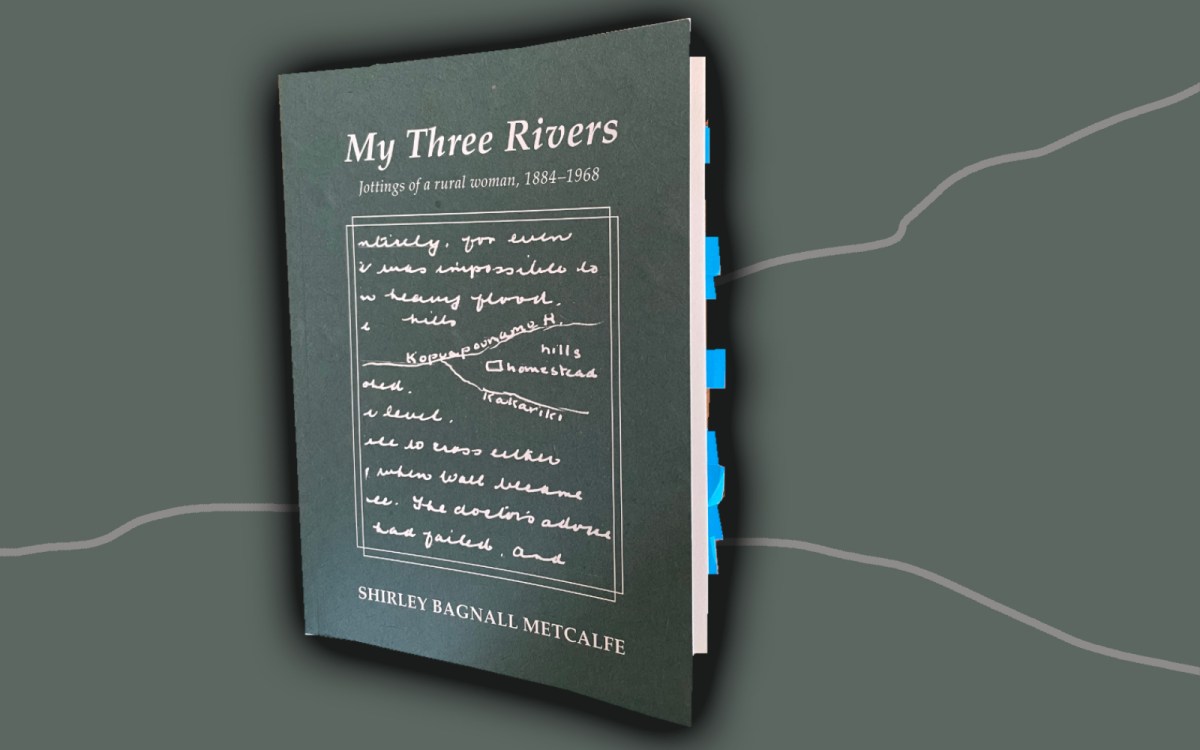
My Three Rivers, by Shirley Bagnall Metcalfe

This book was a real surprise. Shirley Bagnall Metcalfe’s book on life in NZ’s early outback is subtitled “Jottings of a rural woman 1884-1968”. It sounds like it could be a bit staid. A little bit domestic. Grandmotherly, perhaps. But Shirley is a tour de force, a gutsy and practical woman with a hell of a life story and a cup that is never half-empty, despite the extremes of her life, but always, just like those bloody rivers, filled right to the brim and overflowing. She has gusto, does Shirley, and has a young, friendly voice. I wish we’d been friends. I’d have followed her anywhere.

Continue reading “My Three Rivers – book review”

In Ascension – book review

In Ascension, by Martin MacInnes

I was absolutely engrossed in this novel. It had everything I love in a book; it took me away to places I’ll probably never go (a deep sea trench and space, for example) and concentrated on the one storyteller with all other characters only really understood in relation to her – a deep dive into the head of a very interesting woman. Leigh is a Dutch biologist, very nerdy, interested in the beginnings of life on earth. She is also the survivor of a father’s beatings, a mother who consoled her but would not stop the beatings and a sister Leah protected so she didn’t get beaten. He died and she tried to make herself anonymous. I felt the father as an understated presence in the story. He is not the story. The story is the science.

Much of Leah’s childhood is related in a pragmatic fashion, ignoring the ‘show don’t tell’ rule of modern writing. She tells us, and moves on. She has an extraordinary life, there is lots to cover and Leigh is pretty straightforward. Her science, on the other hand, is – like most things we don’t understand – utter magic. The places she takes us are deeply compelling and we linger over the meaning behind things.

Continue reading “In Ascension – book review”

Strays & Waifs – book review

Strays and Waifs, by Mandy Hager

While we’re on the theme of great Kapiti fiction (The Mires, Sea Change), Mandy Hager’s Strays & Waifs gives a deeper and more sinister element to that usually plucky community of coast dwellers. I should point out that while Mandy Hager is a warm and generous person herself, this is not ‘cosy crime’. Her signature themes are here in this story – environmentalism, protest, kindness as a power – but they are up against some pretty confrontational evil.

Continue reading “Strays & Waifs – book review”

At the Grand Glacier Hotel – book review

At The Grand Glacier Hotel, by Laurence Fearnley

Laurence Fearnley sure knows how to write. I loved Libby’s voice in the book from the off, assured, authentic, telling a story in a way that fully engaged me. And I love the idea of The Grand Glacier Hotel – we’re a bit low on mountains up here in the north but I pictured the Chateau on Ruapehu and imagined the fading glory of such a place against the backdrop of the Southern Alps. It’s a terrific setting for a story, a touch of Hotel du Lac, a place where people go with baggage that needs to be put down for a while.

Continue reading “At the Grand Glacier Hotel – book review”

Sea Change – book review

Sea Change, by Jenny Pattrick

This is a familiar genre, a story of a bunch of plucky underdogs against big money developers. It reminds me very much of Patricia Grace’s lovely Potiki, of which I wrote: “This is a simple story of good verses evil, weak versus strong, country v commerce, tangata whenua v greedy imperialists… the imbalance of power … lives threatened by the Dollarman who will bulldoze away their traditional lifestyle and smother their ancestral lands with rather obvious bad things.” Jenny Pattrick’s Sea Change is a similar story set a few miles around the coast in a Paekākāriki-ish village, and a few decades later. There are two main changes. The first is that Grace’s Māori community is replaced by a collection of unrelated randoms: retirees, hippies, dysfunctional families, escapists, hermits. This could be a cliché of small town residents, but those of us who have lived up the coast know the truth behind these depictions. They grow into a sort of ‘found family’ with their power not in their iwi identity but in the coming together of a mixed community. The second difference is the tidal wave.

Continue reading “Sea Change – book review”

The Household – book review

The Household, by Stacey Halls

Dickens only appears in the background of this story, although the stamp of his concerns and values are everywhere. The Household is the story of historic Urania Cottage, an establishment set up by Dickens in the mid 1840s for ‘fallen women’, told through the eyes of two of the women and also their benefactrix, Angela Burdett-Coutts. So much misogyny in that word ‘fallen’ when you’d think falling is something a woman is capable of doing on her own. Expressions like The girls fell pregnant” and “…poor Lydia Rice had started a child” manage, so wonderfully, to excuse men of responsibility entirely.

At Urania Cottage the aim is to help these women rise up and help themselves by teaching them domestic skills before sending them off to Australia, God help them, to find useful jobs and husbands. Help both noble and patronising in that ridiculous Victorian way that pulls your heart.

Continue reading “The Household – book review”

Norwegian Wood, chopping, stacking and drying wood the Scandinavian way – book review

Norwegian Wood, by Lars Mytting

This is one of the most relaxing and enjoyable books I know. Odd, because it is full of men with axes living in freezing temperatures in remote forests, involving strenuous physical labour. All the hard work is for the benefit of the person snug by the fireside, tucked away from the harsh world outside. That’s us. The lucky readers.

Continue reading “Norwegian Wood, chopping, stacking and drying wood the Scandinavian way – book review”

Sixteen Trees of the Somme – book review

Sixteen Trees of the Somme, by Lars Mytting

There is something about Norwegian writing that reminds me of Irish literature. It’s so centred on place, it’s the being there that grounds the story. We are different here, these stories say, our culture is wrapped around our traditional ways based on a history, geography and climate that are distinctly our own. It’s like the country itself has a voice. We are beginning to understand this power in New Zealand writing and could take lessons from these countries, for sure. Lars Mytting’s voice is profoundly Norwegian. There is always the expectation of snow on his boots and trolls under the woodpile.

Sixteen Trees of the Somme has a long reach. The base of the story is a Norwegian farm – mostly in the snow but summer visits occasionally – and it’s a mystery and a history and a resistance story and has love and travel and coming of age, a history of gun making and an obsession with trees and their particular wood and so many other things. Lots of secrets to unravel. It kept me spellbound.

Continue reading “Sixteen Trees of the Somme – book review”