Iris and Me – book review

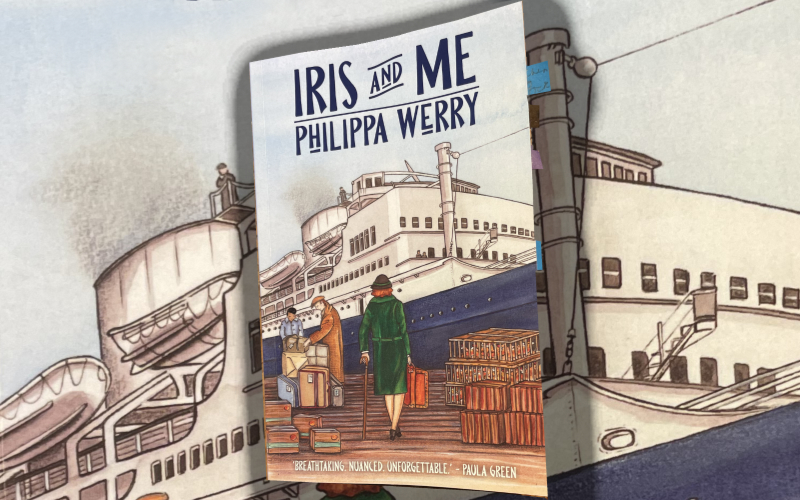
Iris and Me, by Philippa Werry

This is a terrific story about a tenacious woman who, in the 1930s, leaves New Zealand with no support and very little cash and reports on a war in China. It’s intelligent young adult fiction (though I don’t qualify as either and I loved it). Despite speaking no Chinese language, having no official capacity, being slightly lame and needing a walking stick, Iris gets right to the front-line and writes on the conditions she finds there. This is Iris Wilkinson, pen name Robin Hyde, who was a New Zealand poet, journalist and novelist. I knew her from her books; I read The Godwits Fly recently, but I had no idea she was such an audacious traveller as well.

Continue reading “Iris and Me – book review”

Getting Lost – book review

Getting Lost, by Annie Ernaux

This is a book about a woman’s sexual passion. That’s it, really. A French woman’s love affair with a married Russian diplomat lasts for 240 pages on the theme of will he? won’t he? oh! he’s here, and he will!

This is Ernaux’s diary for 1989, when, nearing fifty, divorced with adult sons, she hooks up again with the younger ‘S’. She’s an important and famous writer and she’d met him on a trip to Leningrad and their one night stand had been perfect: sex that set the bar for everything that is to come after, when the Russian is posted to Paris.

Continue reading “Getting Lost – book review”

Running slips

and planting natives

Five weeks without access to the Hawkes Bay reserves has been nothing compared to the anguish suffered by so many after the devastation of Cyclone Gabrielle. So, we couldn’t run the hills for a few weeks. Not a big deal, in the scheme of things. Now the trails are mostly open again and frankly, I’m surprised at the speed of this considering the resources required – those same resources of machinery and planning and humans that are in such demand everywhere. Men with diggers, once again, I salute you.

Continue reading “Running slips”

Ockhams Digital Sampler

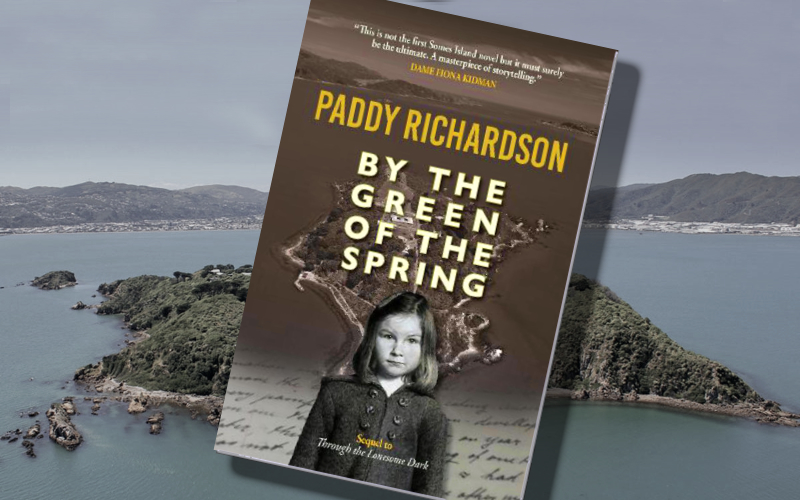
The four finalists of the Jan Medlicott Acorn prize for fiction.

It is such a privilege to be on this year’s Ockham shortlist, along with Michael Bennett, Catherine Chidgey and Monty Soutar. It’s a very happy period, these weeks between the shortlist and the announcement of the winner, which will be on May 17th at the Auckland Writers’ Festival. A girl can dream!

Here is the Ockham Sampler, where you get to read an extract from each of the books for free. If you like what you read, please head to your nearest bookshop and buy the book. Not sure about the others, but I’m saving for a gold frock.

The Anomaly–book review

The Anomaly, by Hervé Le Tellier

Such a brilliant premise. An Air France flight from Paris to New York hits unexpected and severe turbulence on a routine flight, dramatically bumps through towering cumulonimbus, and lands with shaken passengers, but nothing seemingly untoward. This is in March. In June, the plane lands again. The same plane. Exactly. Flight 006, with Captain Markle at the controls and the passengers: writer Victor Miesel, French hitman Blake, a gay Nigerian singer called Slimboy, emotionally complex Lucie and others. All duplicates. WTF? asks the control tower.

Continue reading “The Anomaly–book review”

Liberation Day – book review

Liberation Day, by George Saunders

The thing about George Saunders is he always makes you think. This is definitely a set of stories for those who enjoy being intellectually challenged by an unusual world rather than for readers who take comfort in the known and seek familiarity in a story. If you loved Saunders’ prize winning but weird Lincoln in the Bardo, or have pretensions to literature and study his texts on writing craft, hey, here’s a book for you.

His stories often have the theme of some kind of sub-category of humans, exploited or trapped, those who don’t fit the mainstream. Lincoln in the Bardo had this with the dead wandering the graveyard unable to escape purgatory. In this collection, three of the futuristic stories also explore this idea, the sub-groups being exploited by the more powerful who, the way Saunders describes it, are acting within the expectations of prevailing society.

Continue reading “Liberation Day – book review”

Birnam Wood – book review

Birnam Wood, by Eleanor Catton

Well, I didn’t see that one coming. What an ending! Bloody hell, Eleanor Catton first lulls us with a nice gardening collective and then goes full-on James Bond.

So much has been written about Birnam Wood already and all of it is full of praise: dark and brilliant (the Guardian), an astounding analysis of human psychology (the Spinoff), an explosive climate-change thriller (FT), phenomenal and utterly gripping, electric, spectacular, a complex and absorbing web of human relationships (Various). And yes to all that.

Continue reading “Birnam Wood – book review”

Small Things Like These – book review

Small Things like These, by Claire Keegan

The Magdalen laundries, tool of the Catholic Church and Irish state, was closed down in 1996, in abject disgrace. In 2013 the Irish government gave a much belated apology to the women who had suffered in these prisons of forced labour. Women who had ‘fallen’ and needed to be removed from society. Some thirty thousand women are estimated to have been incarcerated, their babies adopted out. A shocking number of babies died.

Fallen. That word. Young women ‘fell’ pregnant. Their fault for being a bit clumsy, tripping up because they weren’t paying attention.

Continue reading “Small Things Like These – book review”

Lessons – book review

Lessons, by Ian McEwan

So continues my love/meh relationship with Ian McEwan. There’s no doubt this is a huge book, a deep immersion into an Englishman’s life from childhood to old age. Our narrator, Roland, is a decade-and-a-half older than me so what happened in his formative years went on to form me. Ian McEwan covers all the big political issues of those years through Roland’s eyes, from war-damaged parents and Arab nationalism to the threat of nuclear destruction, the Gorbachev years and the end of the cold war, women’s liberation, Thatcher, Major, and then Blair’s Britain (remember that huge positivity that the world was, finally, coming right?), and on to financial crises, corporate greed, global warming and covid. McEwan/Roland is intelligent, left-wing and an interesting political commentator. The problem is, though I think I probably like McEwan, I don’t like Roland at all.

Roland is eleven, sent away by his parents to boarding school (his father, the Captain, had them stationed in Lybia with the army) is kissed and fondled by his piano teacher, a woman a decade older who wears a seductive perfume. He is confused and awakened and a few years after the lessons cease he goes willingly, seeking her out, desperate to have sex before the world ends in nuclear destruction. He cannot die a virgin. This is the most obvious lesson in this Book of Lessons, and we see his self-destructive life path in the aftermath of this abuse. He learns other lessons from his parents, the way a mother can abandon a child to keep a marriage or hide a secret, and also from his wife, who vanishes in the second chapter leaving Roland to raise their child alone. A husband and child would cramp her style, she says and tells him not to look for her.

Continue reading “Lessons – book review”

Kāwai – book review

Kawai, by Monty Soutar

We seem to have been waiting such a long time for this book. Kāwai is truly groundbreaking and I hope that it clears the way for more stories in this historical and cultural setting. So what’s the big deal with Kāwai and why has it been so phenomenally successful?

Firstly, no one has published such an epic saga of Māori life before, and the timing now is impeccable. It seems Soutar has been coming all his life to be writing this story now (for such a time as this), when not only does he have the necessary contacts and learning and experience, but there is an audience with a huge appetite for stories and discussions of our history and people. Just look at how the bestsellers lists over the past three or four years have been dominated by things Māori. We’re open and primed for a big, readable Māori story that would have been unthinkable twenty, even ten years ago. And here it is and it’s fascinating.

Continue reading “Kāwai – book review”