William Curling Young

I went to the Nelson archives to find Captain Arthur Wakefield, agent of the New Zealand Company and uncle to Jerningham (about whom I’m writing a book). There are folders of transcribed letters, mostly from Arthur to his brother William Wakefield. I passed over the stiff official missives, but there are lots of gossipy, friendly letters, all signed yours affy, as if the word “affectionately” was too formal for such brotherly love. They are intimate letters and even a hundred and seventy-seven years later feel immediate, the sentiment easy to read. Arthur has a mixed retrospective reputation but I like him and he has a seat at my table any time he wants to show up.

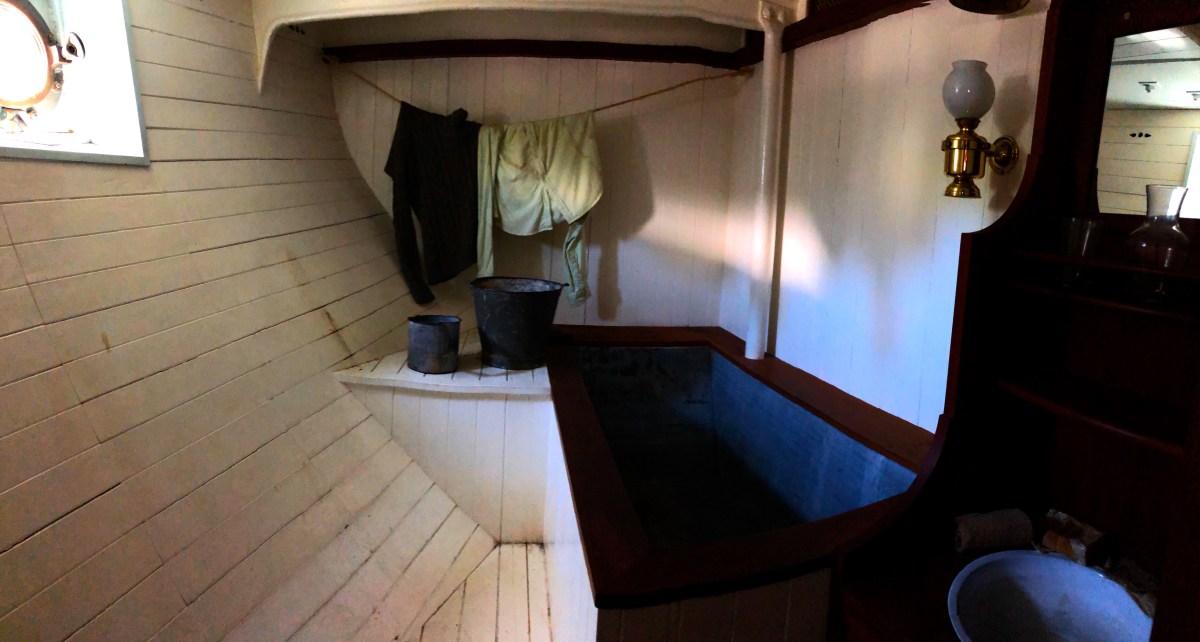
But I got side-tracked by another story in the archives.  Filed between Arthur’s letters were those of William Curling Young, writing home to England from colonial Nelson. William was 28.

His father was a director of the New Zealand Company Continue reading “William Curling Young”
The Imaginary Lives of James Pōneke – book review

The Imaginary lives of James Pōneke, by Tina Makereti

Interesting book!
Tina Marereti is long listed for the Ockham Book awards and I so hope she wins. That’s unfair, because I haven’t read any of the others, (yet, but if you send them, I will, I will!)  But if you’ve been following my book reviews you’ll know by now that I’m a sucker for Victorian era fiction and this one’s a corker. Continue reading “The Imaginary Lives of James Pōneke – book review”

Looking forward to Waitangi Day

Questions and optimism from Glenn McConnell

Here’s a young journalist who always asks questions that get me thinking all day. Glenn McConnell writes an occasional column in the Dominion Post and I enjoy his clear writing and fresh viewpoint.   Today’s article (link below) is no exception and well worth a read in the run up to Waitangi Day. Continue reading “Looking forward to Waitangi Day”

Unsheltered – book review

Unsheltered, by Barbara Kingsolver

Other reveiws of Barbara Kingsolver’s Unsheltered focus on the political; the coy way that Trump shadows the book but is never mentioned by name, the crisis in mid-America in employment, health, etc, our hurtle towards ecological crisis. It has all this; it is trademark Kingsolver.

But I read the book very literally.  To be unsheltered is a primal fear. Unsheltered gave me goosebumps. It is as threatening as a horror story, more so because the menace lies in the undercurrents while things on the surface look good enough. Continue reading “Unsheltered – book review”

Educated – book review

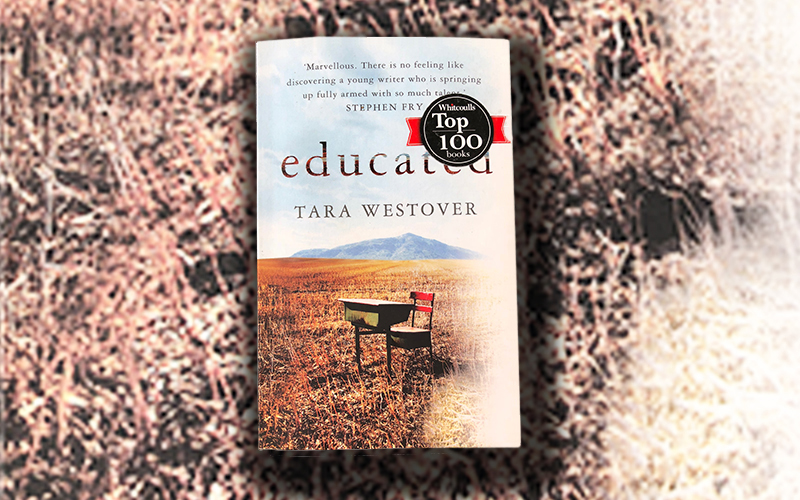
Educated, by Tara Westover

As I read this story, I wondered – how much can really be true?

How, given the emotional brainwashing and abuse of her childhood, could Tara succeed so brilliantly – from unschooled junk-yard kid, through Harvard and Cambridge to a PhD in only ten years?  If I was reviewing this as fiction I would call it unbelievably contrived. Continue reading “Educated – book review”

The rafting fallout (yes, we did)

White water rafting truths

  • Wear a helmet. You will fall in. There will be rocks.
  • Not all dry bags are equal. Pay for quality.
  • When a water-tight barrel explodes open in a rapid, dry things get wet.
  • Securely tied items can do a Houdini and wave goodbye as you’re clinging to the upside-down raft.
  • If you lose your heavy camp stove at the bottom of a river and a waif dives for it, it will miraculously light first click.
  • Chilly bins need to be tied shut.
  • Waterlogged bagels are inedible.
  • Sunnies should be tied on. What did I tell them?
  • A cairn piled on a rock on the side of the river may indicate a ledge wide enough to pitch camp. Stop!
  • Memories of past trips are rose tinted. Add an extra few hours and serious amounts of fear to any memory. I would argue (and did) that a rafting trip is nothing at all like giving birth, but it is true you soon forget the pain and turn around and do it all over again.

Continue reading “The rafting fallout (yes, we did)”

Packing list for rafting

Summer camping on the river

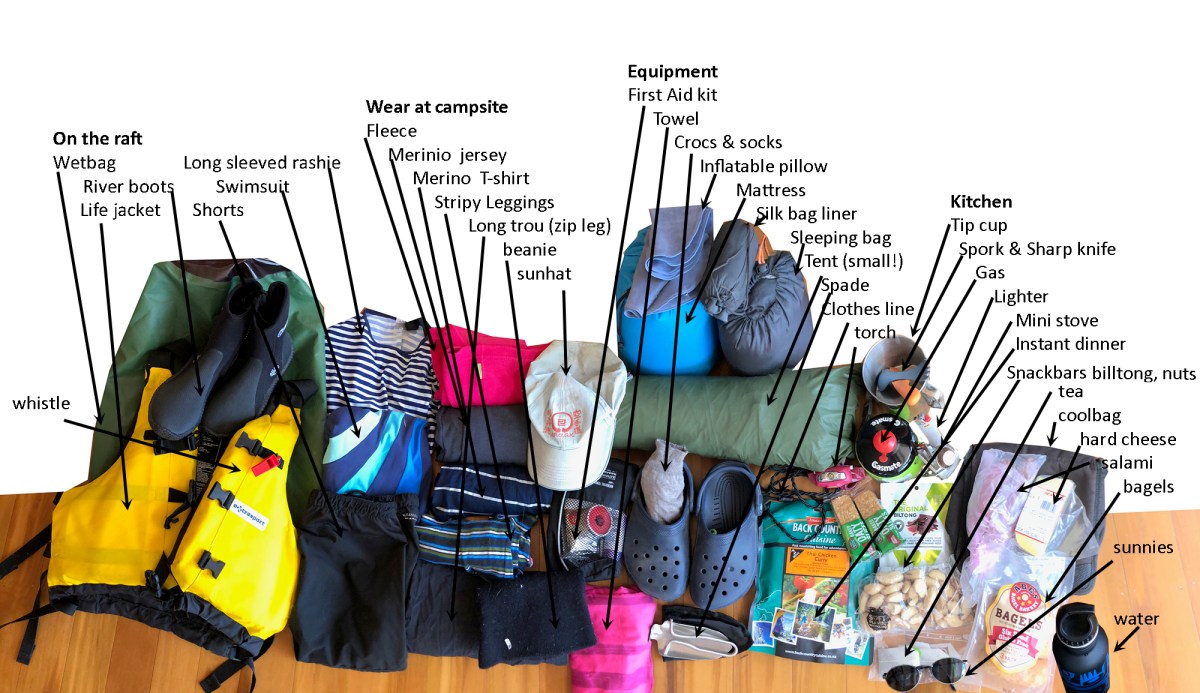
Here’s my packing list for an overnight rafting trip. (There’s no rain forecast and someone else is looking after the raft!) Off down the Ngaruroro river tomorrow.

Newbies often asked what to pack for a multi-day rafting trip. You need to be fairly tight, to fit in on the raft, but weight is not as issue like it is for a tramp. Continue reading “Packing list for rafting”

A home is a house with books in it

I built these bookshelves a few years back. I’m no DIY-er but was forced into action. How frustratingly difficult it is to find slim bookshelves! You know, built for books. Paperback width. I took the shelves out to paint when we tarted up the hallway and found lovely matai wooden floors under the dull carpet. And then, for a while, we had a smashing, tidy, wide hallway.

But it wasn’t until the books went back in that it became home again.

The Wairau Affray

Or do we call it a massacre?

Sally Burton has created an intensely emotional work of art, inspired by the Wairau Affray. I find it extraordinary that an exhibition so poignant can come from that ugly rock in the river of our history. She has made sculptures of the armed conflict between the Nelson colonials and Te Rauparaha’s Ngāti Toa, frozen at the flashpoint when the bullet hits his daughter. If only she could have stopped time a minute earlier and said – No. Wait. We can talk, we can talk, we can talk.

The figures are crafted from driftwood bones collected from the Wairau River which is appropriate as 175 years ago the dispute began with these trees, this wood. Te Rauparaha said he could burn the surveyors’ huts because the wood, being on his land, belonged to him. Captain Arthur Wakefield said he had committed arson and must be arrested.

We call it the Wairau Affray now. Or the Wairau Incident. I do wonder why we are so reluctant to call it the Wairau Massacre. It ended in an indiscriminate and brutal slaughter of a dozen men, so no matter who the provocateurs and who fired the first shot, I think we can own up to our history and call it a massacre.

In 1843, the ownership of Wairau Valley was disputed.

Ngāti Toa had claimed it by force from South Island iwi in the 1830s, but had not settled there.  The Wakefield brothers (Ernest Gibbon in England, William in Wellington and Arthur in Nelson) were convinced they had purchased it for the New Zealand Company settlers. They bought it from a woman, said to be the widow of a Captain Blenkinsopp. She had deeds for the plains of Wairau signed with elaborate drawings of the tattoos of Te Rauparaha, his nephew Te Rangihaeata and chiefs from Te Atiawa, who appeared to have sold the land to Blenkinsopp in exchange for a ship’s cannon. But had Blenkinsopp reached an agreement to buy the land, as stated in the deed, or had he just made an agreement to take wood and water from Wairau and tricked the chiefs into signing away the land, as Te Rauparaha later claimed? We can guess, but we don’t know.

It gets more complicated: the New Zealand Company also claim to have bought the land directly from Te Rauparaha in their 1839 agreement, and, for good luck, a third time from local iwi. A Sydney agent also claimed to have bought Blenkinsopp’s deeds (meaning Wakefield’s was a copy), but was prevented from taking ownership by local iwi, who disputed his claims.

There was already a land court in place in 1843, presided over by William Spain. This marked the beginnings of a complicated judicial procedure to establish who had said what to whom, and what was understood, and whether it was fair or whether the seller actually owned the land in the first place and had the right to sell. And at what point taking land by armed force became illegal. And what these disputes meant in the context of land sold on, to honest buyers. And whether, pre-Treaty, any of the European land purchases held any validity at all. William Spain had his work cut out and he was a slow, methodical man. He was working his way through disputes in Wellington, Wanganui and Taranaki. Wairau was a way down his list.

Meanwhile the Nelson settlers wanted their land. They had purchased their town and country acres before leaving England, in some cases before Nelson even existed. There was a huge pressure on the Company to open up farmland, and Wairau offered a great expanse of “waste land”, with no obvious, settled, Māori population. Captain Arthur Wakefield, the nice-but-dim NZ Company Agent in Nelson, sent the surveyors in.

Te Rauparaha brought his people across from Kapiti Island. They had protested to William Spain that the land was not given up, they threatened the New Zealand Company not to survey there. Te Rangihaeata told Wakefield if he wanted to take the land, first he would have to kill him, or make him a slave. The survey went ahead. William Spain didn’t arrive.

Te Rauparaha burned the surveyors’ huts, after first escorting the men out, unharmed, with their possessions. The huts were built from wood from his land, he said, he could burn them if he chose.  And this was where Police Magistrate Henry Thompson stepped in with a matching show of testosterone and the Victorian equivalent of: Oh, no you don’t!

Thompson issued a warrant for Te Rauparaha’s arrest on a charge of arson and he armed a party of fifty-odd settlers with outdated weaponry and headed for Wairau. Arthur Wakefield went along with him, agreeing the chiefs were bullies and needed to be taught a lesson. In hindsight, it is difficult to imagine such recklessness.

The English were not an army. Most were farmers or shop keepers, rounded up for the expedition. For most Nelson settlers at this time, immigration had been a disappointment and they were a disgruntled lot, but their complaints were with the Government and increasingly the New Zealand Company rather than Māori.

In Wairau they found the well-armed Ngāti Toa camped by a stream. Te Rauparaha offered his hand to shake – the surveyors greeted him but Thompson pushed it away.   The accounts from then on vary.  Most agree that Te Rauparaha had offered to talk things through, the volatile Te Rangihaeata had made threats, and Thompson brought out handcuffs and foolishly attempted to arrest Te Rauparaha in front of his people. The English fixed bayonets, Captain Wakefield called them forward to assist the arrest, and a shot was fired. Neither side has admitted to that first shot.

Then the volleys went back and forth and the first dead was Te Ronga, wife of Te Rangihaeata and daughter of Te Rauparaha. The English fled, the Māori chased. There was fighting on the hillside. It was an affray.

Then Wakefield, seeing men going down, called for the English to surrender. They waved a white flag. They put their hands up and submitted to being rounded up by their captors. For the English, capture in defeat meant being taken prisoner until your allies ransomed your release. Not so for the Māori. Claiming utu for the death of Te Rongo, they executed the English by tomahawk, with hacking blows to the back of the head. Twelve of them, one after the other, while Arthur Wakefield called for peace.  There are 22 Nelson settlers buried in Tuamarina in Wairau. Four Māori were killed.

That was the Wairau Massacre.

It could have tipped the whole country into war and the Pakeha would have been routed, as they had vastly inferior numbers. But somehow, the situation was temporarily diffused by talk and talk and talk, and when FitzRoy arrived as Governor a few months later, he pardoned Te Rauparaha, accepting that he was provoked and recognising the two races had cultural differences in war. FitzRoy knew he had no option. History shows the pardon was not forgiveness.

I’d like to think that, despite the systematic racism of the intervening years, we are finally coming to the understanding that viewpoints can differ but be equally valid, and we have discovered ways to deal with complex problems other than by aggression.

Sally Burton’s exhibition illustrates our painful history, but I hope comes with a message of hope for how far we have come.

__________
Sally Burton – Pale History, at Pātaka Art + Museum, Porirua. 16 December 2018 – 24 March 2019. https://www.pataka.org.nz/
(Photo: RNZ / Tracy Neal)


Elizabeth and her German Garden – book review

Elizabeth and her German garden, by Elizabeth Von Arnim

Here’s my pick for a Christmas gift for a woman who likes reading and gardening, and doesn’t go at things in a rush. It’s for someone who takes time over words and soil, someone who stops to look at dew on a spider’s web and who, when you drop by over Christmas, is invariably in a flowering sunny nook with a book.

It’s a turn of the Century book (20th Century, that is) in which a young English woman marries a German count and bucks established conventions, opting to leave city society and live in his country pile, where she is obsessed with being outdoors and working in the garden.

She refers to her husband as the Man of Wrath though he is a long suffering dear, who humors her and visits when he can and gives her a generous budget for her mulches and compost though appears quite bewildered by the oddball he has married. She says it must be agreeable to have an original wife, he counters that she is eccentric.  Her three daughters are the April baby, the May baby, and the June baby and are all “inoffensive and good” and are released by the nurse periodically to wander the gardens with their distracted mother.

Elizabeth, meanwhile, is learning how her garden grows. Her gardener has planted rockets right along the very front of the two borders and now the plants behind are completely hidden.  “No future gardener shall be allowed to run riot in quite so reckless a fashion.” But she is charmed by the delicate colour of the rockets and their scent, she picks them to bring inside to the room is filled with their fragrance. She experiments with planting in long grass, she puts pansies in the rose beds and makes a great bank of azeleas in front of the fir trees to brighten up a gloomy nook.

The extent of Elizabeth’s garden and obsession is far beyond what most of us consider gardening, but between monologues about over-wintering of tea roses and the planting of annual larkspurs around the privet hedge she does consider wider issues of a woman’s place in the world, the foibles of society and the benefits of me-time (my words, she calls it wintering all alone, which is disapproved of by the German matrons).  She has visits from two friends, one she likes, the other they pick on, and when the visitors get too much, Elizabeth escapes to her garden.

Elizabeth and her German Garden is a lovely read. It has a gentle pace and a spirited heroine, through she does little other than walk around her flower beds. I’m no large-scale gardener and was a bit overwhelmed by the plants and flowers she describes in all their glory and through every season, but very much enjoyed her enthusiasm and love for them all, the poetry of the writing and the fact that a woman can be so happy in her eccentricity.