The Household – book review

The Household, by Stacey Halls

Dickens only appears in the background of this story, although the stamp of his concerns and values are everywhere. The Household is the story of historic Urania Cottage, an establishment set up by Dickens in the mid 1840s for ‘fallen women’, told through the eyes of two of the women and also their benefactrix, Angela Burdett-Coutts. So much misogyny in that word ‘fallen’ when you’d think falling is something a woman is capable of doing on her own. Expressions like The girls fell pregnant” and “…poor Lydia Rice had started a child” manage, so wonderfully, to excuse men of responsibility entirely.

At Urania Cottage the aim is to help these women rise up and help themselves by teaching them domestic skills before sending them off to Australia, God help them, to find useful jobs and husbands. Help both noble and patronising in that ridiculous Victorian way that pulls your heart.

Continue reading “The Household – book review”

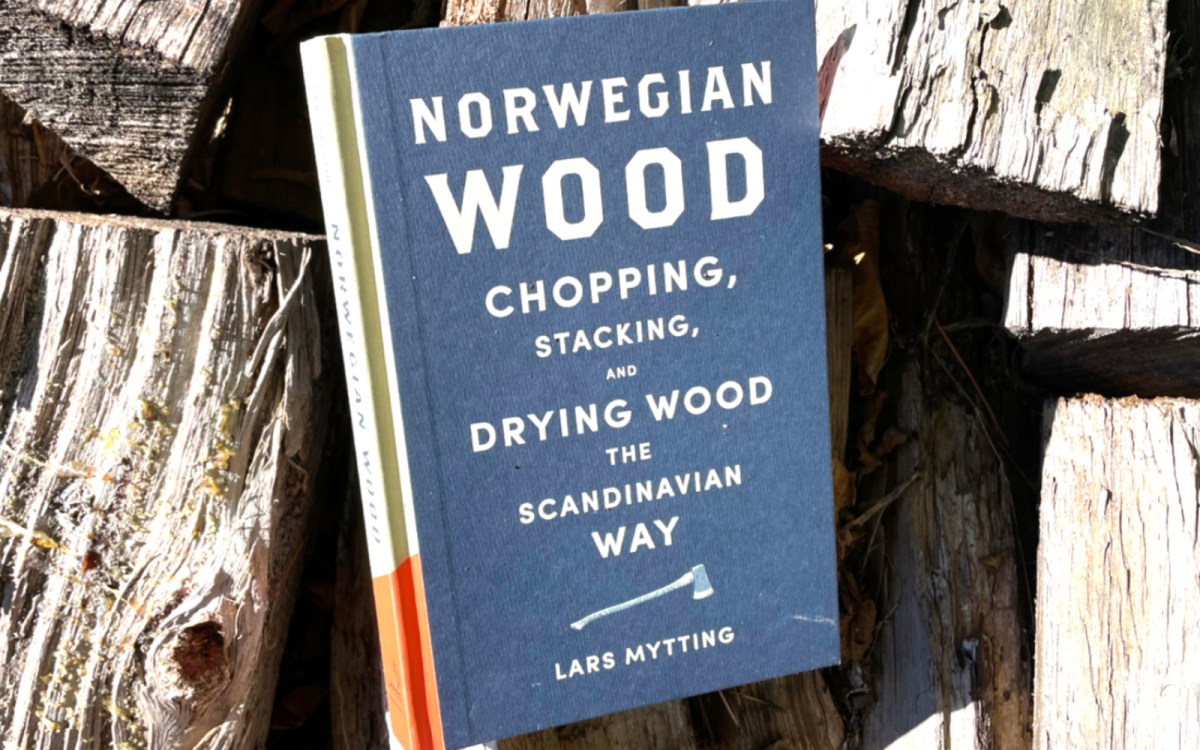
Norwegian Wood, chopping, stacking and drying wood the Scandinavian way – book review

Norwegian Wood, by Lars Mytting

This is one of the most relaxing and enjoyable books I know. Odd, because it is full of men with axes living in freezing temperatures in remote forests, involving strenuous physical labour. All the hard work is for the benefit of the person snug by the fireside, tucked away from the harsh world outside. That’s us. The lucky readers.

Continue reading “Norwegian Wood, chopping, stacking and drying wood the Scandinavian way – book review”

Ash – book review

Ash, by Louise Wallace

I saw a cartoon recently of a woman at the sink with a mop in one hand, a baby in the other, two tugging at her skirts and her man behind saying something like, “You’re not the fun loving woman I married.” Had me chortling with the laughter of ironic truth. In the same vein of misunderstanding, you may think Wallace’s book, Ash, is about the ash that has spewed from the volcano to cover everything and how the townspeople cope with this disaster. But it’s not. It’s about being a mother. And it’s bloody good.

Continue reading “Ash – book review”

Sixteen Trees of the Somme – book review

Sixteen Trees of the Somme, by Lars Mytting

There is something about Norwegian writing that reminds me of Irish literature. It’s so centred on place, it’s the being there that grounds the story. We are different here, these stories say, our culture is wrapped around our traditional ways based on a history, geography and climate that are distinctly our own. It’s like the country itself has a voice. We are beginning to understand this power in New Zealand writing and could take lessons from these countries, for sure. Lars Mytting’s voice is profoundly Norwegian. There is always the expectation of snow on his boots and trolls under the woodpile.

Sixteen Trees of the Somme has a long reach. The base of the story is a Norwegian farm – mostly in the snow but summer visits occasionally – and it’s a mystery and a history and a resistance story and has love and travel and coming of age, a history of gun making and an obsession with trees and their particular wood and so many other things. Lots of secrets to unravel. It kept me spellbound.

Continue reading “Sixteen Trees of the Somme – book review”

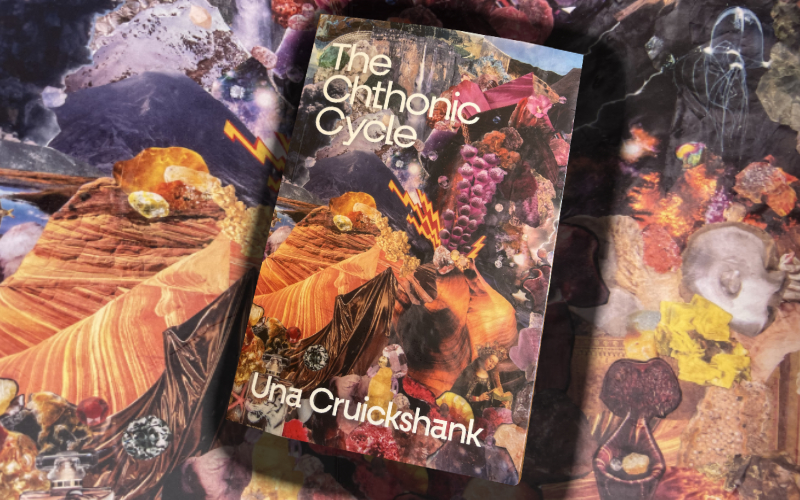
The Chthonic Cycle – book review

The Chthonic Cycle, by Una Cruickshank

First a huge congratulations for the presentation of this book and it’s glorious fold out covers, featuring Sasha Francis’s artistic impression of its themes. It sums them up, natural forces, re-birth, jewels, fossils, water, all strewn together across the page, interconnected and tantalising. Most of the stuff pictured I don’t recognise and nor would I if it were under my feet – how many of us have walked past a lump of ambergris in the sand or sat on a rock hiding a small fortune of ammonites? This book is full of things you may have missed.

Continue reading “The Chthonic Cycle – book review”

The Demolition of the Century– book review

The Demolition of the Century, by Duncan Sarkies

Tom is in insurance. Things turn bad when he checks up on a highly insured horse that dies unexpectedly and is quickly buried. There are sock-fulls of cash involved. He’s also got a failing marriage and a young boy, Frank, who he is meant to be collecting from school, but he is late because the gangsters are after him. I feel no sympathy for this character. Yet.

Continue reading “The Demolition of the Century– book review”

The Royal Free – book review

The Royal Free, by Carl Shuker

OK, so don’t shoot me for asking the question, but is this book even a finished novel? What is Carl Shuker trying to do here and why doesn’t he just tell the story? I know why his editors let him do it – because it is clever and edgy and wildly confusing in a way that makes you think it’s your problem for not getting it, not the fact that the book is so disjointed you could have it served up for dinner with no idea what beast it was. It’s experimental, for sure. There are literary nods and references, clever but incidental. So why is it on my list of books I love?

Continue reading “The Royal Free – book review”

Creation Lake – Book Review

Creation Lake, by Rachel Kushner

Very nearly an excellent book, but…

I’m intrigued from the start with Sadie, our kick-ass narrator. She’s a singular character, I’ll risk a bit of woke chastisement and suggest she felt masculine: decisive, job-focused, practical. Her job has no ethical element to it, she abuses trust for financial gain. A drinking driver, but she tells us she knows how much she can take, and a slovenly eater – warm beer, fast-food, the rubbish piling up around her. She’s very low on empathy, callously uses men for advantage, talks about her body like it’s a weapon. Got a breast enlargement and knows how to use it. Fantastic mercenary women agents have been turning up for a while, from Tomb Raider to Black Doves (mostly male creations I think), but these usually have an compassionate flip-side, perhaps to feed the male fantasy. Sadie is just unbalanced. This makes her interesting. Her narration is straight-forward.

Continue reading “Creation Lake – Book Review”

The Essex Serpent – book review

The Essex Serpent by Sarah Perry

We haven’t changed so much since Victorian times. They chased after mysteries, fell in love inappropriately, refused to be pigeon-holed, got passionate about causes, died bright-eyed of lingering illnesses, and tried to make the world a better place for the less fortunate. The Essex Serpent is very much a character story with a perfect selection of characters: each distinct, with their own needs and foibles, each with their own way of engaging with the others. If that sounds a bit trite it absolutely is not: there is no feeling of a manufactured band here, this is not one of those dreadful ‘found families’ stories. They just meld together all over the place and it’s magic.

Continue reading “The Essex Serpent – book review”

There are rivers in the sky–book review

There are rivers in the sky, by Elif Shafak

I bought this book because of the insanely pretty cover (the silver drops are embossed) and for the fact that there is a woman called Zaleekah in it. My sailboat is called Zuleika, a name from the same root. I thought I could find a bit more about the name, it’s not common. And yes, I did. I also learned heaps about the ancient city of Nineveh in Mesopotamia, the rivers Tigris and Euphrates, and lots about the world’s earliest poem, Gilgamesh, which was carved into stone tablets. The ruse for this story is that water falls from the sky and is recycled over and over again. We meet the first raindrop when it falls on a Mesopotamian king and it resurfaces again for our three storytellers: a slum boy in Victorian London; a Yazidi girl who travels to war torn Iraq in 2014 and a miserable woman in 2018 London who is ungrateful to her rich relatives. I don’t know why these three narrators. The drop of water seems a tenuous selection process.

Continue reading “There are rivers in the sky–book review”