Love In The Time of Cholera–book review

Love in the time of cholera, by Gabreil Garcia Marquez

Love in the time of Cholera is different to every other book I read and for that, alone, I am glad to have read it. Set across decades around the turn of the 20th Century, amid the plagues, wars and the environmental catastrophes of Caribbean Columbia, the story is of lives full of lusty passion. The thing is, I originally read this book in 1985 when it first came out and I was young and naive. Times have changed and I have changed and in the post ‘me too’ environment ‘Love in the time of Cholera’ feels like a misnomer. ‘Dysfunctional sexual obsession in the time of Cholera’ is more accurate, though not so catchy a title.

Continue reading “Love In The Time of Cholera–book review”

Norwegian Wood (Murakami) – book review

Norwegian Wood by Haruki Murakami

Norwegian Wood (1987) is considered a masterpiece, and Murakami the best known/ best selling Japanese author outside of Japan. So what is it about this book that hits the buttons? It is torturously sad, the story of a life defined by suicides – the whole book really a nostalgic subtext for the story that might have been told had Toru Watanabe’s college friend not committed suicide at the start. It’s timeless, sometimes beautiful. Pitch perfect. A masterpiece? Yes, perhaps.

Continue reading “Norwegian Wood (Murakami) – book review”

My Friends – book review

My Friends, by Hisham Matar

Any book that offers a description of a face ‘like a landscape liable to bad weather‘ has got my love. This is a writer with poetry in his soul. ‘We shared the city the way honest labourers share tools,’ he says of two young men finding their way around London. He describes a nurse who ‘would gently tuck in my bedsheet like a skilled cook filleting a fish.’ This is classy writing.

Continue reading “My Friends – book review”

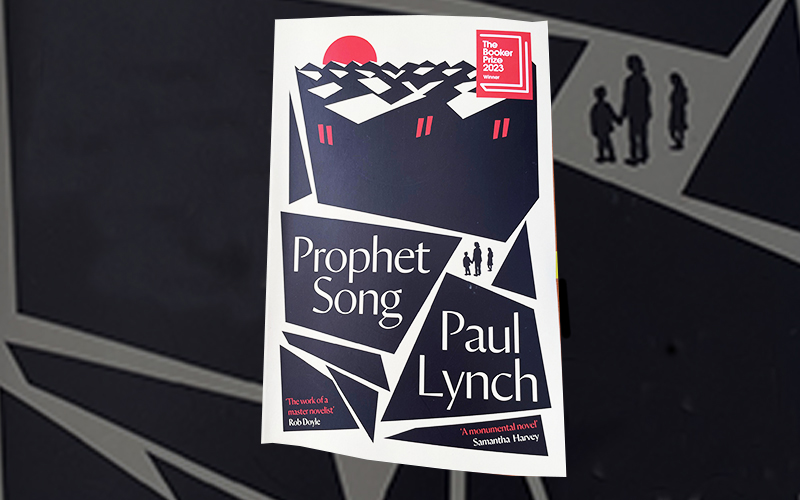
Prophet Song – book review

Prophet Song, by Paul Lynch

When I described the plot of this book to my hubby – about a country turned to anarchy, the tyranny of a government and brutality of the rebels –he said it could never happen in modern Ireland. This surprised me, as we had lived in London during the troubles, had felt the bombings personally. It wasn’t so long ago. And Hitler’s rise to power less than a century ago illustrates how a modern country can turn on itself in a heartbeat of time. Why assume sectarian violence has gone away? And yet Ireland, today, seems such a peaceful place. Paul Lynch’s book imagines how, still, it could turn. Horribly, given the increasingly polarised state of the world, I found his scenario felt entirely possible.

Continue reading “Prophet Song – book review”

Whatever Love Means – book review

Whatever love means, by David Baddiel

Whatever Love Means is an easy enough read about two couples in London around the turn of the millennium, the boys best mates, one married, the other a bit of a predator, with all the ingredients Baddiel seems to think we want to read about: sex, love, death, twists, secrets. Def a holiday read, there’s nothing much very philosophical here, no bigger picture other than creepy Vic having an affair with his best friend’s wife, and an unpicking of why her car crashed into a wall. “Whatever Love Means”, of course, is the famous line of Prince Charles’s in response to his engagement to Di – a stunningly cold response to love, which sums up the book really. None of these characters seem to have discovered the meaning of love. So why has it made my good books list? Well, I enjoyed the obviousness of it. Also, I think the stilted and stifled emotions of the characters deserve exploring. A good book, perhaps, for students of creative writing to unpick. Discuss: How might different people receive the book; what does the author want us to feel; is he in control of his characters?

Continue reading “Whatever Love Means – book review”

Lola in the Mirror – book review

Lola in the Mirror, by Trent Dalton

Trent Dalton has done it again – Lola in the Mirror is Boy Swallows Universe in all its unmitigated glory, but in Lola in the Mirror we have a girl hero who’s on the rocks, fighting to gain a place in the world. This was one of my favourite books of 2023 and I do recommend it for the feisty characters, twisting plot, adversity, love and gorgeous writing all wrapped up in a thrilling read. Yes, it is sentimental and the homelessness described is packaged with optimism. Barbara Kingsolver did this with her brilliant Demon Copperhead; she gave the narration of a deprivation story to a gustsy kid with smarts. Perhaps such optimism doesn’t live in broken cars in junk yards. Or, just perhaps, it does.

Continue reading “Lola in the Mirror – book review”

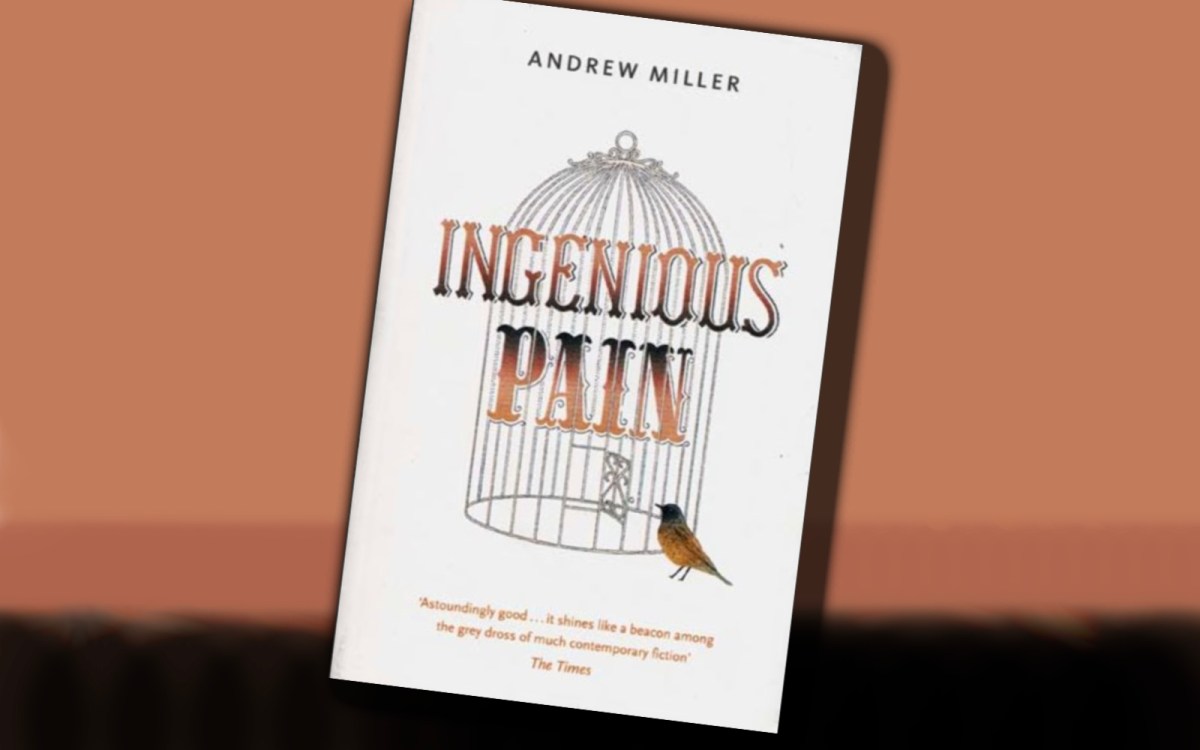
Ingenious Pain – book review

Ingenious Pain, by Andrew Miller

This book was recommended by a good reader to me, one with a shared love of historical fiction. It’s by Andrew Miller, who later wrote the fabulous but misnamed Pure about the stink of a cemetery in Paris in 1785, which I thoroughly recommend for a wallow in atmospheric history. Ingenious Pain not so much. There are flashes of writing that evoke time and place brilliantly, like: “Candlemas, 1767. The streets perfumed with coal smoke and frost, the night sky richly hammered with stars.” Perfect. A whole description in fifteen words. But these word-riches are not as frequently distributed as in Pure, and don’t flow as easily. I will still recommend Ingenious Pain, but if you’re only going to read one Miller, make it Pure, for sure.

Continue reading “Ingenious Pain – book review”

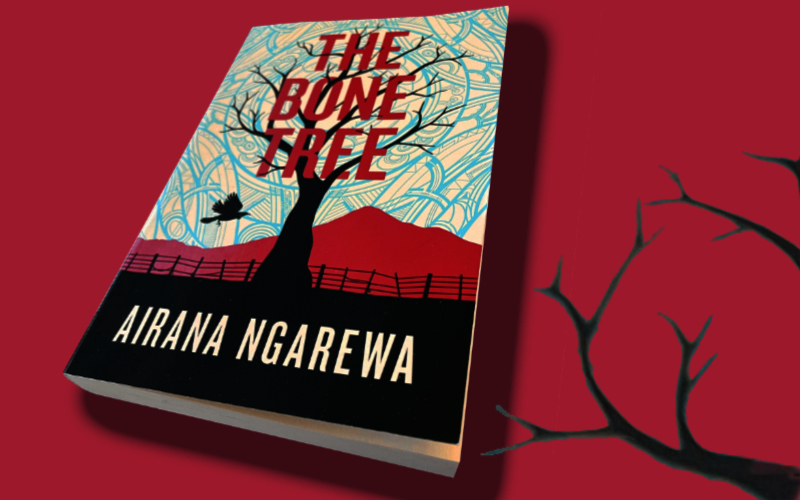
The Bone Tree – book review

The Bone Tree, by Airana Ngarewa

I met Airana at a book festival. He’s a presence – full of youth and energy and a willingness to be in the moment. He speaks the reo in a voice that carries across an audience and compels you to listen. No wonder his debut book is so gripping. I reckon when this guy has a story, you’ll want to sit up and listen.

The Bone Tree is, yes, another story of a dysfunctional Māori family living on the edge. In this case, they’re toppling over. There is little relief and no laughs; it’s the story of the misery of a good kid – I was going to say ‘who deserves better’, but of course all kids deserve better than this. The Bone Tree is narrated by Kauri, also called Cody by fat-tongued white folk, the implication being that his name is never written down. He lives in a totally dilapidated house on a bit of land in the ‘wopwops’. When his mum dies, dad carries her body out to bury her somewhere on the land, and later the kids do the same for the dad. Kauri’s dad, a violent alcoholic, has left him with a bad shoulder and a scar under his right eye, and maybe the boy’s life will be better without him. When the little brother, Black, gets sick, Kauri is the sole caregiver with no sense of how to save him. His main focus is to hide the fact the the kids are alone, to prevent CYPS from taking Black into care. This fear of the authorities underlies the whole story and it is malignant and irrational and yet, for this child, is the bedrock of his belief. He eventually walks to the city and is given food and Māori medicine, and his brother continues to decline.

Continue reading “The Bone Tree – book review”
English Passengers – book review

English Passengers, by Matthew Kneale

This novel, like most colonial fiction stories told in the last 25 years, looks back at history and describes why the English should feel abhorrence and shame. I found the story interesting – the premise of a group of miss-matched individuals on a voyage to Tasmania and back is a good hook for me – but there was something here I found a bit off, and I’m trying to put my finger on it. I think, to me, it seemed the author, for all he researched events and geography well, was an outsider. He wasn’t wholly present in the period or the location. Perhaps we have woken up since it was published in 2000. I hesitate to use the word ‘flippant’ but it did feel the purpose of the story was to entertain us with the terrible things those crazy colonials did back in the day rather than explore something more nuanced: how these potentially good men could be so blind, perhaps; or what these psychologies meant to the people there, on the ground. The Aboriginal part of the story is told in first person by a boy whose mother is taken, chained and raped by an Englishman and the boy is blond. I’m not sure I trust Kneale’s telling of his voice and culture; I was always aware of the English pen behind the voice as I read, and I cringed, occasionally.

Continue reading “English Passengers – book review”

This Other Eden – book review

This Other Eden, by Paul Harding

Such an interesting book, such a dive into the lives of people ostensibly at the very bottom of the pile. The story has its roots at the end of the 1700s, when Apple Island is settled by an escaped slave called Benjamin Honey, and his Irish wife. A hundred years later their descendants and a smattering of other (often a bit too closely) related families still shamble through their lives in this place. They’re a stone’s throw from the coast of Maine, close enough that they can forage on the mainland but, in the eyes of the mainlanders, who consider the islanders an inbred, mixed-race of starving, ignorant, degenerate squatters, they’re too close for comfort. The islanders are an amorphous blight, a problem in need of some kind of resolution. We learn that each islander is, of course, an individual, with different wants and needs and talents.

Continue reading “This Other Eden – book review”