
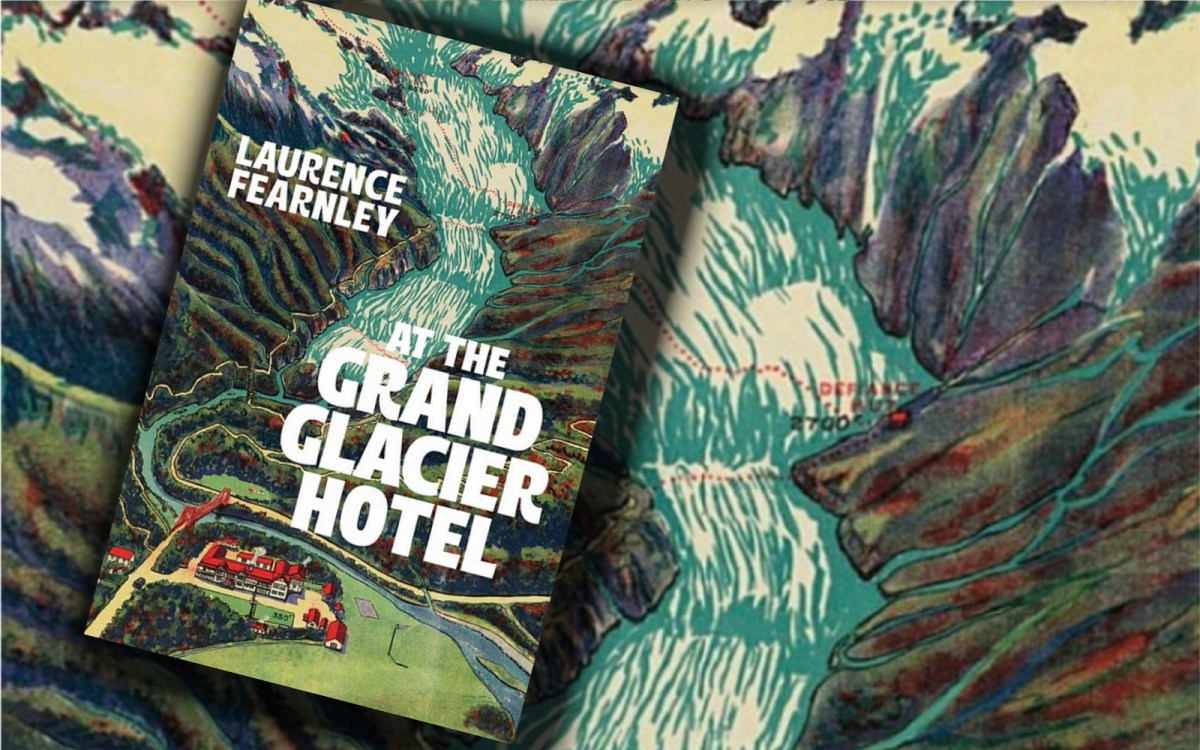
Laurence Fearnley sure knows how to write. I loved Libby’s voice in the book from the off, assured, authentic, telling a story in a way that fully engaged me. And I love the idea of The Grand Glacier Hotel – we’re a bit low on mountains up here in the north but I pictured the Chateau on Ruapehu and imagined the fading glory of such a place against the backdrop of the Southern Alps. It’s a terrific setting for a story, a touch of Hotel du Lac, a place where people go with baggage that needs to be put down for a while.
Libby and Curtis are on a roadie over the mountains from Dunedin, and they’ve booked a stay at the Grand Glacier Hotel, having seen it in passing years ago. The glacier is no longer grand, but can just be seen a long way up the valley. Curtis has to drive back to Wanaka find his specs, the roads close with slips and Libby is on her own. It’s a great set up. The rain pours down. We get a lot of weather in this story. Libby is the perfect candidate for introspection. She’s had a hideous cancer, a massive sarcoma, cut out of the back of her thigh and after several months in hospital is struggling with the fact of her decreased mobility after a previously active life. The idea of sitting around alone in a comfortable old hotel, sleeping and thinking, is just what she needs. She has a lot to process. But she is also an outdoors woman by nature, and there is an ongoing tension of wanting to rest while also wanting to be out walking the tracks. Exercise in the rain or sit by the fire? is a conflict I am familiar with and it is well portrayed here.
My mother would be having a fit if she could see me. She was a crack-of-dawn type. There wasn’t a minute of the day that wasn’t spent doing something. For her, it was all about making the most of things and getting your money’s worth. Her preferred activities, in fact, were free. I could see her, pulling on her rainwear and heading out for a bracing walk on the nearest beach: the wilder the better. She’d walk for an hour or two in driving rain, as far as she could go in one direction, and then back again, practically in the same set of footprints. She would enjoy it. ‘Doing something’ gave her pleasure, a sense of purpose and immense satisfaction. By exhausting herself during the day, she earned the right to relax at night. It was a transaction, in that sense. Lounging on the bed all day wouldn’t be similarly rewarded and so, even though my mother had died many years before, I knew better than to risk the shame of doing nothing. I had to do the proper thing and make an effort.
Bloody mothers, hey.
We spend the book in Libby’s head and she is careful with her thoughts as I think you would be after a long hospital stay. She takes pleasure in bird song, a chair by a fireplace and the constant rain watched from the window of her big room.
The weather and its repercussions dominate the mood, the flooded river with dead, bloated cows drifting past, the muddy trails, the puddles and the storm soundscape is all part of the reading experience.
Libby is a good observer of character and there are other guests in the hotel, including a party of Esperanto speakers which sets up some lighter moments, the hotel owner, a novelist madly writing by a window in the dining room and a young man called James. James picks her up when she falls in a ditch and they go on a slow walks together through the native bush to the glacier lookout. Much of the book focuses on Libby’s disability. It’s a burden that I felt as a reader, a constant worry about the pain that comes in throbs and flashes, the judgement before each walk – how far, will there be uneven ground, a fence, will I fall, will I hold people up? And worse, how do I get out of the bath?
James is a considerate young man. His bird watching camp has been washed out and so he incorporates Libby in a treasure hunt around the area, a reason to get out walking in the bad weather. It’s obviously good therapy for Libby. I’m not sure about James and what he is supposed to represent in the story other than a motivator to get Libby walking. It is an unlikely relationship. I can imagine them striking up an interesting conversation in the dining room perhaps, but with her obvious reluctance to walk fast and the long distances he wants to cover I’m not sure why he seeks this older woman out. The treasure hunt is odd and unfulfilling, too. A strange middle in an otherwise near perfect book.
This is a tender story of a woman’s rehabilitation of body and soul and I feel my levels of empathy have grown by the reading of it.

 Cristina Sanders' blog