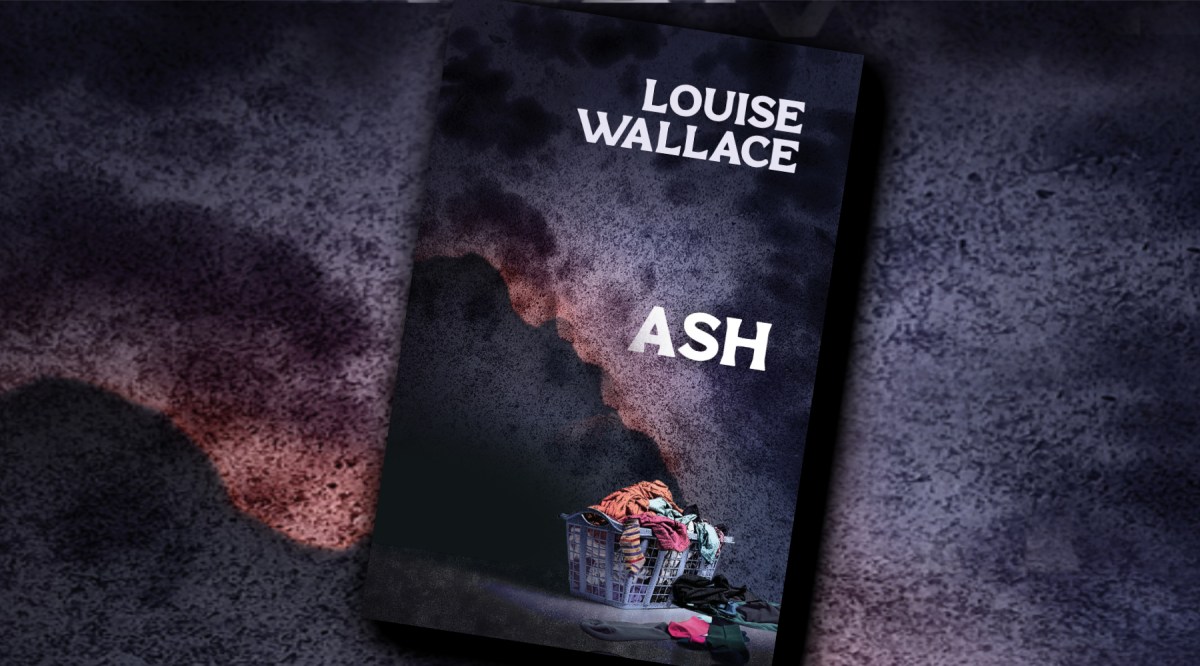
I saw a cartoon recently of a woman at the sink with a mop in one hand, a baby in the other, two tugging at her skirts and her man behind saying something like, “You’re not the fun loving woman I married.” Had me chortling with the laughter of ironic truth. In the same vein of misunderstanding, you may think Wallace’s book, Ash, is about the ash that has spewed from the volcano to cover everything and how the townspeople cope with this disaster. But it’s not. It’s about being a mother. And it’s bloody good.
Yesterday, I was telling Nick’s mum how difficult work is right now. In return, she told me how she’d recently read that in some cultures when a woman has a child, the woman becomes known by a title that translates simply to The Mother and she relinquishes her own name.
Right-oh. Those days of living so close to the edge of insanity I realise now, even though so long in the past, remain anchored in me. I was triggered by this book and the way our (nameless, I think?) protagonist just gets on with things. Like you do. The covering of ash over everything could be anything, really. There are many things that can block out the sun and smother colours grey when you are on the edge of not-coping with motherhood.
Wallace is a poet so this book is short on words, and I mean that in a very good way. It’s a complete novel in 160 pages with never word unneeded or misplaced. There are blocks of – I’m not going to call them poetry, more breaks into train of consciousness – that feel like cries for help, the type mothers everywhere have called into the void.
Our narrator is a vet. She specialises in big animals. It’s a bit of a man’s world, though it really shouldn’t be. When she turns up to a new client he asks, ‘When does the real vet get here?’ Ho ho ho. Such a wag and hell, all that shit adds fuel to the furnace. The book is full of such casual misogyny, girly. You know she’s heading to sort that shit out; she’s not a woman I’d mess with.
Hubby does marketing for personal trainer Tamara, who is all about the package. Firm abs and the glow of wellness aren’t high priority for our narrator. She has the baby monitor on, forever on call and I could feel the tension between her and her bloke and the alternative life they they are not living, which includes lots of ‘me’ time.
This is not a survival story, not a story about surviving the ash, at any rate. Although it covers the town and overwhelms everything, there is no real explanation of the disaster. We don’t see the government springing into action or nightly reports on the TV. Shit happens. You get on with it. The people of the town work from home when they can, or put on a face mask and go out. The rift in the side of the mountain makes everything turn bleak, but no one really talks about it much. Our narrator just waits for the darkness to lift.
There is a small but achingly intense story running along the footer of the pages, about another woman sensing failure.
‘The wife had spilled the soup in bringing it to the table. Or had not put the butter out beside the bread.’ …
‘In her dreams, the wife kicked viciously until needing to be roped, her language not enough to raise blisters.‘…
‘When they spoke of the wife to others. they probably said ‘poor’ before her name, she thought.’
It’s not a motherhood many women admit to feeling. But I’ll bet there is a lot more of it out there than we see. Even simply reading the line: ‘there’s a costume day at school next week,’ is enough to give me a twinge of post-traumatic stress. The kids, however, are terrific and well loved by their mum. And she does enjoy them. If there was nothing else she was obliged look after, if she could just put down one or two of the other balls she was juggling, she’d be grand.
We are not told the location of the mountain but I’m guessing Taranaki, the family living on shaky land both geographically and historically.
We drive, shouting ‘mixer!’ or ‘digger!’ whenever we see one. The road winds around the river that runs alongside us. Its name means the line from which you’ve come. I fall outside of that line. I have nowhere to stand and the mountain tells me so – its sheer sides and exposed rock. I’m no victim, of course. People prefer not to mention the reasons we’re still here.
I read this a month or so ago, but still feel I’m shaking the ash out of my clothes.

 Cristina Sanders' blog