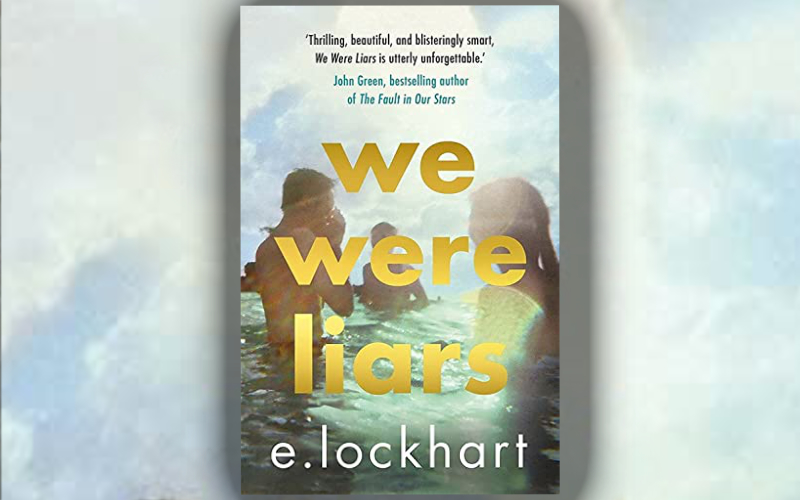
I read this soon after the fatuous Pineapple Street, confirming that the joy of reading (of course!) is all in the writing rather than the setting. This story, again, features wealthy New Yorkers with more privilege entitled on them than seems fair. This family have their own island on which they spend summer; grandfather and the aunts all in separate houses through which the kids wander. But where Pineapple Street struts the flashy surface of monied lives, We Were Liars goes deep with plot and character and story. It’s a good story, a coming of age and a mystery you don’t realise is a mystery until things stop adding up. Here, our girl, Cadence, introduces us to her three companions and lets the story rip.
The character introductions are sublime. “Johnny, he is bounce, effort, and snark. Back then he would hang our Barbies by the necks or shoot us with guns made of Lego. Mirren, she is sugar, curiosity, and rain. Back then she spent long afternoons with Taft and the twins, splashing at the big beach, while I drew pictures on graph paper and read in the hammock on the Clairmont house porch. Then Gat came to spend the summers with us.”
Gat is the nephew of an aunt’s new husband and he joins the gang of cousins. Beautiful Gat. “He is contemplation and enthusiasm. Ambition and strong coffee.” Cadence loves him.
Cadence’s voice is clear and vivid, she paints word pictures like draping her fingers over the side of a row boat and letting the patterns flow out behind. I won’t offer a plot summary here because every reader should have the experience of opening this story box themselves. But a bit about Cadence: she’s romantic and loose, protected from the world – we only ever see her on the Island – and a happy child. She’ll spend a Saturday night “reading a novel in a pile of smelly golden retrievers”. It’s an idyllic life. Apart from occasional forays ashore with her grandfather and the more formal family dinners (put together by staff whose names Cadence doesn’t always remember), the kids are left to make their own entertainment. They laze about, swim, read. There’s no side to any of them, other than an edge to Gat, who is not a Sinclair. He has Indian heritage, but that’s his story, not Cadence’s, and she only explores the edges of what it might mean to live outside the family. This lapse is absolutely right; we only know what’s going on in Cadence’s head, and she misses a lot that the reader has to bring to the story themselves. Love books like this.
Being a Sinclair becomes a bit of a theme. “We believe in outdoor exercise. We believe that time heals. We believe, although we will not say so explicitly, in prescription drugs and the cocktail hour. We do not discuss our problems in restaurants. We do not believe in displays of distress.” Cadence is frequently told to hide her feelings. Not to cause a scene. She’s in her own head a lot, more so as the book progresses, and her mother checks her emotions, reins her in. “Mummy is leaning over me. I reach and clutch her hand. “Be normal now,” she whispers. “Right now.” “What?” “Because you are. Because you can be.” Okay. Okay. It was just a tree. Just a tree with a tire swing that I loved a lot. “Don’t cause a scene,” whispers Mummy. “Breathe and sit up.” I do what she asks as soon as I am able, just as I have always done.
Variations of a fairy story appear from time to time, perhaps Cadence’s view of her family: “ONCE UPON A time there was a king who had three beautiful daughters. He gave them whatever their hearts desired, and when they grew of age …” She is working out her part in this legend.
Ultimately, the kids grow to question their privileges and Grandfather’s power over all their lives. It’s Cadence telling us this in retrospect, and she’s no longer reliable. Argh! Holding in the spoilers here. Strongly recommending: read the book.
I marked up dozens of quotes where the phrasing and imagery of the text left me sighing with delight. I’ll leave you with some snippets, little billet doux with gifts from Gat to Cadence:
“Someone once wrote that a novel should deliver a series of small astonishments. I get the same thing spending an hour with you. Also, here is a green toothbrush tied in a ribbon. It expresses my feelings inadequately.“
“Better than chocolate, being with you last night. Silly me, I thought that nothing was better than chocolate. In a profound, symbolic gesture, I am giving you this bar of Vosges I got when we all went to Edgartown. You can eat it, or just sit next to it and feel superior.“

 Cristina Sanders' blog