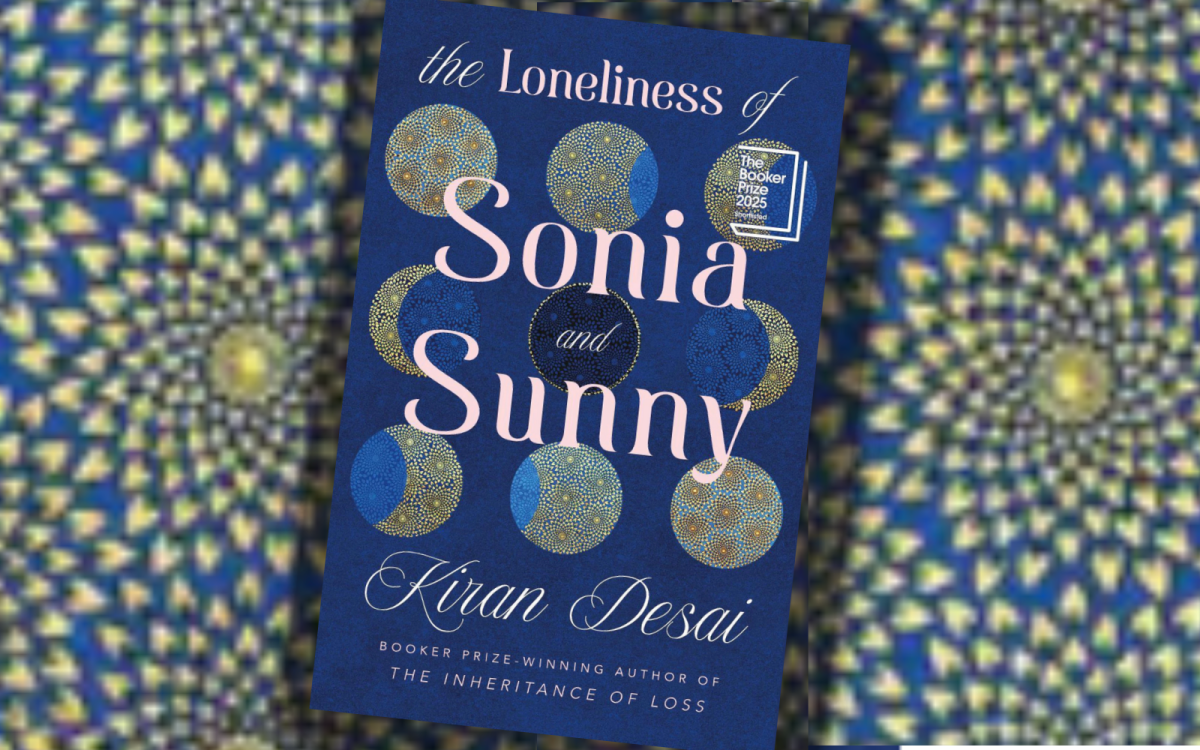
The waiter brought them a parade of dishes: a mineral-smelling broth, a barely set delicate custard perfumed with chrysanthemum, bright roe that burst marine between their teeth, pickled autumn roots. How lovely. There is a lot about food in this story and if you enjoy Indian cooking you are in for a treat. There is a lot about a lot of things in Sonia & Sunny, so settle in for a long read. It is a very Indian story, and by that I mean in the fine tradition of introducing you, in great detail, to the long back stories of every member of every character’s extended family, with all the hints of corruption and family estrangements, overheard conversations and unanswered questions and the quirky personalities of all the uncles. The food is not only looked at, but smelled and tasted and each dish’s history is unravelled and the knowledge of who makes the best kebabs in the neighbourhood is shared, who taught them. Who stole the cook deserves a sub-plot all of its own. Perhaps it is impossible to write a short story about India. You can’t really dip in and get a feeling of the place. It’s full immersion or nothing.
This is also an immigrant story. Our two eponymous characters, Sonia and Sunny, live between their overbearing families in India and their loneliness in America. They are not together in the strangeness of urban USA, not at the start. Sunny is a journalist for the Associated Press with a cool girl-friend and Sonia, a budding writer, picks up with a older man, an artist called Ilan de Toorjen Foss – a name for a monster if ever there was.
Their parents live in the same neighbourhood back in Allahabad, an arranged marriage between the two is rejected, but later Sonia and Sunny meet on a train and a fuse is lit. Embarrassing? Hell yes. But might this attraction lead to true love indeed, and the end to their loneliness? There are still an awful lot of pages to get through.
It’s the side relationships that keep this story trucking through all the passing descriptions of peripheral life. Ilan de Toorjen Foss is a superbly written narcissistic lover, his cruelty trapping Sonia and tearing at her ability to understand herself or her situation. Ilan and Sonia had become more secretive, more dependent. When someone has seen you as less than human and may at any time betray this information and inform others that you are actually a ghoul, it means you have to be more solicitous of the other, more closely a pair. And after you’ve gouged on another, your missing parts belong to your fighting partner; you need to be constantly with the keeper, the consumer of your vital organs, your mind, your heart, or you no longer exist. His reappearance, famously showcasing exploitative material, is shocking. God, he’s a nasty piece of work but well complicated and rather horribly believable. Then there’s the odd combination of vulnerable Sonia with Sunny’s martyr-like mother, also vulnerable, of Sunny and his mother, Sonia’s mother and father, Sunny and his old freind, Satya. All these are fraught with aching tenderness and misunderstandings and yes, loneliness.
The only relationship I find problematic is that of Sonia and Sunny themselves. They’re not Indian enough and also not American enough to build anything more than the most fragile love together in either world. But, come on, you two. The book is a touch too long to be dragging out this indecision.
A shadow obsession of the story is that of Indian insecurity, the deference of the Indian in any company outside his anointed place, especially in regard to the white man. One Indian alone is luckier than two Indians together, is a constant refrain on the American side, always with an eye out how one’s race impacts on other people. Never, it seems, positively, which adds a depth and context for this white reader, such racial awareness missing from my everyday. Sunny remembered his pride when he was first together with Ulla—it was in great part because she was a white American, but he was ashamed to be proud that she was white…She [his mother] wished Sunny would live in a building where he’d be the only Indian…she also thought Hispanic brown people were lower than Indian brown people…She’s very beautiful, the wife; she doesn’t look at all Jewish…The Chinese run in a very funny way; just look at that woman running after the bus...as a paler woman, you could marry a man far wealthier if he was far darker than yourself.
Sunny tries to address this: He must release himself from the trap of India–United States–United States–India in the same way the past generation had felt trapped by India-Britain-Britain-India. He needed a third way, a sideways gesture, a kind of jazz, a riff on a raga. I’d like to think he grows more comfortable in himself as the book progresses, but I’m not sure either Sonny or Sophie develop much. There is no hallelujah at the end of the story, when issues the characters have been struggling with get resolved.
The Loneliness of Sonia and Sunny is a bit of a dive into Indian life that slides into America and looks back at home, with feelings of alienation in America and perhaps now at home as well. I found that terribly sad, the racism obviously a lingering legacy of the British colonial period, though of course Indian culture always had a way of dividing people into classes long before the Brits arrived.
The many and varied sub-plots in the story are wonderful, but I’m not sure the main story is strong enough to carry them through. I got a bit lost on many occasions and decided I didn’t care enough about any of the characters to rush and pick up the book in the evening. A slow read for me, not sure I’d particularly recommend it unless you want to dive into the minutiae of Indian life in all its colour and confusion and madness, in which case knock yourself out. It’s got all that in spades.
Shortlisted for the 2025 Booker Prize.

 Cristina Sanders' blog