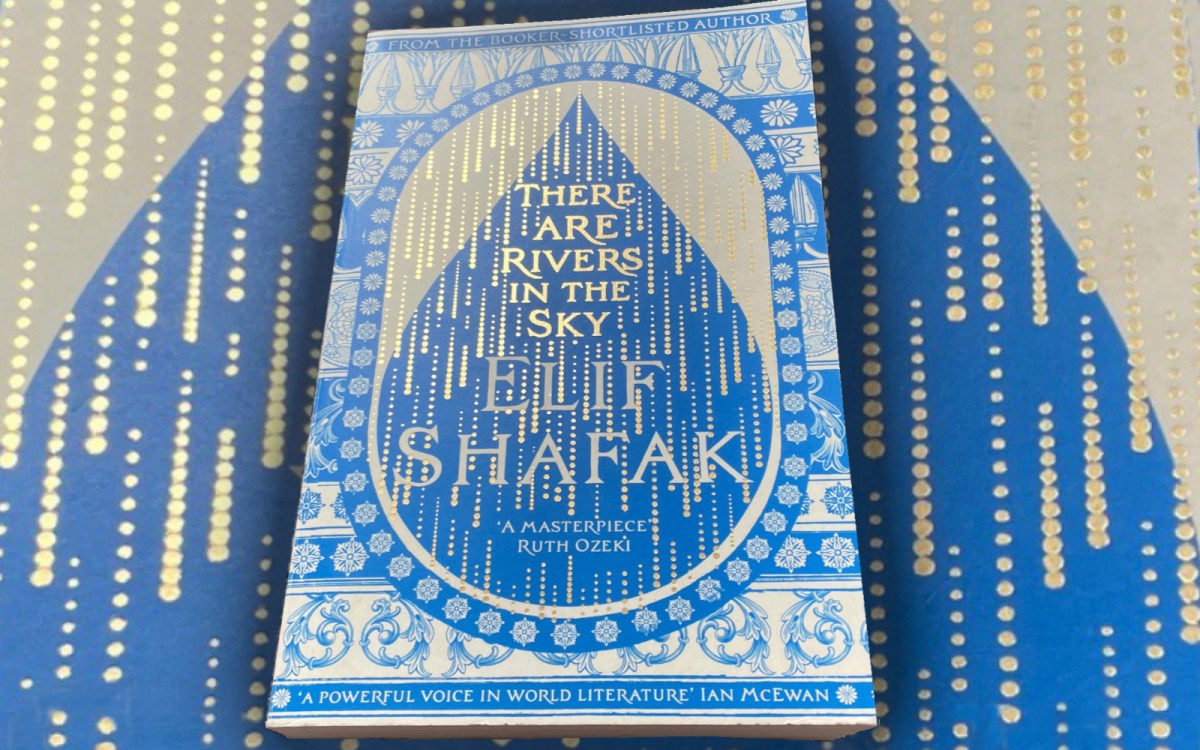
I bought this book because of the insanely pretty cover (the silver drops are embossed) and for the fact that there is a woman called Zaleekah in it. My sailboat is called Zuleika, a name from the same root. I thought I could find a bit more about the name, it’s not common. And yes, I did. I also learned heaps about the ancient city of Nineveh in Mesopotamia, the rivers Tigris and Euphrates, and lots about the world’s earliest poem, Gilgamesh, which was carved into stone tablets. The ruse for this story is that water falls from the sky and is recycled over and over again. We meet the first raindrop when it falls on a Mesopotamian king and it resurfaces again for our three storytellers: a slum boy in Victorian London; a Yazidi girl who travels to war torn Iraq in 2014 and a miserable woman in 2018 London who is ungrateful to her rich relatives. I don’t know why these three narrators. The drop of water seems a tenuous selection process.
The slum boy definitely steals the show. His name is King Arthur of the Sewers and Slums. He is born to a mudlark mother and degenerate father and on being born a snowflake fell on his tongue and he can remember this because he has the memory of a savant, he can recall everything he ever knew, dates and times and what day of the week it was four years ago on such and such a day. He can even tell you what he was doing that day and describe the weather. Tricks like this delighted Victorians and the boy does good. Load of nonsense, but there you are. He also sees patterns where others see gobbled hieroglyphs, and as a young man begins translating the poem of Gilgamesh in the British Museum which earns him lots of awe and the sponsorship to follow his obsession to the ruins of Nineveh, now a modern site of archeological thievery. Something in that drop of water, perhaps. He has a sad story, and we are told way too early that he dies on his quest. Shame, he was interesting. We all know the fascination of Victorians for unusual people, or to use parlance of the era: freaks. Judging by the number of times such characters end up as modern story fodder, it seems the fascination hasn’t gone away.
I would have enjoyed the book so much more if it contained just this story: historical fiction set in the Victorian era looking back at ancient times. Cool. But there are two additional recent stories which are kind-of interesting, but really belong elsewhere. Narin and her grandmother are two Yazidi women, and we are lulled into following their sweet story with undertones of violence until the progress suddenly flips into an illustration of the plight of young women in the hands of Isis terrorists. There is something wrong with this story tucked in as a side-line to spice up the plot’s entertainment. It feels gratuitous. The other additional plot is Zaleekah’s story, pretty dull until the end, when it dove-tails, un-foreshadowed, into Narin’s plot line with an extra twist, again, not really adding anything to the main theme which, as far as there is a main theme, I think lies with Gilgamesh.
There is a sentimentality to the story which can feel a bit cloying. Here’s a woman who hears ‘voices from other realms’, ‘stories from the olden times, tales as ancient as the river itself.’ There’s a lot of poetical writing about rivers. Some of this stuff works well, some is a weirding too far.
It’s a big book, to fit in all this stuff. 483 pages. I’d have pared it back to two fifty and stuck with Arthur – sometimes you have to cut your darlings away. But a few of my serious reader friends had this at the top of their favourites of 2024, so if you’re a serious reader, give it a go. The stuff about Mesopotamia is great.

 Cristina Sanders' blog
currently reading ‘All our broken idols’ by Paul Cooper (2020)- very similar?.
LikeLike